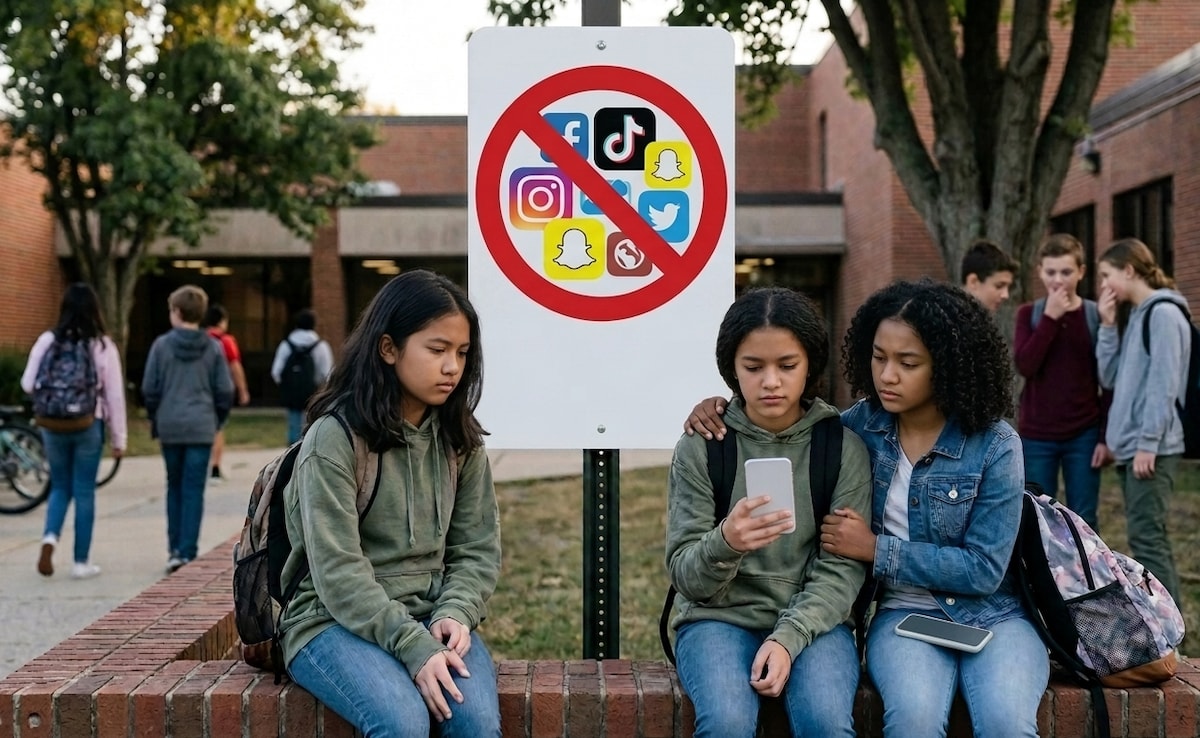
Indonesia just flipped the switch on one of the world's most aggressive digital experiments. As of Saturday, March 28, 2026, the country has officially started enforcing a blanket ban on social media and "high-risk" digital platforms for anyone under the age of 16. It's a move that targets roughly 70 million children in a nation of 280 million people.
If you think this is just another toothless government guideline, think again. The Ministry of Communication and Digital Affairs isn't asking nicely. Minister Meutya Hafid made it crystal clear on Friday night: there’s no room for compromise. Platforms that don't fall in line face a escalating ladder of pain, from public reprimands and heavy administrative fines to the ultimate "death penalty" for an app—total access termination in the country.
The end of the digital Wild West for Indonesian teens
For years, parents have felt like they were bringing a knife to a gunfight against billion-dollar algorithms designed to keep their kids hooked. This new regulation, technically known as PP Tunas (Government Regulation No. 17 of 2025 on the Governance of Electronic System Providers for Child Protection), changes the math.
The government has explicitly blacklisted eight massive platforms as "high-risk" for minors:
- YouTube
- TikTok
- Facebook and Instagram
- Threads
- X (formerly Twitter)
- Bigo Live
- Roblox
Why these eight? The ministry identifies high-risk platforms based on how easily a child can encounter strangers, predators, or harmful content like pornography and scams. They're also looking at the risk of data exploitation and, perhaps most importantly, the psychological toll of digital addiction.
Why a simple age limit won't be enough
Most platforms already have a 13-year-old age limit in their terms of service. We all know how well that works—kids just lie about their birth year. Indonesia is demanding something much more substantial. Under PP Tunas, platforms must integrate "safety by design."
This means implementing verified age-verification systems, not just a checkbox. There's talk of integrating with Dukcapil (Indonesia's national population registry) to verify identities instantly. If a platform is "high-risk," kids under 16 shouldn't even be able to create an account. For those between 13 and 16 using "low-risk" apps, parental consent is now a hard legal requirement.
The impact is already hitting the ground. X and Bigo Live were among the first to update their help centers to reflect the 16-year-old minimum for Indonesian users. TikTok and YouTube have voiced support for the "risk-based framework," but the ministry notes they're still in the middle of self-assessment and compliance checks.
The human cost of a sudden logout
While the government talks about protection, the reality for millions of Indonesian teens is a sudden loss of community. Take 14-year-old Charissa Putri Chandra Kirana, an Instagram and Facebook creator with nearly 800,000 followers. For her, social media isn't just for fun; it’s a paycheck that supports her family since her mother can't work. Under these rules, her career is effectively on ice until she turns 16.
Rights groups like Amnesty International are also sounding the alarm. Usman Hamid, the executive director for Amnesty Indonesia, argues that a blanket ban stifles the rights of young people to express themselves and participate in civic life. In a country where social media is often the primary way to discuss government policy, shutting out everyone under 16 removes a massive chunk of the conversation.
Then there’s the technical reality. Kids are smart. They use VPNs. They create "secret accounts" using their parents' info. A 2026 survey by the Indonesia Internet Service Providers Association found that over 13% of children already admit to having accounts their parents don't know about. A ban might just drive this behavior further underground.
What this means for the global tech map
Indonesia is the first country in Southeast Asia to take this leap, following in the footsteps of Australia’s world-first ban last year. It’s part of a growing global wave that includes the UK, France, and Spain.
The message to Big Tech is clear: the era of "move fast and break things" at the expense of child safety is over. Governments are no longer content with voluntary guidelines. They want hard code, verifiable data, and the power to pull the plug if companies don't comply.
Practical steps for parents and creators
If you’re a parent or a young creator in Indonesia, don't wait for the apps to disappear.
- Audit existing accounts: Check if your child’s account uses their real age. If they’re under 16, that account is at high risk of being deactivated in the coming weeks as platforms ramp up enforcement.
- Export your data: If you’re a young creator like Charissa, download your content and follower lists now. You don't want to lose years of work if a platform suddenly wipes under-16 accounts to avoid a government fine.
- Look for "Low-Risk" alternatives: The government will eventually publish a list of approved "low-risk" platforms designed for kids. These will be the only legal digital playgrounds for the under-16 crowd.
The transition is going to be messy. There will be tantrums, confusion at schools, and a lot of bored teenagers hanging out in malls instead of Roblox. But for many parents who feel they've lost control to the "algorithmic giants," Saturday's rollout is the first time they've felt the government actually has their back.