Geopolitics is often a theater of the absurd where maps are drawn by wishful thinking rather than hard logistics. The current narrative surrounding India—specifically that it is the "Gateway to Asia" and that a looming trade pact with Israel will ignite a regional economic explosion—is a classic example of lazy consensus. It sounds good in a boardroom. It looks great on a slide deck. It is fundamentally disconnected from the friction of reality.
If you believe India is the gateway to Asia, you haven't looked at a map or a balance sheet lately. Gateways imply a smooth transition, a hub-and-spoke model of efficiency. India is not a gateway; it is an island of complexity.
The Geography Delusion
The "Gateway" label is usually reserved for places like Singapore or Dubai. These are frictionless zones where goods move in and out with surgical precision. India, by contrast, is a destination, a massive internal market that is notoriously difficult to penetrate and even harder to use as a transit point.
To call India the gateway to Asia ignores the massive Himalayan barrier to the north, a hostile border to the west, and a maritime infrastructure that, while improving, still lags behind the hyper-efficiency of the Pearl River Delta. If you want to get into Asia, you go through the Strait of Malacca. You don't try to haul freight across the subcontinent to reach the rest of the continent.
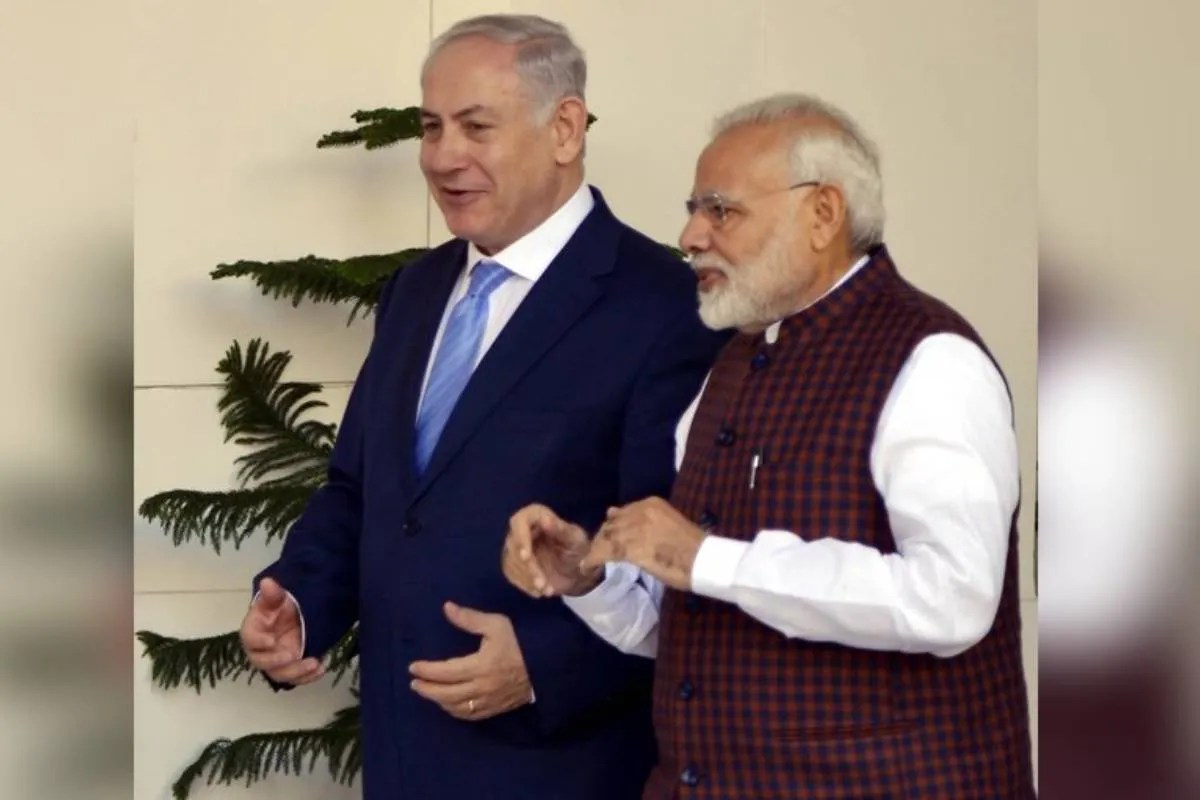
The competitor's piece suggests that a trade deal with Israel is the "key" to this door. This is a misunderstanding of scale. Israel is a high-tech powerhouse, but its total GDP is roughly $500 billion. For a $3.7 trillion economy like India, a trade deal with Israel is a tactical upgrade in specific sectors—defense, agritech, and cybersecurity—not a structural transformation of India's role in the global supply chain.
The Israel Deal is a Boutique Partnership, Not a Bulk Engine
Stop treating the India-Israel Free Trade Agreement (FTA) as if it’s the next NAFTA. It’s not. It is a highly specialized boutique arrangement.
The logic being pushed is that Israeli innovation combined with Indian manufacturing scale creates an unstoppable force. I’ve seen companies blow millions on this "synergy" myth. Innovation doesn't just "transfer" because a treaty was signed in New Delhi.
- The Defense Trap: A huge portion of India-Israel trade is locked in the defense sector. This is "black box" trade. It doesn't create the kind of downstream consumer economic activity that a gateway economy requires.
- The Tech Talent Gap: While Israel provides the blueprints, India’s "manufacturing scale" is still struggling with a massive skills gap in high-end precision engineering. You cannot manufacture a $50 million drone with the same labor pool used for textile assembly.
- The Regulatory Labyrinth: An FTA does not erase the nightmare of state-level bureaucracy in India. A signed paper in the capital doesn't mean a factory in Tamil Nadu or Gujarat operates any faster.
People also ask if this deal will counter China's influence. It won't. China’s trade with India is nearly $120 billion, dominated by essential components and raw materials. Israel-India trade hovers around $10 billion. Thinking a deal with Jerusalem replaces the necessity of Beijing is a dangerous geopolitical fantasy.
The Infrastructure Mirage
Everyone loves talking about the India-Middle East-Europe Economic Corridor (IMEC). It’s the centerpiece of the "Gateway" argument. Let's be brutally honest: IMEC is currently a series of lines on a map that requires the total stabilization of the Middle East to function.
Counting on a trade route that depends on a peaceful, integrated Levant is not a business strategy; it’s a prayer. The logistics of moving a container from Mumbai to Haifa, then to Piraeus, involves so many loading and unloading points (intermodal transfers) that the cost-per-mile becomes astronomical compared to the deep-sea route through the Suez Canal.
In my experience, when politicians start talking about "corridors," they are usually trying to distract from the fact that their domestic ports are congested. India’s turnaround time at ports has improved, but it’s still twice as slow as Singapore's. You can’t be a gateway if the door is only half-open.
The Protectionist Reality
The most contrarian truth of all? India doesn't actually want to be a wide-open gateway.
The "Atmanirbhar Bharat" (Self-Reliant India) initiative is the literal opposite of a gateway philosophy. A gateway is a conduit for global goods. Self-reliance is about building walls to nurture domestic industry. You cannot have both.
India is currently using high tariffs to force companies to "Make in India." That is a legitimate development strategy, but it is a protectionist one. It makes India a "Fortress," not a "Gateway."
- The "Early Harvest" Fallacy: Watch out for the "Early Harvest" deal. This is a tactic where both countries agree on easy items (fruit, some chemicals) to claim a win, while the hard stuff (intellectual property, services, high-end tech) remains stuck in negotiations for a decade.
- The Water Scarcity Link: Israel’s real contribution to India isn't trade volume; it's survival tech. Desalination and drip irrigation. This keeps India from collapsing under climate stress, but it doesn't turn it into a global trade hub.
Stop Asking if India is the New China
The premise itself is flawed. China became the "factory of the world" by embracing a level of environmental and labor ruthlessness that India’s democracy simply won’t allow. India’s path is messy, litigious, and slow.
If you are looking for a seamless, "plug-and-play" gateway to Asia, you are in the wrong country. India is where you go to fight for a share of a billion-person market, not where you go to ship things somewhere else.
The Israel trade deal will happen. It will be heralded as a "historic shift." In reality, it will be a incremental gain for a few defense contractors and irrigation firms. The "Gateway to Asia" title remains vacant because the infrastructure of the 21st century doesn't need a single gate—it needs a thousand small doors.
Stop looking for a shortcut through New Delhi. Start looking at the friction on the ground. The real money isn't in the "gateway" myth; it's in solving the bottlenecks that make the myth necessary in the first place.
Build the factory. Buy the land. Fight the bureaucracy. But don't for a second think a trade deal with Israel is going to make any of that easy.