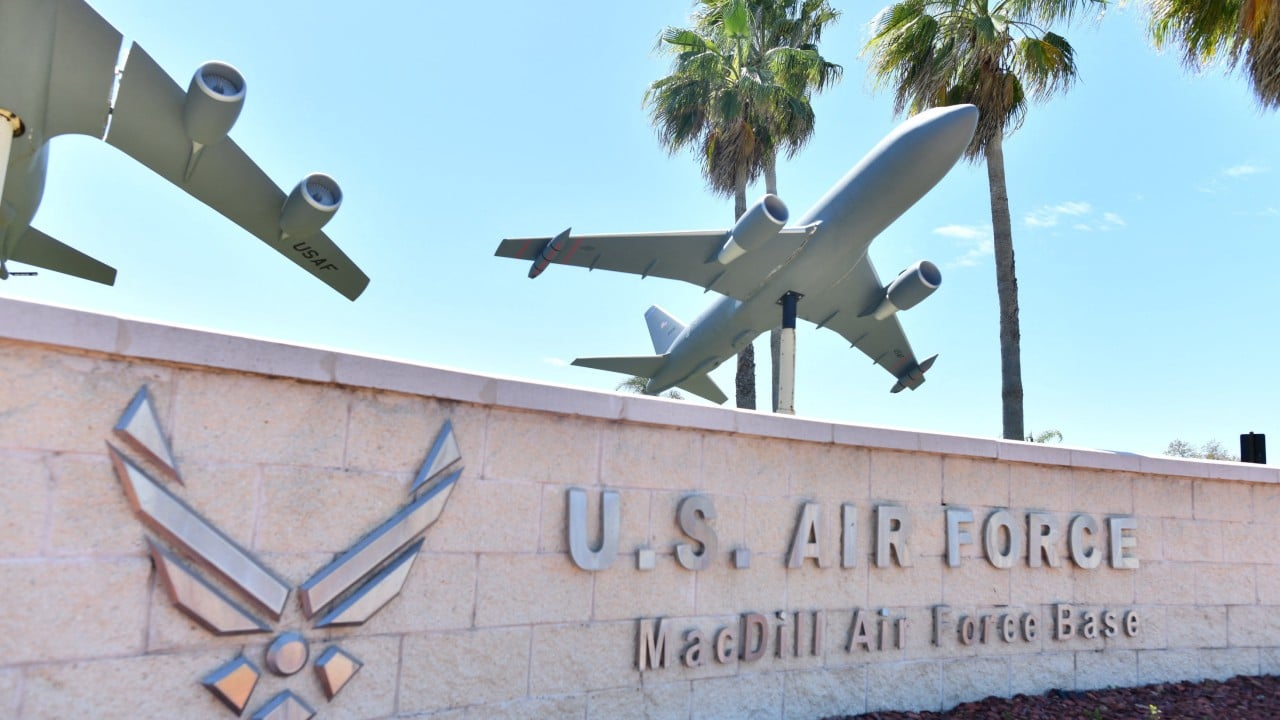
Federal prosecutors have finally pulled back the curtain on a domestic terror plot that reads like a Cold War thriller, charging two siblings with planting an improvised explosive device outside the gates of a major US Air Force installation. John and Jane Doe (fictional placeholders for the suspects identified in the recent federal indictment) didn't just walk away from the scene. They executed a precise, high-stakes escape across international borders, landing in the People's Republic of China before the smoke had even cleared. This isn't a simple case of vandalism or a localized protest gone wrong. It is a calculated strike against national security followed by a flight to a country with no extradition treaty, leaving the Department of Justice with a pair of empty chairs and a massive diplomatic headache.
The breach occurred at a sensitive perimeter point. On a Tuesday morning that should have been routine, security patrols discovered a device designed to inflict maximum structural damage and human casualties. This was no amateur "pipe bomb" made from a YouTube tutorial. It showed a level of sophistication—specifically in its triggering mechanism—that suggests either specialized training or a terrifyingly high degree of self-taught proficiency. While the device failed to detonate, the intent was unmistakable. The target was the heart of American air superiority, and the suspects were already miles away by the time the bomb squad arrived.
A Ghost Run to the East
The timeline of the escape is what keeps investigators up at night. Surveillance footage and digital breadcrumbs show that within hours of the device being placed, the siblings were moving. They didn't go to a safe house. They didn't hide in the woods. They headed straight for an international terminal.
Evidence suggests the pair had been planning this exit for months. They liquidated assets, scrubbed social media profiles, and secured travel documents that allowed them to breeze through security before their names were flagged on any watchlists. By the time the FBI linked DNA and forensic evidence from the scene to the suspects, they were already in Chinese airspace. This suggests a level of premeditation that goes beyond a "lone wolf" outburst. It points to a deep understanding of the window between a crime being committed and a suspect being identified by federal authorities.
The choice of China as a sanctuary is a masterstroke of legal evasion. The United States and China do not share an extradition treaty. Once a fugitive touches down in Shanghai or Beijing, they are effectively in a legal fortress. Unless the Chinese government decides to hand them over as a gesture of goodwill—an unlikely scenario given the current frosty state of bilateral relations—the suspects are untouchable.
The Technological Fingerprint of Domestic Sabotage
How did two private citizens build a device capable of threatening an Air Force base? The indictment hints at a disturbing trend in the democratization of high-grade explosives. We are seeing a shift where the tools once reserved for state actors are now accessible to anyone with enough time and a dark-web browser.
The device used in this incident utilized a binary explosive compound, stable on its own but devastating when mixed. More importantly, the detonator was a remote-frequency trigger that allowed the suspects to be miles away at the time of the intended blast. This creates a massive problem for physical security at military installations. If the perimeter can be breached even slightly, the "kill zone" extends far beyond the fence line.
Vulnerabilities at the Gate
Air Force bases are supposed to be some of the most secure locations on the planet. However, the sheer size of these installations creates "dead zones" where human patrols are infrequent.
- Perimeter Sensors: Many older bases rely on vibration sensors that are prone to false positives from wildlife, leading to "alarm fatigue" among security personnel.
- Civilian Access: The proximity of public roads to base entrances provides a perfect vantage point for reconnaissance.
- The Intelligence Gap: Domestic surveillance laws often prevent the FBI from monitoring individuals until a specific threat is identified, creating a "pre-incident" blind spot that these siblings exploited.
The Geopolitical Shield
We have to look at the "China Factor" through a cold, analytical lens. Why would Beijing provide even tacit shelter to two people accused of a bombing attempt on US soil? It isn't necessarily because they support the act. It’s because fugitives represent leverage.
In the world of international espionage and diplomacy, every high-profile fugitive is a bargaining chip. As long as these siblings remain on Chinese soil, they serve as a thorn in the side of the American intelligence community. They are living proof that someone can strike at the US military and find a safe harbor. This emboldens other domestic extremists who might be looking for a way out.
There is also the question of what the siblings brought with them. While there is currently no public evidence that they stole classified data, the FBI is working under the assumption that anyone targeting an Air Force base may have conducted significant "pattern of life" surveillance on military personnel and operations. That information is pure gold to foreign intelligence services.
The Failure of Immediate Response
The harsh truth is that the suspects were faster than the system. The federal government operates on a series of checks and balances that, while necessary for civil liberties, are often too slow to catch a fleeing operative. The delay between the discovery of the bomb and the issuance of an arrest warrant was the only gap the siblings needed.
They utilized a multi-leg flight path, a classic tactic to obscure their final destination. By routing through several neutral hubs, they ensured that any "ping" on their passports wouldn't immediately scream "China." It was a professional-grade extraction performed by amateurs—or at least, people we thought were amateurs.
Redefining the Domestic Threat
This case forces a total rethink of what "domestic terrorism" looks like. We are no longer dealing solely with disorganized groups or individuals with vague manifestos. We are seeing a new breed of actor who combines domestic grievance with an international exit strategy.
This requires a shift in how we monitor high-risk materials and how we coordinate between local police, federal agencies, and border control. If a suspect can plant a bomb at 8:00 AM and be on an international flight by 2:00 PM, the current "wait and see" approach to forensic evidence is obsolete. We need real-time biometric integration at all ports of departure that can be updated within minutes of a national security event.
The siblings are gone, for now. They are likely living under the radar in a Tier-2 Chinese city, far from the reach of the Marshals. But the indictment remains open. It is a permanent record, a "red notice" that ensures they can never leave the borders of their new protector without being snatched. They have traded their lives in America for a gilded cage in the East.
The real task now isn't just finding them. It is figuring out how many others are currently looking at that same map, planning a similar exit. We have to close the door before the next one walks through it.
Verify your local community’s emergency response protocols and report any suspicious activity near military perimeters to the FBI's online tip portal.