The headlines are predictable. They are also intellectually lazy. When news broke that a hospital hit by a "dirty water" scandal began readmitting patients to its cancer ward, the public outrage machine hit high gear. The narrative is always the same: heartless bureaucracy meets systemic negligence. People want heads on pikes. They want a world where healthcare is a sterile, risk-free vacuum.
That world does not exist. It never has.
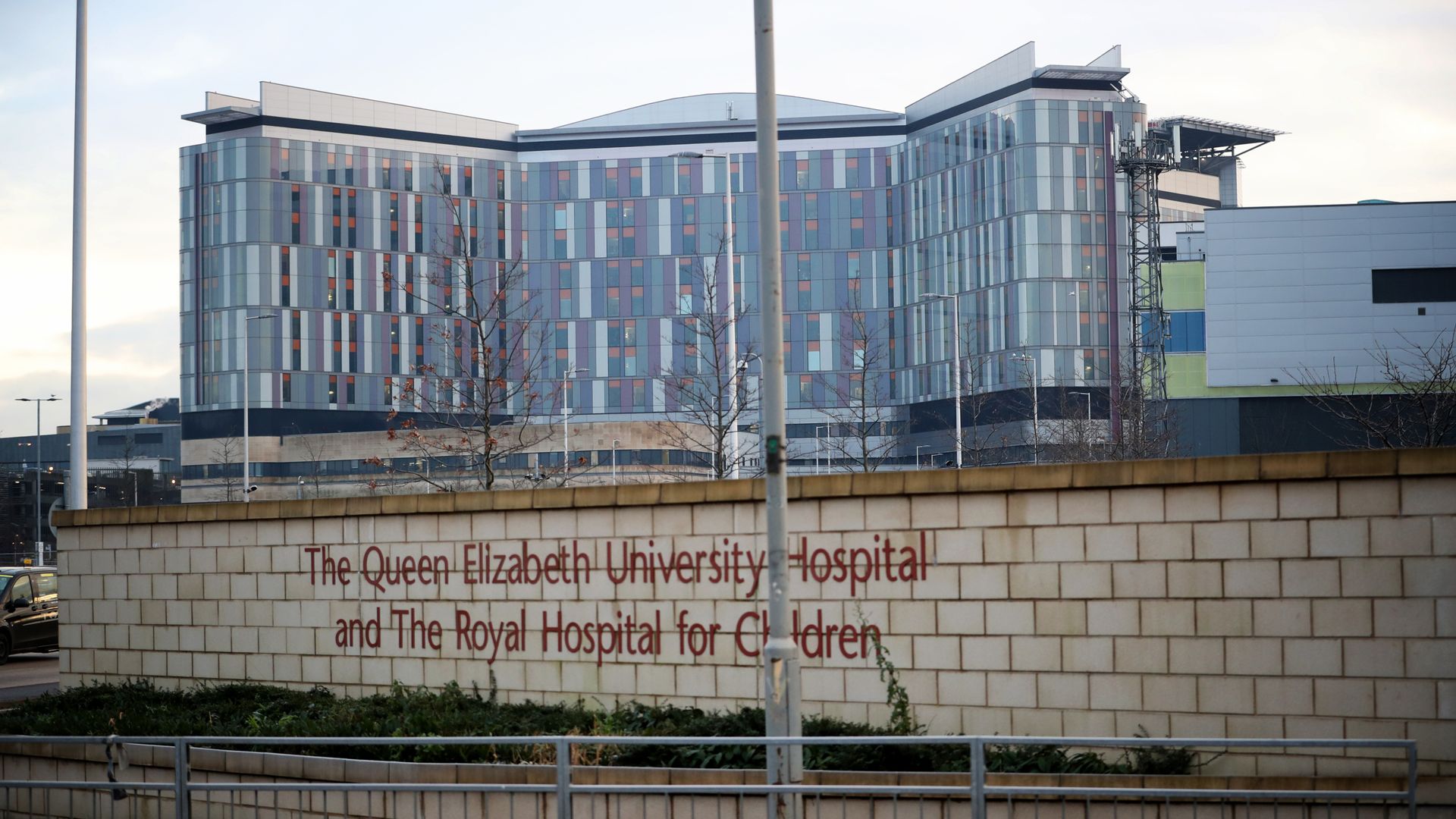
The outrage surrounding the Queen Elizabeth University Hospital (QEUH) or similar facilities dealing with Pseudomonas or Legionella outbreaks misses the point. We are obsessed with the "scandal" and blind to the physics of modern medicine. You are being sold a fairy tale where old infrastructure, complex microbiology, and cutting-edge oncology can coexist without friction. They can’t.
Stop asking why the water was dirty. Start asking how much you are willing to spend to pretend that hospitals aren't biological battlegrounds.
The Myth of Sterile Perfection
Every time a "dirty water" incident hits the press, the "People Also Ask" sections of search engines fill with a fundamentally flawed question: Is it safe to go to a hospital with a history of infection?
The honest, brutal answer is no. It is never "safe." A hospital is a concentrated collection of the most resilient pathogens on earth and the most vulnerable immune systems in existence. When you put them in the same building, you are managing a crisis, not maintaining a spa.
The lazy consensus suggests that these incidents are the result of someone forgetting to turn a valve or scrub a floor. In reality, we are fighting the laws of fluid dynamics and evolutionary biology. Biofilms in hospital piping are not a sign of "laziness." They are an inevitability of plumbing.
Bacteria like Cupriavidus pauculus—the culprit often cited in these specific Scottish ward scares—don’t care about your administrative inquiries. They thrive in the complex, low-nutrient environments of modern medical cooling and water systems. To eliminate them entirely, you would need to rebuild the infrastructure every five years.
Are you ready to pay that tax? I didn't think so.
The Infrastructure Debt Nobody Admits
I have sat in boardrooms where millions are "allocated" to infection control, and it is almost always a shell game. We spend on PR-friendly "deep cleans" while the actual copper and PVC veins of the building are rotting.
We are currently witnessing a global collision between 21st-century medicine and 20th-century engineering. You cannot run high-intensity chemotherapy—which essentially nukes a patient's white blood cell count to zero—in a building that relies on traditional municipal water logic.
The Mathematical Reality of Risk
If we want to reduce the risk of infection in a cancer ward from $0.5%$ to $0.05%$, the cost does not double. It increases by an order of magnitude.
- Level 1: Basic Filtration. Standard carbon and particulate filters. (Cheap, but useless against microscopic pathogens).
- Level 2: UV and Chemical Dosing. Constant monitoring of chlorine dioxide levels. (Expensive, maintenance-heavy, and corrosive to pipes).
- Level 3: Total Point-of-Use Sequestration. Changing every tap and showerhead daily. (Logistically impossible in a 1,000-bed facility).
When a hospital "admits patients" back into a ward after a scandal, they aren't claiming the risk is gone. They are claiming the risk is now statistically acceptable. The "scandal" is simply the moment the public realizes that "statistically acceptable" includes a non-zero number of deaths.
Stop Blaming the "System" and Start Blaming the Silence
The real failure isn't the presence of bacteria. It is the lack of transparency about the trade-offs.
Hospital administrators are terrified to say the following: "We have opened this ward because the risk of these patients dying from delayed cancer treatment is higher than the risk of them dying from the water supply."
Instead, they use the language of "robust new protocols" and "enhanced testing." This is a lie of omission. Protocols don't kill bacteria; chemicals and heat do. And those chemicals eventually eat the pipes, leading to leaks, which lead to mold, which leads to the next "scandal."
It is a closed loop of decay.
If you want a "clean" hospital, you have to accept a "closed" hospital. You cannot have 24/7 access, thousands of visitors bringing in outside biomes, and a perfectly controlled internal environment. You are choosing the convenience of a public institution over the sterility of a laboratory.
The Unconventional Advice for the Vulnerable
If you or a loved one are being admitted to a facility with a history of environmental issues, stop looking for "official" reassurances. They are legally mandated to give you those, which makes them worthless.
Instead, do the following:
- Demand the Biofilm Data. Ask for the most recent heterotrophic plate count (HPC) for that specific floor. If they won't give it to you, they don't have a handle on the environment.
- Bring Your Own Water. This sounds paranoid. It isn't. If the ward has a history of waterborne pathogens, do not use the tap for anything—not even brushing teeth.
- Pressure the Architects, Not the Nurses. The nurses are doing their best with a rigged deck. The fault lies with the PFI (Private Finance Initiative) deals that prioritized aesthetic "landmark" buildings over boring, redundant, accessible plumbing systems.
The QEUH was built as a monument to modern Scotland. It was designed to look good in drone shots. It wasn't designed for the reality that water sits in dead-legs of pipework when wards are at half-capacity, becoming a breeding ground for death.
The Brutal Truth of the Readmission
The competitor article treats the readmission of patients as a gamble. It isn't a gamble; it's a triage.
Cancer is a clock. It doesn't stop ticking because a pipe is dirty. Every day a specialist ward stays closed, the "excess deaths" from untreated oncology cases climb. At some point, the hospital has to flip the switch and accept that some patients might get an infection because the alternative is that all of them will see their tumors grow.
That is the "dirty" secret of healthcare. It is a constant calculation of which way you would rather die.
We love to point fingers at "scandal-hit" managers because it absolves us of the collective decision to underfund the boring parts of healthcare. We want the shiny MRI machines and the miracle drugs. We don't want to pay for the industrial-grade water treatment plants and the perpetual replacement of internal plumbing that true "safety" requires.
The water isn't the scandal. Our delusion that we can have world-class care on a bargain-bin infrastructure budget is the scandal.
Shutting down the ward was the easy part. Opening it back up is an act of cold, hard necessity. If that makes you uncomfortable, good. It should. Welcome to the reality of modern medicine, where the "clean" option was never on the menu.
If you're waiting for a guarantee of safety before you seek treatment, you aren't being cautious. You're being a statistic. Stop looking at the taps and start looking at the oncology charts.
Pick your poison.