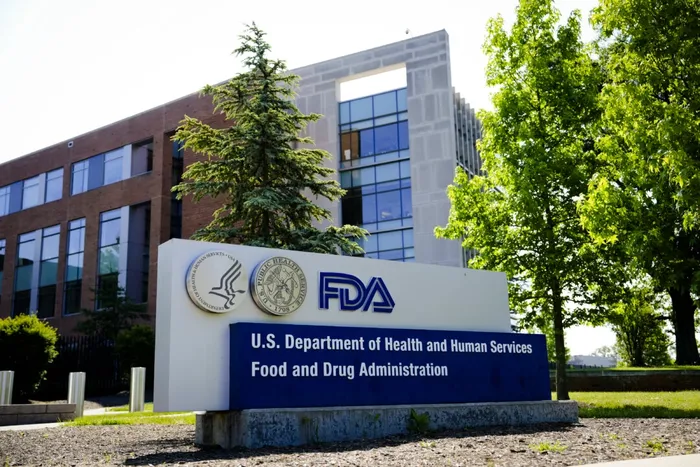
The fluorescent lights of a government office have a way of flattening time. They hum with a persistent, low-frequency anxiety that mirrors the high-stakes decisions made beneath them. For Marion Gruber, that hum was the soundtrack to thirty years of public service. But by the time the news broke that the FDA’s vaccine chief was walking out the door for the second time, the noise had become deafening.
Science is supposed to be a slow, methodical conversation with the unknown. It requires patience. It requires a certain kind of stubbornness to say "not yet" when the rest of the world is screaming "now." When the director of the Office of Vaccines Research and Review decides she can no longer stay in the room, it isn't just a personnel change. It is a signal flare.
The Weight of the "Not Yet"
Consider the immense pressure of holding the gate. In a hypothetical scenario, imagine a small town facing an approaching storm. The townspeople are terrified. They want a sea wall built immediately. A group of engineers says they have a new, experimental material that can be poured in hours. But the chief inspector knows that if the mixture isn't cured properly, the wall will crumble at the first touch of salt water. The town screams that a weak wall is better than no wall. The inspector knows a collapsing wall kills more people than the tide.
Marion Gruber was that inspector.
Her departure from the Food and Drug Administration (FDA) during the Trump administration’s final stretch—and her subsequent return and second exit—reads like a thriller where the monster isn't a creature, but the erosion of process. The first time she left, it was a quiet roar. Along with her deputy, Phil Krause, she stepped away amidst a whirlwind of tension regarding the authorization of COVID-19 boosters.
The White House was moving faster than the data.
To the average person standing in a pharmacy line, the nuances of a regulatory review feel like red tape. To a career scientist, those nuances are the only thing standing between public trust and a generational catastrophe. When the political arm of a government starts announcing rollout dates before the scientific arm has even finished reading the primary data, the friction creates heat. Eventually, that heat burns the house down.
The Return and the Residual Smoke
Why do they come back? Usually, it's a sense of duty that borders on the masochistic. Gruber returned to help steady the ship under a new administration, perhaps hoping the climate would return to the cool, sterile objectivity that vaccine science demands.
But the air had changed.
The FDA is an island that is increasingly being swallowed by the sea of partisan signaling. Whether it was the pressure to approve treatments that lacked rigorous backing or the accelerated timelines for pediatric doses, the "sentinels" found themselves constantly checking their watches against a clock they didn't set.
We often think of "The Government" as a monolith. A giant, faceless machine. In reality, it is a collection of people like Gruber—individuals who have spent decades learning the specific, boring, vital language of clinical trial protocols. They are the ones who look at a 1,000-page submission and find the one outlier that everyone else missed.
When these people leave, they take the institutional memory with them. You cannot replace thirty years of "knowing where the bodies are buried" with a fresh recruit, no matter how brilliant their CV. Each departure is a chip in the foundation.
The Invisible Stakes of a Vacant Chair
The cost of this exit isn't measured in a salary or a title. It is measured in the "Confidence Gap."
Every time a high-ranking scientist leaves under a cloud of controversy or perceived political meddling, a thousand skeptical social media posts are born. The public's relationship with medicine is built on a very fragile bridge of trust. We don't understand how the mRNA enters the cell. We don't understand the statistical significance of a Phase III trial. We trust the bridge because we believe the people who built it were allowed to use the best materials without being told to hurry up by a politician who has an election to win.
If the builder walks off the job, we start looking at the bridge with narrowed eyes.
The FDA’s vaccine office is responsible for more than just the headlines of the day. They handle the flu shots your grandmother gets every October. They handle the polio and measles vaccines that keep our schools from becoming wards. They are the silent guardians of the status quo.
When the leadership is in flux, the "silent" part of that guardianship becomes a problem. Uncertainty breeds delay. Delay in the world of vaccines can be measured in lives. Yet, the irony is that rushing can be just as deadly to the system's long-term health.
The Anatomy of a Second Goodbye
Leaving once is a statement. Leaving twice is a verdict.
The second exit suggests that the issues weren't just about one specific leader or one specific moment in time. It suggests a systemic fever that hasn't broken. If the environment remained one where the data was allowed to speak first and the press releases second, a career veteran like Gruber likely would have stayed to finish the job.
Instead, the vacancy at the top of the vaccine office became a symbol of a broader struggle: the fight for the soul of regulatory science.
The stakes are invisible until they are impossible to ignore. We don't notice the FDA when it's working perfectly. We only notice it when the pharmacy shelves are empty or when a product is recalled. But the work required to prevent those two things is grueling, thankless, and requires a level of autonomy that is currently under siege.
Imagine the conversations in the breakrooms. Imagine the junior researchers looking at an empty office and wondering if their work will ever be judged solely on its merit again. That is how a culture of excellence evaporates. It doesn't happen with a bang; it happens with a series of resignations.
The Silent Corridor
The hallway leading to the director’s office in the Office of Vaccines Research and Review is likely quiet today. The hum of the lights remains. The stacks of data continue to pile up. Somewhere, a new variant is mutating, and a new clinical trial is being designed.
The work doesn't stop, but the perspective has shifted.
We are living through an era where the experts are tired. They are tired of being the villains in someone’s political narrative and the scapegoats for someone else’s logistical failure. Gruber’s departure is a reminder that even the most dedicated public servants have a breaking point—a line where the desire to do the work is outweighed by the impossibility of doing it right.
The gate is still there. The wall still needs to be built. But the person who knew exactly how long the concrete needed to dry has just handed over her badge and walked out into the sunlight.
We are left watching the tide come in, wondering if the person who takes her place will have the courage to say "not yet" when the water starts to lap at our feet.