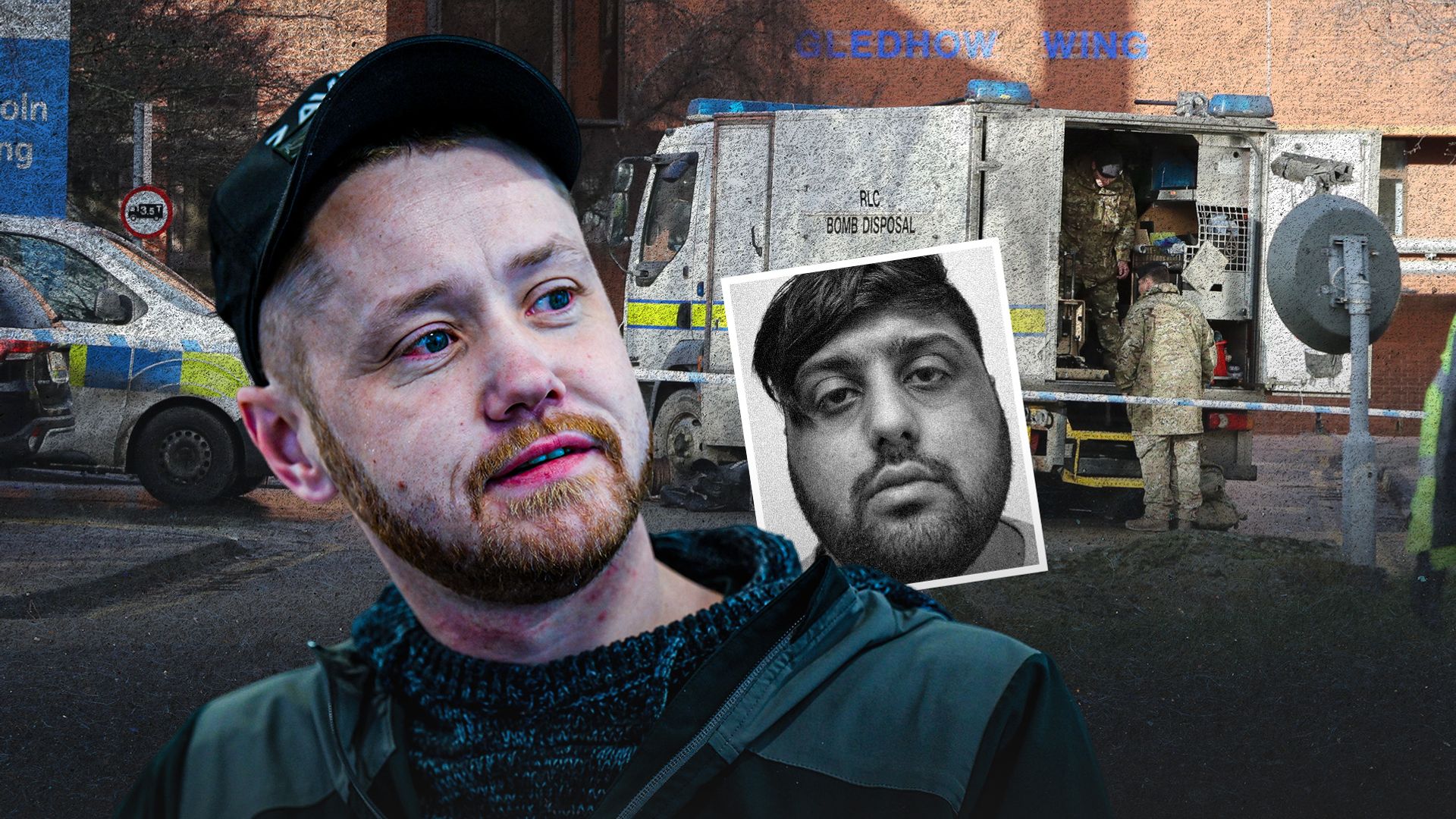
Luca Pascot didn't expect his craving for a cigarette to save hundreds of lives. He was just a patient at Liverpool Women’s Hospital, bored and looking for a quick escape from the clinical white walls. It was Remembrance Sunday, 2021. The atmosphere in the UK was already tense. When a taxi pulled up to the hospital entrance and suddenly exploded into a fireball, the world slowed down. Most people run away from fire. Luca ran toward it.
This wasn't a movie set. It was a cold November morning in Northern Ireland’s neighboring England, and a man named Emad Al Swealmeen had just detonated a homemade pressure-cooker bomb in the backseat of David Perry’s taxi. The blast was meant to kill dozens, perhaps hundreds, of mothers, newborns, and medical staff. It failed because of a stroke of luck and the split-second bravery of a man who just happened to be in the right place at the right time.
Why the Liverpool Hospital Bombing Could Have Been Much Worse
The timing of the attack was surgical. Al Swealmeen chose 10:59 AM on Remembrance Sunday. This is the exact moment the United Kingdom observes a two-minute silence to honor its war dead. Large crowds were gathered at the nearby Liverpool Cathedral. If the taxi had reached the cathedral, the body count would've been catastrophic. Instead, the bomb went off early, right at the hospital doors.
Security experts later found that the device contained improvised explosives and ball bearings. These weren't just for show. Ball bearings are designed to act as shrapnel, tearing through human flesh and bone at high velocity. The intent was mass murder, plain and simple. When the device went off, the driver, David Perry, miraculously scrambled out of the smoking wreck.
That’s when Luca Pascot stepped in. While others stood frozen in shock, Luca and another bystander rushed to the car. They didn't know if there was a second device. They didn't know if the car would fully go up in a secondary explosion. They just saw a man in trouble and a situation that needed a lead.
The Reality of Split Second Heroism
We like to think we'd all be heroes in a crisis. We wouldn't. Most of us succumb to the "bystander effect," waiting for someone else to tell us what to do. Luca didn't wait. He helped pull the driver away and stayed on the scene while the vehicle turned into a skeletal remain of charred metal.
The investigation by Counter Terrorism Policing North West eventually revealed that Al Swealmeen had been planning this for months. He’d rented a "bomb factory" flat in Sefton Park. He’d bought the components online under various aliases. He was a failed asylum seeker who had supposedly converted to Christianity, a move many now believe was a ruse to avoid deportation.
What the headlines often miss is the mental toll on those who intervene. Luca wasn't a trained soldier. He was a guy in a hospital gown. Dealing with the aftermath of seeing a human being—even a terrorist—vaporized in front of you isn't something you just "get over" with a firm handshake and a medal. It sticks.
The Problem with Soft Targets
Hospitals are "soft targets." They're designed for accessibility, not defense. You can't turn a maternity ward into a fortress without ruining its ability to function. This creates a terrifying vulnerability that Al Swealmeen exploited.
- Public Access: High foot traffic makes it easy to blend in.
- Minimal Security: Most UK hospitals rely on basic CCTV and a few guards.
- Maximum Impact: Attacking a place of birth and healing carries a psychological weight that hitting a government building doesn't.
The bravery shown by the public that day forced a national conversation about how we protect these spaces. Since 2021, UK security protocols for public buildings have tightened, but the reality remains that a determined individual with a backpack or a taxi can still cause chaos.
Beyond the Smoke and Mirrors of the Investigation
The fallout of the bombing was messy. It sparked a massive debate about the UK's asylum system. It turned out Al Swealmeen had his asylum claim rejected years prior. He’d stayed in the country by navigating the legal loopholes of the appeals process. While politicians argued over border policy, the people of Liverpool focused on the man who jumped out of his skin to help.
The driver, David Perry, was called the "luckiest man in Britain." But luck only goes so far. If Luca hadn't been there, if the bomb had been constructed with slightly more technical precision, or if the taxi had arrived three minutes earlier, the narrative would be a funeral march instead of a story of survival.
Lessons from the Liverpool Bombing
You don't need a cape to change the outcome of a tragedy. Sometimes you just need to be observant. The "See It, Say It, Sorted" campaign in the UK gets mocked a lot, but in this instance, public awareness was the only thing standing between a botched attempt and a successful massacre.
If you ever find yourself in a situation involving a vehicle fire or a suspected blast, remember the basics of emergency response. Don't crowd the scene. If you aren't actively pulling someone out, get back. Secondary devices are a common tactic used by terrorists to kill first responders and "heroic" bystanders. Luca took a massive risk that happened to pay off, but the danger was absolute.
Don't wait for a crisis to understand your surroundings. Take note of exits in public buildings. Watch for erratic behavior in high-traffic areas. Being "brave" starts with being aware. Check your local government's emergency preparedness guides for "Run, Hide, Tell" protocols. It sounds cynical, but in 2026, it's just being practical. Stay sharp.