A frozen thumb. That is often the silent price of the images we scroll past in three seconds while waiting for a latte.
Somewhere in the High Arctic, a photographer has been lying face-down in the snow for six hours. They aren't moving because the slightest crunch of ice would shatter the precarious trust of a hunting fox. Their joints are screaming. Their breath is a crystallizing veil. They are waiting for a fraction of a second where light, biology, and luck collide.
We call this "Wildlife Photographer of the Year." But the title is a bit of a lie. It isn't just about the photographer. It is about a silent pact between the observer and the observed, a moment where the human ego vanishes and the raw pulse of the planet takes over. Now, that moment is being handed to you. You aren't just looking at pictures; you are being asked to decide which of these stolen fragments of time carries the most weight.
The Weight of a Single Frame
Think about your own phone’s camera roll. It’s likely a graveyard of blurry sunsets and half-eaten lunches. We treat images as disposable data. But the twenty-five images selected for the People’s Choice Award are the opposite of disposable. They are the survivors. Out of nearly 50,000 entries from 95 countries, these few remain.
Take, for example, the hypothetical story of a "perfectionist" entrant. Let’s call him Elias. Elias doesn’t just go to the woods; he haunts them. He knows the specific branch where a certain owl lands at 5:14 PM. He knows the wind direction. He has failed 400 times to get the shot. On the 401st attempt, the owl looks directly into the glass. In that millisecond, the bird isn't an object. It’s a consciousness.
When you vote, you are validating that 401st attempt. You are acknowledging the frostbite, the expensive broken gear, and the thousands of miles traveled to bring a piece of the wilderness back to a digital screen.
Why We Can’t Look Away
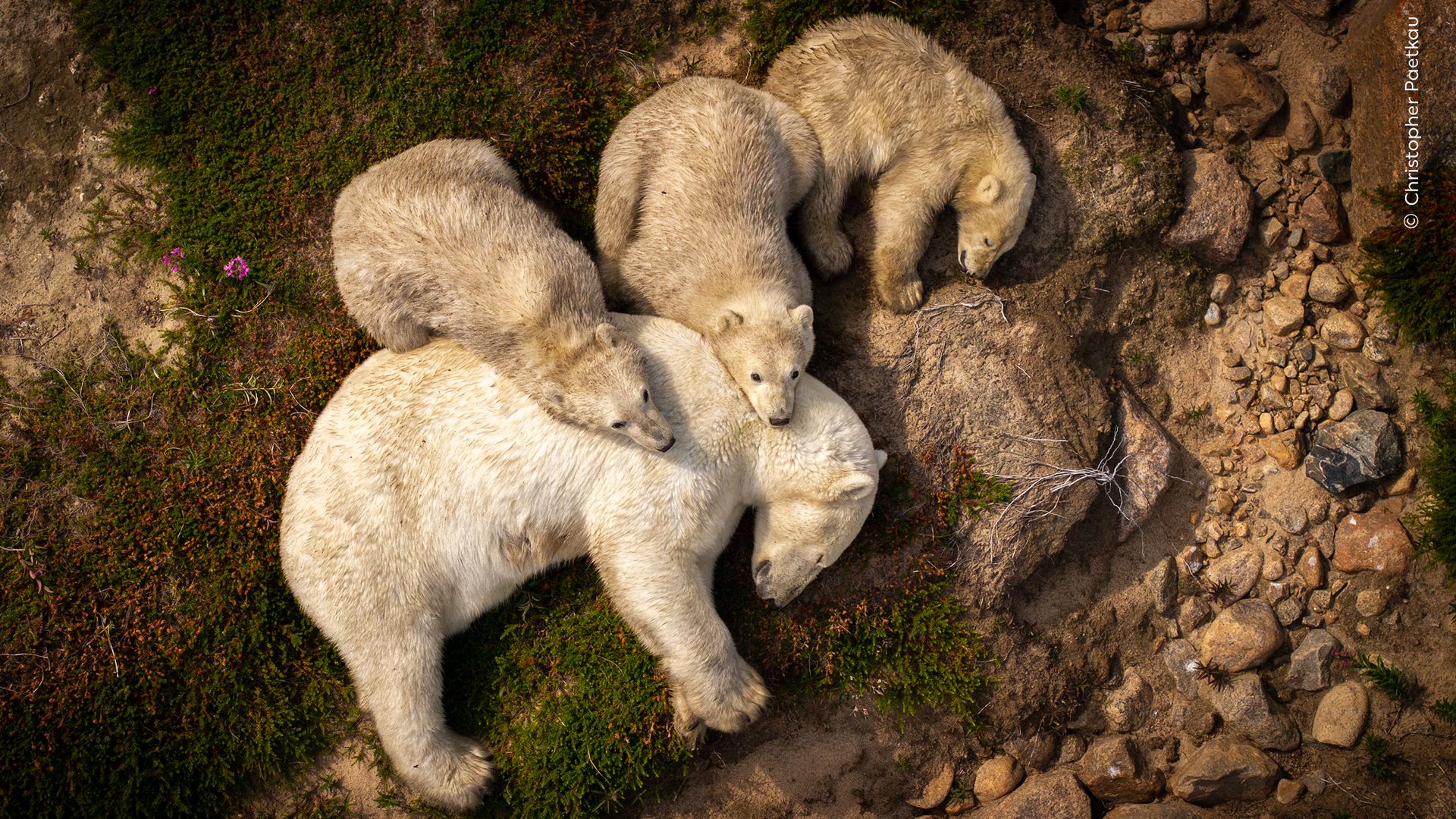
There is a specific kind of ache that comes from seeing a polar bear sleeping in a bed carved into an iceberg, or a pair of lions nuzzling in the golden hour. It’s a mix of awe and a very modern, very sharp anxiety. We know, deep down, that these scenes are becoming ghosts.
We are living through a period where the "wild" is shrinking. These photographs serve as a biological ledger. They document what we still have, which makes the act of choosing a favorite feel strangely heavy. Is the "best" photo the one that shows the brutal beauty of a predator? Or is it the one that shows the heartbreaking encroachment of the human world—a macaque clutching a discarded plastic bottle, perhaps?
The People’s Choice Award is a psychological mirror. It tells the Natural History Museum—and the world—what we actually value. Do we want to be comforted by the majesty of nature, or do we want to be confronted by our impact on it?
The Mechanics of the Miracle
To understand the scale of these photos, we have to talk about the physics of the impossible. A dragonfly in flight isn't just a bug; it’s a blur of wings moving at thirty beats per second. To freeze that motion requires a shutter speed so fast it’s almost incomprehensible to the human eye.
$$S = \frac{1}{v \cdot D}$$
If $S$ is the shutter speed needed to freeze the subject, $v$ is the velocity of the animal, and $D$ is the distance to the sensor, the margin for error is non-existent. If the photographer is off by a millimeter, the eyes are soft. If the sun ducks behind a cloud, the grain ruins the depth.
These images are the result of a thousand variables lining up in a row. It is a mathematical miracle disguised as art. When you look at the short-list, try to find the "seams." Look for the ripple in the water that shouldn't be there, or the way the light catches the moisture on a leopard’s whisker. You realize quickly that these aren't just "snaps." They are long-form poems written in light.
Beyond the Gallery Walls
The impact of this competition ripples far beyond a hallway in London. These images become the face of conservation movements. A single photograph of a displaced orangutan can do more to shift public policy than a 400-page white paper on deforestation.
Visual storytelling is our oldest language. Long before we had alphabets, we had charcoal drawings of bison on cave walls. We are hardwired to respond to the gaze of another living creature. That is the "invisible stake" here. If we stop looking, if we stop being moved, the protection for these creatures evaporates.
The voting process isn't a beauty pageant. It’s a census of our empathy.
The Choice in Your Hand
The Natural History Museum has put the power in the public's hands because the public is the ultimate stakeholder in the planet's future. You have until the beginning of February to cast your vote.
When you enter the digital gallery, don't just look for the "prettiest" colors. Look for the story that makes you hold your breath. Look for the image that makes you feel small—not in a way that diminishes you, but in a way that reminds you that you are part of something much older and more complex than your daily commute.
One of these images will be displayed in the flagship exhibition until the end of June. It will be stared at by hundreds of thousands of people. It will inspire children to become biologists. It will remind cynical adults that there is still magic left in the corners of the map.
The photographer did the hard part. They sat in the mud. They braved the heat. They waited for the ghost to appear. All you have to do is look, really look, and decide which story deserves to be told the loudest.
The ice is melting, the wings are beating, and the shutter has already clicked. The rest is up to you.