The global shipping industry is currently breathing a collective, misguided sigh of relief. Headlines are screaming about Iran’s "generosity" in granting safe passage through the Strait of Hormuz to a select group of "friendly" nations—India, China, Russia, Iraq, and Pakistan. The consensus is that diplomacy won, the energy taps are back on for the lucky few, and the rest of the world just has to wait for their turn in the "friendly" column.
This is a lazy, dangerous misreading of what is actually happening.
I have spent decades watching these maritime chokepoints, and I have seen the same pattern repeat: a regional power claims to offer a "solution" to a crisis they created. But what we are seeing in the Strait of Hormuz in March 2026 is not a diplomatic victory. It is the formalization of a maritime protection racket. By "permitting" specific countries to pass, Iran isn't upholding freedom of navigation—they are effectively ending it.
The Fiction of the "Safe Corridor"
The current narrative suggests that if your flag is on the list, your ship is safe. That is a fantasy. In the last 48 hours alone, IRGC naval units have turned back Chinese-owned COSCO vessels despite China being at the very top of the "friendly" list. The IRGC’s own social media channels have directly contradicted the Iranian Foreign Ministry, stating the Strait remains closed to any traffic that doesn't meet shifting, opaque security requirements.
The "friendly list" is a psychological operation, not a maritime policy. It is designed to fracture the international coalition by tempting major powers like India and China to break ranks in exchange for temporary energy security.
The Toll Road Trap
What the "lazy consensus" missed is the proposed "toll." Reports from Tehran indicate a draft bill is moving through parliament to charge vessels for the "security" provided by Iran. Let's call this what it is: a ransom.
When a sovereign nation claims the right to charge for passage through an international strait, it is a direct violation of the United Nations Convention on the Law of the Sea (UNCLOS).
- The Sovereignty Scam: Iran claims "complete control" over the waterway. Under international law, the Strait of Hormuz is an international strait where the right of transit passage applies. You cannot "permit" what is already a right.
- The "Non-Hostile" Moving Target: Iran defines "hostile" as any vessel associated with the U.S., Israel, or their "supporters." That definition is broad enough to include any ship that has ever docked in a NATO port or carries a single component of Western technology.
- The Intermediary Tax: To get through, operators are being told to contact "intermediaries" with ties to the IRGC. This isn't a shipping fee; it’s a direct injection of cash into the very military apparatus currently mining the waters.
Why the "Friendly" List Will Fail Its Members
If you are a CEO at a major shipping line in Mumbai or Shanghai, you might think you’ve won the lottery. You haven't. You’ve just become a hostage with better perks.
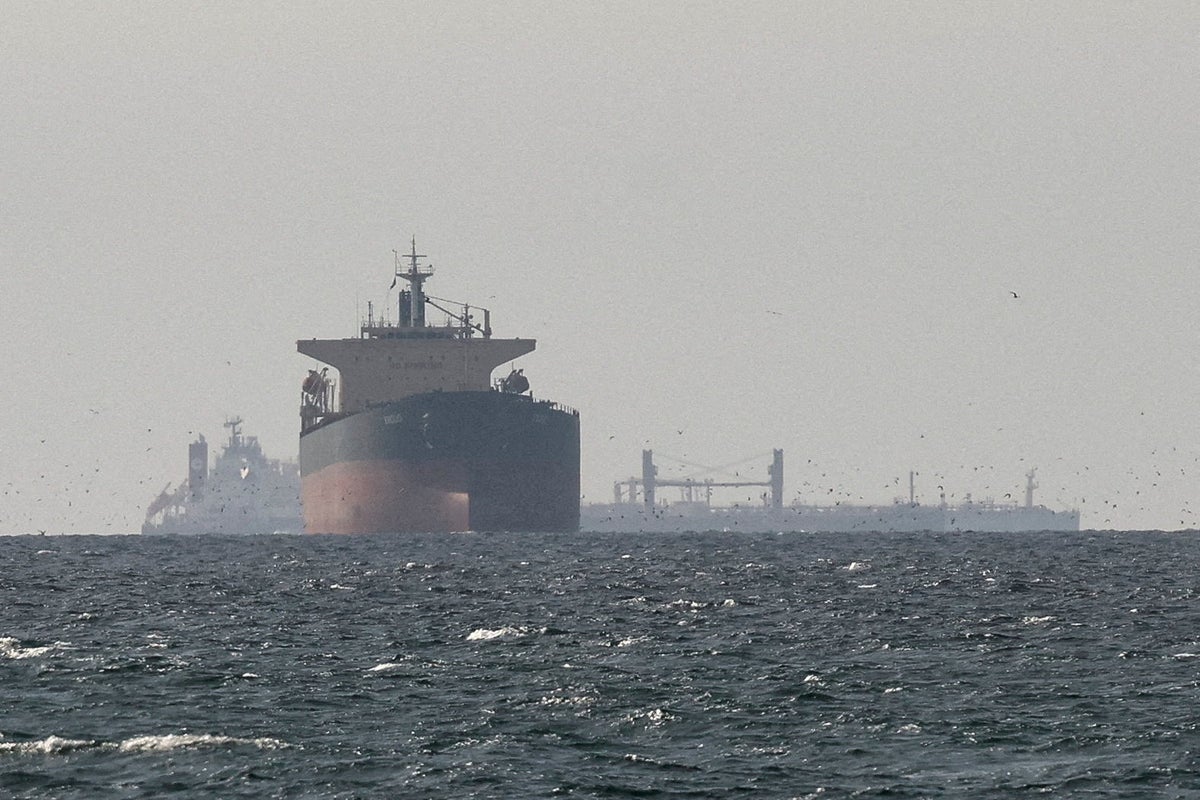
Consider the "successful" passage of the Jag Vasant or Pine Gas this week. Those ships didn't just sail through; they moved through a war zone under the grace of a regime that is currently being threatened with airstrikes by the Trump administration.
The moment a "friendly" ship enters that corridor, it becomes a human shield. If the U.S. or Israel decides to strike Iranian coastal assets, those "permitted" vessels are in the direct line of fire. Furthermore, the insurance industry isn't buying the "friendly" label. War risk premiums for the Strait haven't dropped just because a list was published. In many cases, they’ve spiked because the "permitted" route is now a predictable target for any actor looking to escalate the conflict.
The Real Data: Dependence is a Death Sentence
The hard truth is that Iran is just as trapped as the shipping industry. Despite years of trying to build workarounds like the Jask terminal, 90% of Iranian oil still flows through the Kharg Island hub. They cannot afford a total closure any more than the world can.
But they are betting that the world’s "dependence" on this single 21-mile-wide strip of water makes us weak. They are right, as long as we keep treating the "friendly list" as a legitimate diplomatic breakthrough rather than a tactical feint.
- The Iraq Paradox: Iraq is on the "friendly" list, yet its Basra production has cratered by 70% because it can't get the volume out through the very strait it is supposedly "permitted" to use.
- The India Delusion: New Delhi thinks its "special relationship" is a shield. It’s not. It’s a lever that Tehran will pull every time it needs a diplomatic favor from the Modi government.
Stop Asking "Who is on the List?"
The world is asking the wrong question. It’s not about who Iran allows through; it’s about why we’ve allowed a single actor to hold the global economy's jugular.
Instead of celebrating a spot on the "friendly" list, the industry needs to pivot to a "post-Hormuz" reality. That means accelerating the GCC pipelines to the Arabian Sea, doubling down on African LNG, and accepting that the "cheap" energy that came through the Gulf carried a hidden cost of geopolitical blackmail that has finally come due.
The "friendly" list is a ghost. It’s a promise made by a Foreign Ministry that doesn't control its own navy, offered to nations that are currently paying three times the normal rate for insurance, to transit a waterway that could become a graveyard of steel at any moment.
If your ship is on that list, you aren't "safe." You're just next.
Would you like me to analyze the specific insurance implications for "friendly" flagged vessels or look into the viability of the current pipeline workarounds?