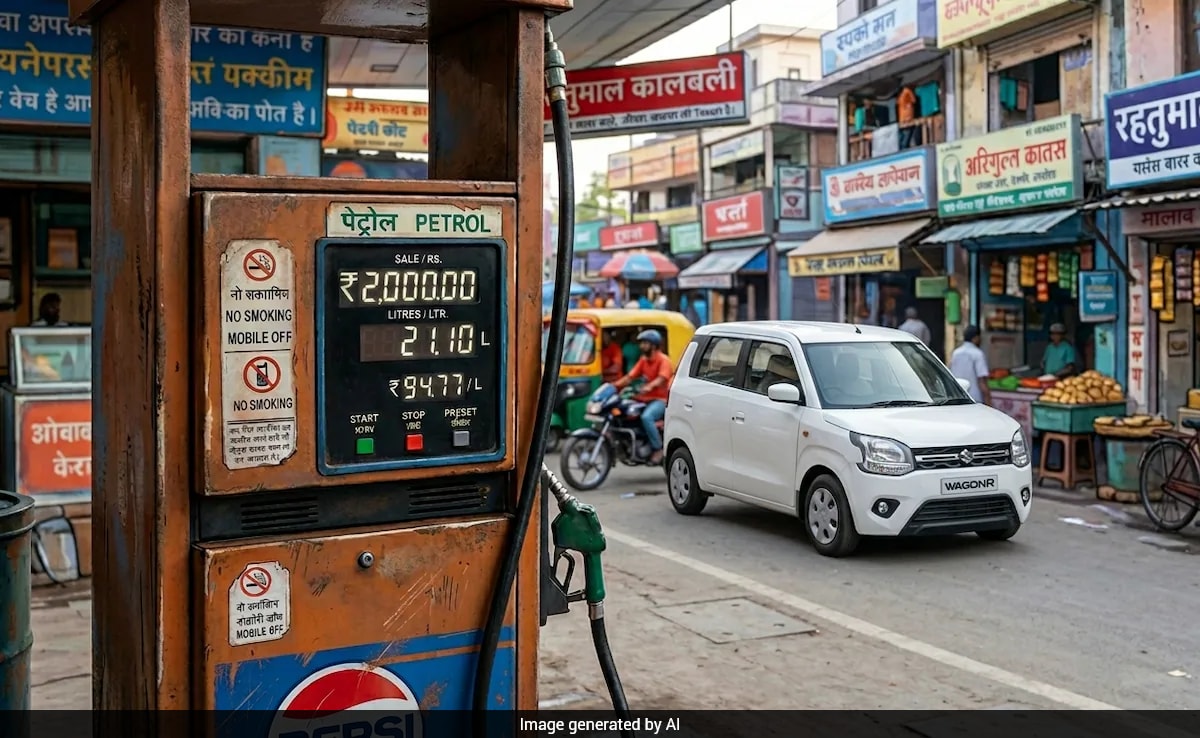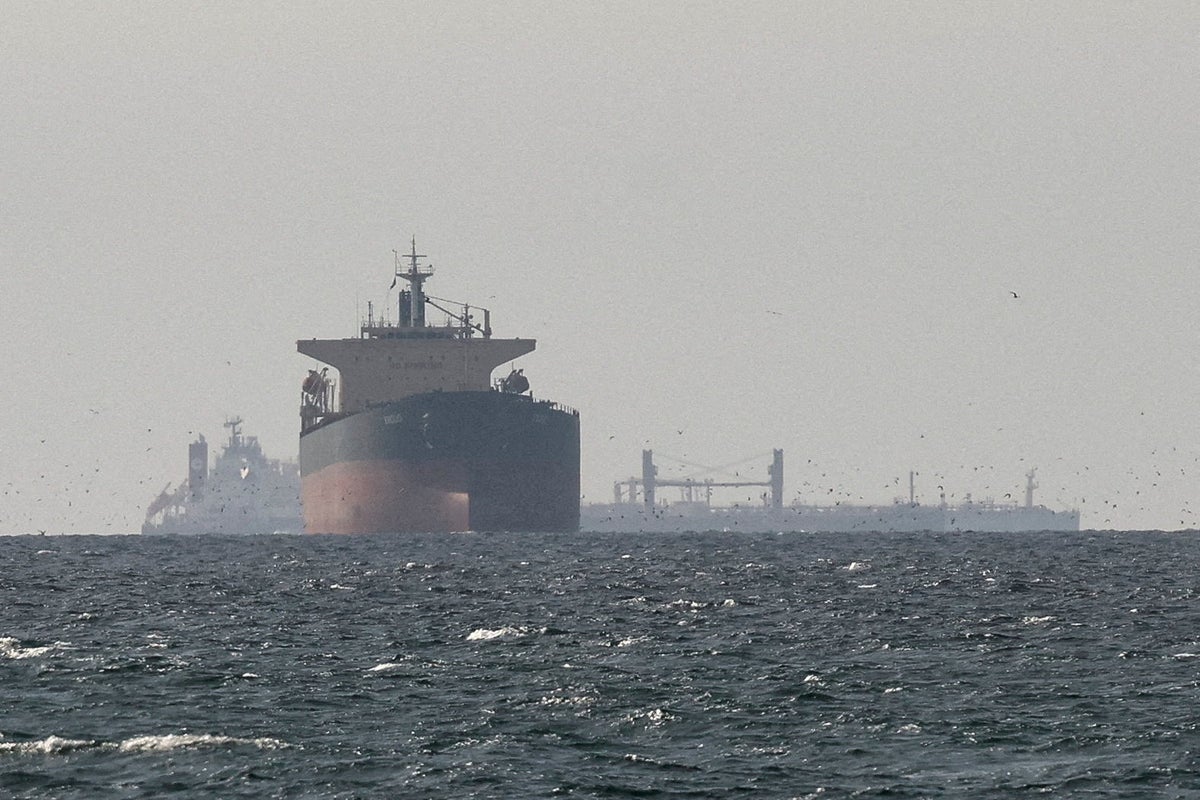
The closure of the Strait of Hormuz by Iranian authorities represents the activation of the single most significant single-point-of-failure in the global energy supply chain. While equity markets react to the immediate $110 per barrel price tag, the real disruption lies in the fundamental breakdown of maritime logistics and the sudden extraction of approximately 21 million barrels of oil per day (bpd) from global circulation. This represents roughly 21% of total global petroleum liquids consumption. When this volume is removed, the market shifts from a state of manageable tightness to a state of absolute physical deficit.
The Anatomy of the Hormuz Chokepoint
The Strait of Hormuz is not merely a geographic corridor; it is a structural bottleneck with no viable redundant capacity. To understand the gravity of a closure, one must deconstruct the physics of the passage and the secondary infrastructure.
- The Navigation Constraints: The strait is 21 miles wide at its narrowest, but the shipping lanes consist of two-mile-wide channels for inbound and outbound traffic, separated by a two-mile buffer zone. These lanes lie within Omani and Iranian territorial waters.
- The Volume Concentration: Beyond crude oil, the strait facilitates the passage of roughly 20% of the world's liquefied natural gas (LNG), primarily from Qatar. A closure stops not just transportation fuel, but the primary heating and industrial power source for much of East Asia and Europe.
- The Redundancy Deficit: The East-West Pipeline in Saudi Arabia and the ADCOP pipeline in the UAE offer theoretical bypasses. However, their combined spare capacity is less than 6.5 million bpd. Even under optimal operating conditions, these pipelines can only mitigate 30% of the lost volume, leaving a net deficit of 14.5 million bpd.
The Pricing Function of Geopolitical Premium
Oil pricing at $110 per barrel is a reflection of three distinct layers of risk that have been priced into the Brent and WTI benchmarks simultaneously.
The Physical Scarcity Layer
This is the baseline calculation of supply and demand. In a 100 million bpd global market, a 15% net reduction in supply triggers an exponential rather than linear price response. Because oil demand is highly inelastic in the short term—refineries cannot simply stop processing and freight ships cannot switch fuels—the price must rise to the "destruction point" where consumers are forced to cease activity.
The Risk and Insurance Layer
A closure of the strait involves the declaration of "War Risk" by maritime insurers. This leads to the immediate suspension of standard hull and machinery coverage for any vessel in the Persian Gulf. Freight rates (Worldscale) spike as shipowners demand premiums to compensate for the potential loss of the asset. This "logistic tax" is passed directly to the barrel price, often adding $5 to $10 per barrel before the oil even leaves the terminal.
The Strategic Reserve Anticipation
Market participants are currently pricing in the expected reaction of the International Energy Agency (IEA). While the release of Strategic Petroleum Reserves (SPR) provides a psychological buffer, the SPR is a finite tool. If the market perceives the closure as a long-term blockade rather than a short-term skirmish, the "floor" for prices rises because the buffer is being depleted without a clear replenishment timeline.
Strategic Consequences of Energy Asymmetry
The closure creates an asymmetrical impact across global economies, dictated by their proximity to the strait and their energy mix.
The East Asian Vulnerability: China, India, Japan, and South Korea are the primary destinations for Hormuz-transiting crude. For these nations, the closure is not just a price shock; it is a threat to industrial continuity. China’s "String of Pearls" strategy and its investments in the Gwadar port are long-term attempts to solve this, but currently, no infrastructure exists to bypass the strait for the volumes required to sustain Chinese manufacturing.
The European Replacement Crisis: Europe, already reeling from the loss of Russian pipeline gas, relies on Qatari LNG to stabilize its grid. A Hormuz closure forces Europe into a direct bidding war with Japan and South Korea for the remaining global LNG cargoes (primarily from the US and Australia). This creates a global price floor for gas that renders heavy industry in Germany and Northern Italy economically unviable.
The Logistic Cascading Effect
The disruption extends beyond the barrel of oil. When the strait closes, the global tanker fleet becomes maldistributed.
- Vessel Stranding: Hundreds of Very Large Crude Carriers (VLCCs) and Suezmax vessels are trapped inside the Gulf or waiting outside in the Gulf of Oman. This effectively removes a significant portion of the world's shipping capacity from the market.
- Refinery Imbalance: Refineries are calibrated for specific grades of crude (Saudi Light, Iraqi Basrah Medium). Substituting these with US shale (Light Sweet) or North Sea grades requires complex reconfiguration and results in lower yields of middle distillates like diesel and jet fuel.
The relationship between the crude price and the "crack spread"—the difference between the price of crude and the refined products—widens. Even if crude sits at $110, the price of diesel may behave as if crude were at $150 because of the inefficiency of the substitution process.
Strategic Logic of the Iranian Position
The Iranian decision to close the strait is a move of "Calculated Desperation." By leveraging its geographic position, Iran attempts to equalize the economic pressure of international sanctions. The strategic goal is to force a choice upon the West: accept a global recession or grant sanctions relief.
However, the efficacy of this strategy is limited by the "Escalation Ladder." A total blockade is a casus belli (act of war). The moment the US Fifth Fleet initiates minesweeping or escort operations, the friction shifts from economic to kinetic. Historically, markets price in the "fear" of this transition. The current $110 price reflects the fear of the blockade, but it does not yet reflect the reality of an active naval conflict, which would likely push prices toward $150 or higher.
Quantitative Forecasting of the Supply Gap
To project the impact, we must apply a pressure test to the global supply chain:
- Global Demand: 102 million bpd.
- Lost via Hormuz: 21 million bpd.
- Bypass Capacity: 6 million bpd.
- Global Spare Capacity (Non-Gulf): 2 million bpd (primarily US, Brazil, Guyana).
- Net Daily Deficit: 13 million bpd.
$$Deficit% = \frac{13}{102} \approx 12.7%$$
A 12.7% global deficit is unprecedented in the post-WWII era. For comparison, the 1973 Oil Embargo involved a 5% disruption to global supply. The current situation is more than double that magnitude in a world far more interconnected by "just-in-time" supply chains.
The Strategic Play for Industrial Operators
For organizations exposed to energy volatility, the focus must shift from "price hedging" to "physical security." Financial hedges (futures and options) protect the balance sheet but do not guarantee delivery of the physical molecule.
- Inventory Front-Loading: Organizations must maximize physical storage of distillates immediately. The current $110 price is cheap compared to the price of a full operational shutdown.
- Contractual Force Majeure Review: Review all supply contracts for "Point of Origin" clauses. If your supplier is reliant on Gulf crudes, the "Force Majeure" risk is 100%. Diversification to West African or Atlantic Basin crudes must happen before the spot market for those grades is bid into the stratosphere.
- Efficiency Ratios: Implement an immediate 10% reduction in energy consumption across non-critical operations. This is not about cost-cutting; it is about extending the "days-on-hand" of current fuel reserves.
The situation in the Strait of Hormuz is a reminder that the global economy is built on a foundation of fragile geography. The $110 price is a warning; the real crisis is the impending collapse of physical liquidity in the world's most vital commodity market.
Would you like me to analyze the specific impact of this closure on the European LNG spot market and the resulting "dark spreads" for power generation?