Donald Trump claims he is talking to Iran. Tehran says the United States is merely talking to itself. This rhetorical stalemate hides a much grimmer reality of a Middle East balanced on a knife-edge where traditional diplomacy has been replaced by a series of performative gestures and tactical delays. While the former president signals a willingness to engage in high-stakes deal-making, the Iranian military establishment has dismissed these overtures as a domestic political theater designed for an American audience rather than a serious diplomatic channel. The disconnect is not just about policy; it is about a fundamental breakdown in the language of international relations.
The Mirage of Direct Communication
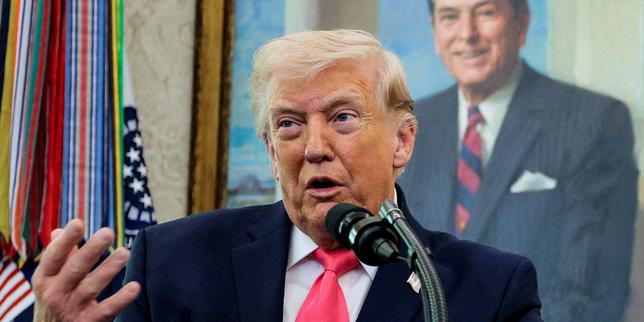
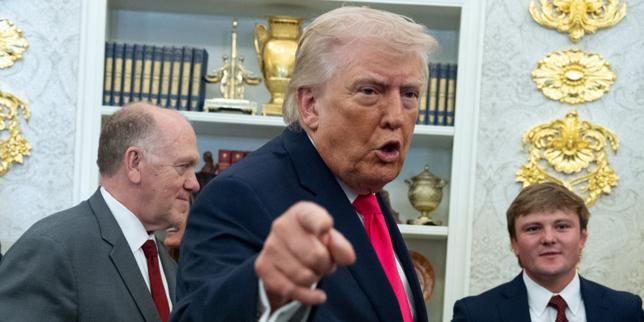
Trump has long prided himself on the "art of the deal," a philosophy that suggests any conflict can be resolved if the right personalities sit across from one another. In his recent statements regarding the Middle East, he has leaned heavily into the narrative that his personal involvement is the missing ingredient in de-escalating the regional war. He suggests that channels are open, that discussions are happening, and that a grand bargain is within reach.
However, the Iranian response is more than just a typical diplomatic snub. When a spokesperson for the Iranian armed forces claims the U.S. is "negotiating with themselves," they are pointing to a structural failure in American foreign policy. Washington is currently trapped in a cycle where it defines both the terms of the conflict and the supposed terms of the peace without any meaningful buy-in from the other side. You cannot have a negotiation when one party refuses to acknowledge the legitimacy of the other's platform.
The current administration and its predecessors have relied on a mixture of crippling sanctions and military posturing. Trump’s claim to be "in discussion" suggests a backdoor channel exists, but the Iranian leadership knows that any public admission of such talks would be political suicide at home. The result is a vacuum. Into this vacuum, Trump pours his characteristic optimism, while the Iranian Revolutionary Guard Corps (IRGC) pours its concrete.
Why the Iranian Military Controls the Narrative
In most nations, the foreign ministry handles the talking. In Iran, the military speaks the loudest when it comes to the United States. This distinction is vital for anyone trying to analyze the situation. The IRGC does not view the U.S. through the lens of a potential trade partner or a diplomatic peer; it views the U.S. as a permanent existential threat that only understands the language of force.
When the Iranian military dismisses Trump’s claims, they are signaling to their regional proxies—Hezbollah, the Houthis, and various militias in Iraq—that the central command has not blinked. It is a message of internal and external stability. If the IRGC admits to talks, the "Axis of Resistance" begins to question the resolve of its benefactor. By calling the U.S. "delusional," they maintain the ideological purity necessary to keep their coalition together.
The Mechanics of the Deadlock
To understand why these negotiations are failing, we have to look at the specific demands. The U.S. wants a total cessation of Iran's nuclear program and an end to its regional influence. Iran wants the lifting of all sanctions and a guarantee that the U.S. will never again pull out of a signed agreement. These are mutually exclusive starting points.
- Sanctions as a blunt instrument: Years of "maximum pressure" have damaged the Iranian economy but have failed to change its regional behavior.
- The ghost of the JCPOA: The 2018 withdrawal from the nuclear deal remains the single biggest barrier to trust.
- Proxy warfare: The conflict is no longer just between two nations; it involves a dozen different actors with their own agendas.
The U.S. is essentially trying to buy a house from someone who has already burned the contract and moved into a bunker. Trump’s insistence that he can simply "fix it" ignores the decades of scar tissue that now define the relationship.
The Danger of Signal Noise
The most dangerous aspect of this rhetorical back-and-forth is the potential for miscalculation. If Trump believes he is making progress and Iran believes the U.S. is merely posturing, a sudden military escalation could catch both sides off guard. We have seen this before. When communication channels are reduced to public insults and vague claims of secret talks, the risk of a "hot" war increases.
The Iranian military's dismissal of American diplomacy serves a second purpose. It prepares their population for continued hardship. By framing the U.S. as an irrational actor that talks to its own shadow, the regime justifies the ongoing economic suffering of its citizens as a necessary sacrifice in the face of a madman. It is a cynical but effective strategy for maintaining power during a crisis.
The Hard Truth About Regional Stability
The reality of the Middle East in 2026 is that the old rules of engagement are dead. The "shuttle diplomacy" of the 20th century has been replaced by social media posts and televised press conferences. Trump’s strategy is built on the idea that the U.S. remains the sole arbiter of global peace. Iran’s strategy is built on the idea that the U.S. is a declining power that can be outlasted.
Neither side is entirely correct, but the Iranian military has a clearer understanding of the current friction. They are not looking for a deal that returns them to the global community under American terms. They are looking for a world where they can operate without American interference. Until Washington realizes that Iran isn't just "playing hard to get" but is actually moving in a different direction entirely, the U.S. will continue to negotiate with itself.
The noise coming out of Florida and Tehran is just that—noise. The real movement is happening in the drone factories of Isfahan and the shipping lanes of the Red Sea. While politicians argue over who is talking to whom, the actual gears of war are turning without any sign of slowing down.
Stop looking at the headlines about "discussions" and start looking at the deployment maps. That is where the real story is written. If you want to see where this is going, ignore what they say in the briefings and watch what they do in the desert. The talking is over, even if one side hasn't realized it yet.