The United States has spent the last two decades trying to pivot to Asia, yet it keeps getting sucked back into the Middle East. It's a cycle that won't break. If a full-scale, prolonged war with Iran actually happens, the "American Century" officially ends. We aren't just talking about a spike in gas prices or a few rough months on the stock market. We're talking about a fundamental shift in global power that would leave the U.S. sidelined while China and Russia fill the vacuum.
A conflict with Iran isn't like the 2003 invasion of Iraq. Iran is a different beast entirely. It has a population of over 88 million, a mountainous geography that makes an invasion a nightmare, and a "forward defense" strategy that can set the entire region on fire. If you think the U.S. military is stretched thin now, wait until you see what happens when the Strait of Hormuz closes.
Why the Math Doesn't Work for Washington
Let's look at the numbers because they tell a story the politicians usually ignore. The U.S. national debt is sitting at over $34 trillion. In 2003, when the Iraq War started, it was around $6.4 trillion. We don't have the financial cushion we used to have. A prolonged war with Iran would cost trillions, and unlike the post-9/11 era, we can't just print money without triggering hyperinflation or a sovereign debt crisis.
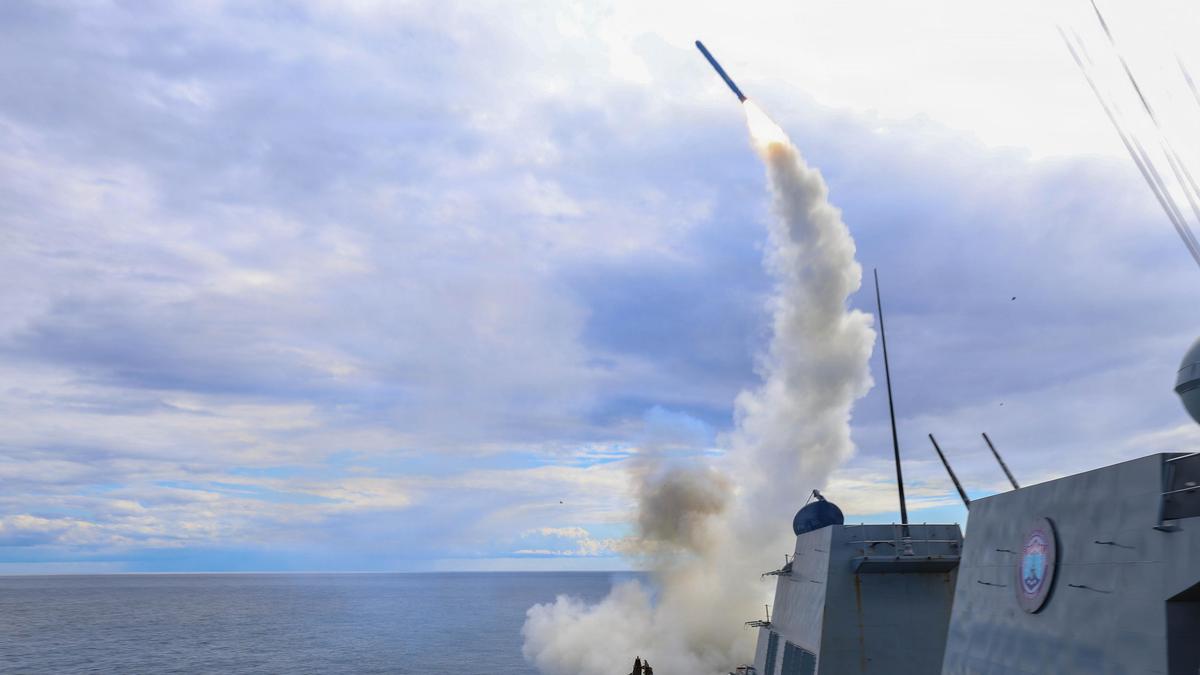
Iran's military doctrine is built for this. They know they can't win a conventional dogfight against the U.S. Air Force. So, they've spent forty years perfecting asymmetric warfare. They have the largest missile arsenal in the Middle East. They have thousands of fast-attack boats that can swarm tankers and destroyers in the narrow corridors of the Persian Gulf.
When the U.S. gets bogged down in a regional slugfest, it loses its ability to deter anyone else. If the Pentagon is moving carrier strike groups to the Gulf to protect shipping lanes, who is watching the Taiwan Strait? Who is keeping the lid on Eastern Europe? The answer is nobody. A war with Iran is a green light for every other revisionist power to move on their own territorial ambitions.
The Chokepoint That Could Break the Global Economy
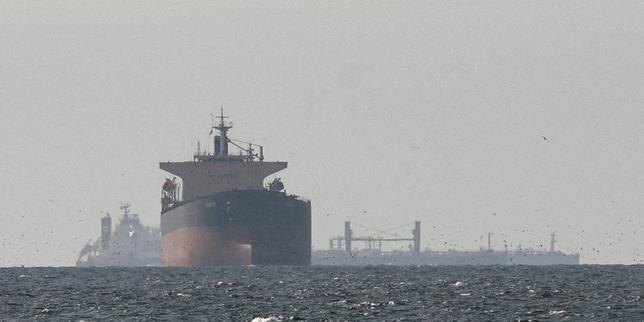
You've probably heard of the Strait of Hormuz, but it's hard to overstate how vital it is. About 20% of the world's total oil consumption passes through that tiny stretch of water every single day. Iran doesn't even need to "control" the Strait to win; they just need to make it too dangerous for insurance companies to cover the tankers.
If insurance premiums skyrocket or the Strait is mined, global oil prices don't just go up—they double. We'd see $150 or $200 a barrel. For a U.S. economy already struggling with the tail end of inflation and high interest rates, that's a knockout blow.
- Manufacturing costs explode. Every plastic, every chemical, and every shipping route becomes more expensive.
- Consumer spending halts. When it costs $100 to fill up a sedan, people stop buying everything else.
- The Dollar under pressure. If the U.S. can't guarantee the security of the primary energy transit point, countries start looking for alternatives to the petrodollar.
Iran's "Axis of Resistance"—which includes Hezbollah in Lebanon, various militias in Iraq and Syria, and the Houthis in Yemen—means the war wouldn't stay inside Iranian borders. It would be a 360-degree battlefield. Israel would be under constant rocket fire. U.S. bases in Qatar, Bahrain, and the UAE would be targets. It’s a mess that the U.S. logistical chain isn't prepared to handle for more than a few weeks without massive domestic mobilization.
The China Factor No One Mentions
Beijing is watching. Every missile the U.S. fires in the Middle East is a missile that isn't available for a conflict in the Indo-Pacific. Every billion dollars spent on a desert occupation is a billion dollars not spent on AI, quantum computing, or naval modernization.
China is currently Iran's largest trade partner. They buy the oil that Sanctions were supposed to stop. If the U.S. enters a prolonged war, China wins by default. They get to play the "peacemaker," offering "Belt and Road" investments to a shattered region while the U.S. burns its remaining prestige and resources on another "forever war."
Honestly, the U.S. military is incredibly capable, but it's designed for high-intensity, short-duration wins. It isn't built to police a country the size of Iran while simultaneously trying to contain a peer competitor like China. The Pentagon's own National Defense Strategy says the U.S. must prioritize "Great Power Competition." A war with Iran is the exact opposite of that. It’s a distraction that could become a permanent handicap.
The Social Cost at Home
We often forget that wars aren't just fought with drones; they're fought with people. After twenty years of combat in the Middle East, the U.S. all-volunteer force is tired. Recruitment numbers are at historic lows. If a conflict with Iran turns into a multi-year grind, the U.S. faces a choice: let the military collapse or bring back the draft.
Imagine the political climate in America today if a draft were reintroduced. It would be 1968 all over again, but worse. The social fabric is already frayed. Adding a mandatory military service requirement for a war that doesn't have a clear "victory" definition would be gasoline on a fire.
What Needs to Happen Now
The U.S. needs to stop treating the Middle East like it's still 1991. The world has changed. Total energy independence—or at least moving closer to it—is the only way to take the "Hormuz Card" out of Iran's hand.
- Prioritize the Pacific. Move assets out of the Gulf and force regional players like Saudi Arabia and the UAE to take more responsibility for their own backyard.
- Aggressive Diplomacy. Not because you "trust" the regime in Tehran, but because a cold peace is infinitely cheaper than a hot war.
- Strengthen Domestic Resilience. If the U.S. can't survive a temporary oil shock without its entire economy collapsing, the problem isn't Iran—it's the U.S. infrastructure.
The reality is simple. A war with Iran wouldn't just be a military failure; it would be a strategic pivot point where the U.S. ceases to be the world's only superpower. You can't lead the world if you're stuck in a mountain range in Western Asia for the next decade. It’s time to recognize that the greatest threat to American power isn't a regional middle-weight like Iran, but the exhaustion that comes from trying to fight everyone at once. Stop the slide before it starts.