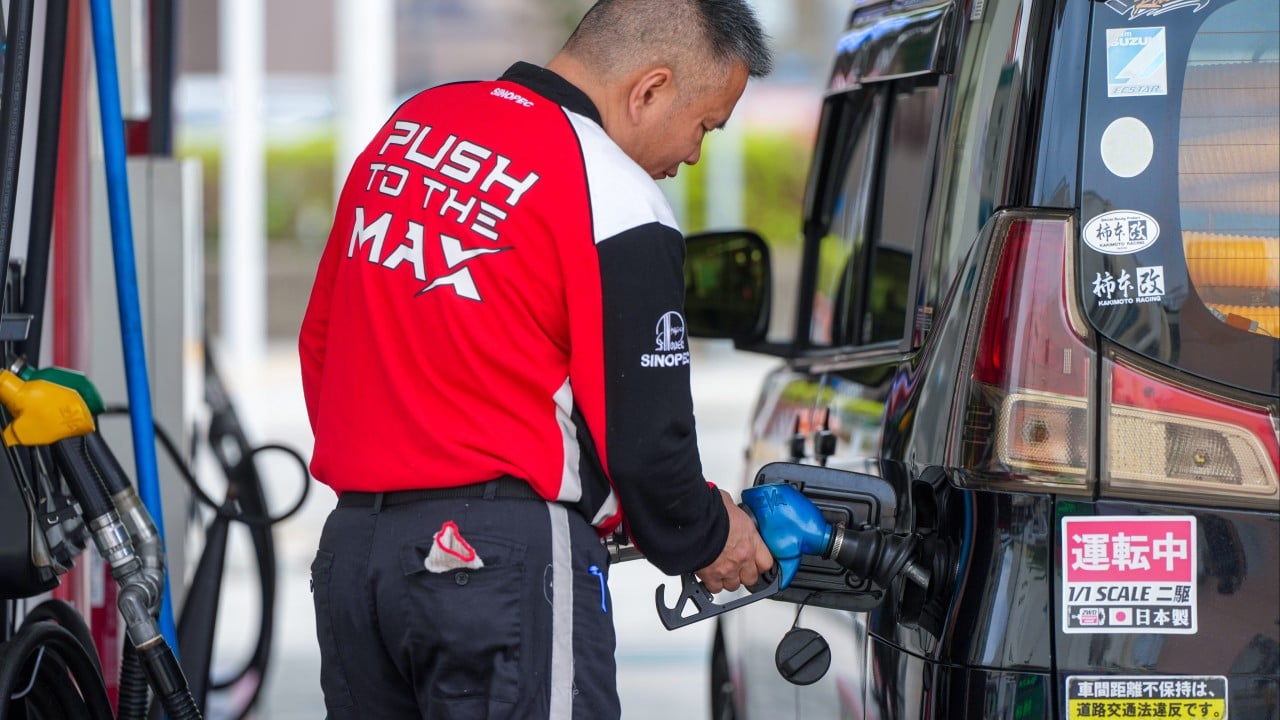
The Hong Kong government is moving to force oil companies into a new era of transparency by embedding pricing disclosure requirements directly into the land tender process for petrol stations. For decades, the pump price in this city has remained among the highest in the world, often moving in a synchronized fashion that leaves motorists feeling cornered. This latest policy shift targets the fundamental mechanism of how fuel is sold, attempting to use the state’s power as a landlord to peel back the curtain on corporate margins.
The Environment and Ecology Bureau's plan is simple on the surface but complex in its execution. By making price transparency a condition of winning a lease, the government hopes to create a market where companies compete on more than just the quality of their loyalty programs.
The Cartel Question and the Land Monopoly
To understand why a disclosure rule matters, one must first look at the unique way Hong Kong manages its space. The government owns all the land. When a petrol station lease expires, it goes to public tender. Traditionally, these tenders were decided almost exclusively on who paid the highest rent. This created a high-cost environment where oil companies argued that sky-high land premiums forced them to keep pump prices elevated.
It is a circular argument that has served the industry well. The Consumer Council has repeatedly flagged "rocket-and-feather" pricing—where pump prices rise like a rocket when global crude costs spike but drift down like a feather when those costs drop. Without a window into the actual import costs and operating margins of these firms, the public is left with a suspicion of price-fixing that is impossible to prove under current laws.
The new disclosure rules aim to break this cycle. If a company must reveal its pricing structure to win a site, the government gains the leverage to hold them accountable. But there is a catch. Knowing the price is not the same as lowering it.
Decoding the Import Cost Disconnect
One of the most persistent frustrations for Hong Kong drivers is the disconnect between the Mean of Platts Singapore (MOPS) benchmarks and what they pay at the nozzle. Critics argue that while the government tracks these benchmarks, the actual import prices paid by local oil majors remain a closely guarded secret.
Companies often claim that their refined products are sourced under long-term contracts or from specific refineries that don't perfectly mirror the daily fluctuations of the Singapore market. This creates a "black box" of costs. By mandating disclosure during the tender process, the government is essentially asking for a peek inside that box.
Why Tenders are the Only Leverage Left
Hong Kong operates on a free-market principle, meaning the government cannot simply cap the price of fuel without upending its entire economic philosophy. This leaves the land tender as the only real point of intervention.
When a site comes up for renewal, the government can now weigh a company’s commitment to price transparency alongside their financial bid. It is a soft-power approach to a hard-money problem. However, industry insiders suggest that unless these rules are applied across the board to all existing stations—not just those up for tender—the impact will be fragmented. A handful of "transparent" stations cannot easily move the needle in a market dominated by a few massive players with hundreds of locations.
The Reality of Operating Margins
It is easy to cast the oil companies as villains, but the economics of a Hong Kong petrol station are legitimately brutal. Beyond the land premium, labor costs and environmental compliance adds layers of expense that didn't exist twenty years ago.
- Labor Shortages: Finding staff to work on forecourts in a city with record-low unemployment is becoming increasingly expensive.
- Safety Regulations: Strict fire and safety codes in one of the world's most densely populated cities make the construction and maintenance of stations more costly than in neighboring regions.
- The EV Shift: The government's push for electric vehicles is a looming threat to the long-term viability of the petrol business.
Oil companies argue that if they are forced to disclose too much, it hampers their ability to react to a volatile global energy market. They suggest that "transparency" is often a code word for "price control," which they claim would eventually lead to reduced investment in station infrastructure and service quality.
The Consumer Council's Limited Reach
For years, the Consumer Council has been the primary watchdog, publishing weekly price comparisons and highlighting the lack of competition. Yet, the Council lacks the teeth to penalize companies. It can only "name and shame."
The new disclosure rule represents a shift in responsibility from a consumer watchdog to a regulatory body with actual power. If a company fails to meet the transparency standards set out in their lease agreement, they could face financial penalties or, in extreme cases, the loss of their site. This is a significant escalation. It moves the conversation from the court of public opinion to the court of contract law.
The Global Context of Fuel Transparency
Hong Kong is not alone in this struggle. Cities from London to Sydney have explored ways to force fuel retailers to be more upfront about their margins. In some jurisdictions, real-time price reporting is mandatory, allowing apps to show consumers exactly where the cheapest liter of fuel is located within a ten-mile radius.
Hong Kong has a version of this, but it is often delayed or lacks the granularity needed to drive true competition. The tender-based disclosure is a more aggressive move because it targets the corporate level rather than just the retail level. It seeks to understand the "wholesale" margin—the gap between the price at which fuel enters Hong Kong and the price at which it leaves the pump.
Looking Beyond the Pump
The true test of this policy will be whether it actually results in a lower cost of living for the average resident. Fuel prices don't just affect those with a car; they dictate the cost of logistics, public transport, and the delivery of every goods-laden truck in the territory.
If the government succeeds in forcing disclosure, it sets a precedent for other sectors where land ownership and essential services collide. This isn't just about petrol. It is about how a government that prides itself on non-intervention handles a market that clearly isn't working for the public.
The oil majors are likely to fight this quietly. They will point to the complexity of global supply chains and the proprietary nature of their pricing models. But as the tenders for prime locations in Kowloon and the Island come due, they will have to decide if a piece of the Hong Kong market is worth the price of showing their hand.
The era of the "black box" in the Hong Kong fuel market is under threat, but the companies holding the keys won't give them up without a struggle that will play out in the fine print of land leases for years to come.
Would you like me to analyze the historical correlation between Hong Kong land premiums and retail fuel prices over the last decade?