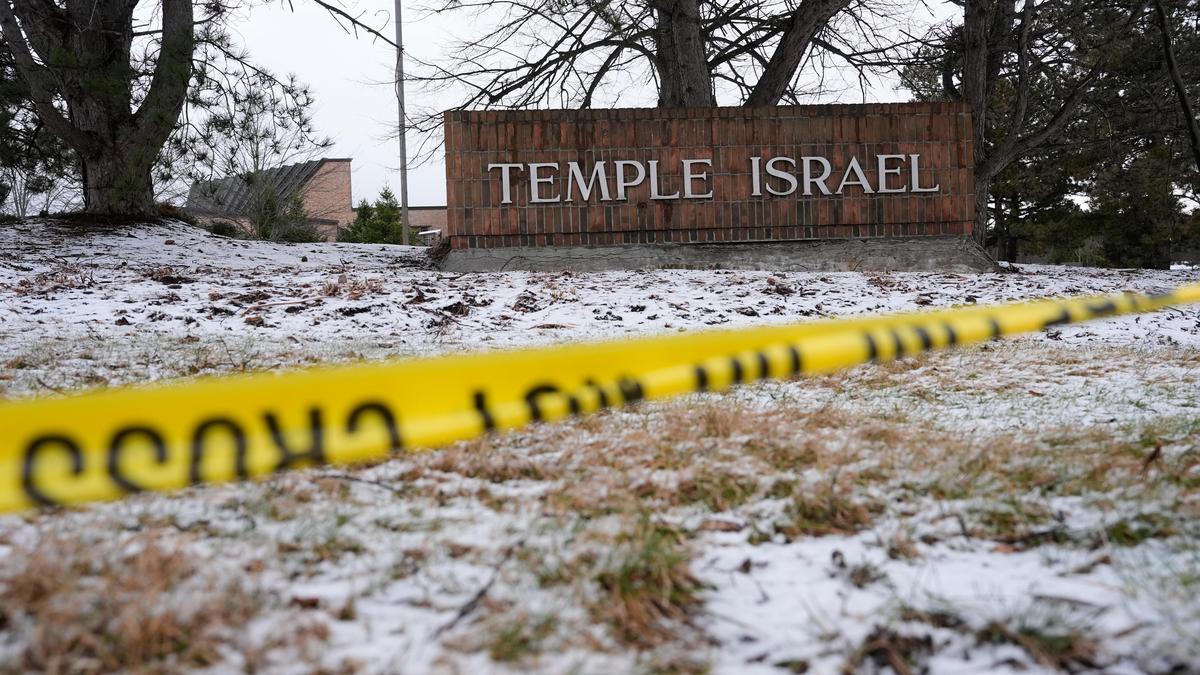
Israel's military just dropped a massive claim that shifts everything we know about the Temple Israel attack in Michigan. On Sunday, the IDF alleged that Ibrahim Mohamad Ghazali—the brother of the man who rammed a truck into a West Bloomfield synagogue last Thursday—wasn't just some bystander caught in a war zone. They're calling him a commander in Hezbollah's specialized Badr Unit.
If you're trying to figure out why a 41-year-old naturalized U.S. citizen named Ayman Mohamad Ghazali would load his Ford F-150 with gasoline and fireworks to attack a preschool full of children, this is the missing piece. It isn't just about a "lone wolf" or a man "devastated by loss." It's about a direct line between a designated terrorist group in Lebanon and a leafy suburb in Metro Detroit.
The Badr Unit and the Ghazali brothers
The IDF didn't mince words in their statement on X. They identified Ibrahim as a key figure responsible for "managing weapons operations" within a branch of Hezbollah that has spent the last year launching hundreds of rockets at Israeli civilians. When an Israeli airstrike hit a three-story building in the eastern Lebanese town of Mashghara on March 5, they weren't just hitting a residential home—they say they were taking out a Hezbollah military structure.
Ibrahim died in that strike. So did his brother, Kassim, and Ibrahim’s two children, Ali and Fatima. Hezbollah's official response was predictably cagey. They called the brothers a "soccer referee" and a "scout member," but notably, they didn't deny the military ties. Local sources in Lebanon have since confirmed to journalists that both brothers were actually members of a Hezbollah rocket unit.
Why the Michigan attacker was already on the radar
Ayman Ghazali didn't just snap out of nowhere. U.S. intelligence already had him flagged. When he returned from a trip to Lebanon in 2019, Homeland Security systems triggered what’s called "threshold targeting."
Customs and Border Protection agents in Atlanta pulled him aside for an interview. He told them he was over there for a hair transplant. But when agents searched his phone, they found contact info that linked him directly to Hezbollah members.
Even with those red flags, Ayman lived a seemingly quiet life in Dearborn Heights. He worked as a cook at a local restaurant called Hamido. He was a father. He was a neighbor who mostly kept to "pleasantries." But after the March 5 strike killed his brothers, he stopped showing up for work. He spent his final days alone, stewing, until he called his ex-wife on Thursday in a conversation that scared her enough to call the police. By then, it was too late.
The failed massacre at Temple Israel
Last Thursday afternoon, Ayman waited in the parking lot of Temple Israel for two hours. Inside, about 140 children and staff were going about their day. When he finally made his move, he rammed his truck through the doors and into a hallway.
It could’ve been a bloodbath. He had a rifle, commercial-grade fireworks, and jugs of gasoline. He started firing through his own windshield at an armed security guard. The guard shot back. In the chaos, the truck's engine caught fire, and Ayman ended the standoff by shooting himself.
The only reason we aren't mourning dozens of children today is that the synagogue had beefed up security months ago, hiring a former police lieutenant to run an armed, professional team. They did their jobs. The FBI has called this a "targeted act of violence against the Jewish community," but they’re still hesitant to use the word "terror." Given the Hezbollah commander connection, that hesitation is getting harder to justify.
What this means for domestic security
This isn't just a Michigan story. It's a wake-up call about how the conflict in the Middle East is spilling over into the U.S. in ways that go beyond protests. We’re seeing "revenge" actions that aren't just emotionally motivated—they're tied to families with deep roots in militant organizations.
The FBI is currently digging into Ayman's digital life to see if he was taking orders or just acting on a personal vendetta for his "commander" brother. Either way, the "lone wolf" narrative is starting to look like a massive oversimplification.
If you live near a house of worship or a community center, don't ignore the security protocols. They worked in West Bloomfield. They’re the only reason a Hezbollah-linked revenge plot didn't turn into one of the worst mass shootings in American history. Keep your eyes open, and don't assume the "quiet neighbor" doesn't have a phone full of contacts you'd never want to meet.
Check your local community's security updates and make sure you know the evacuation routes for your kids' schools. Situational awareness is the only thing that stood between those 140 people and a tragedy.


