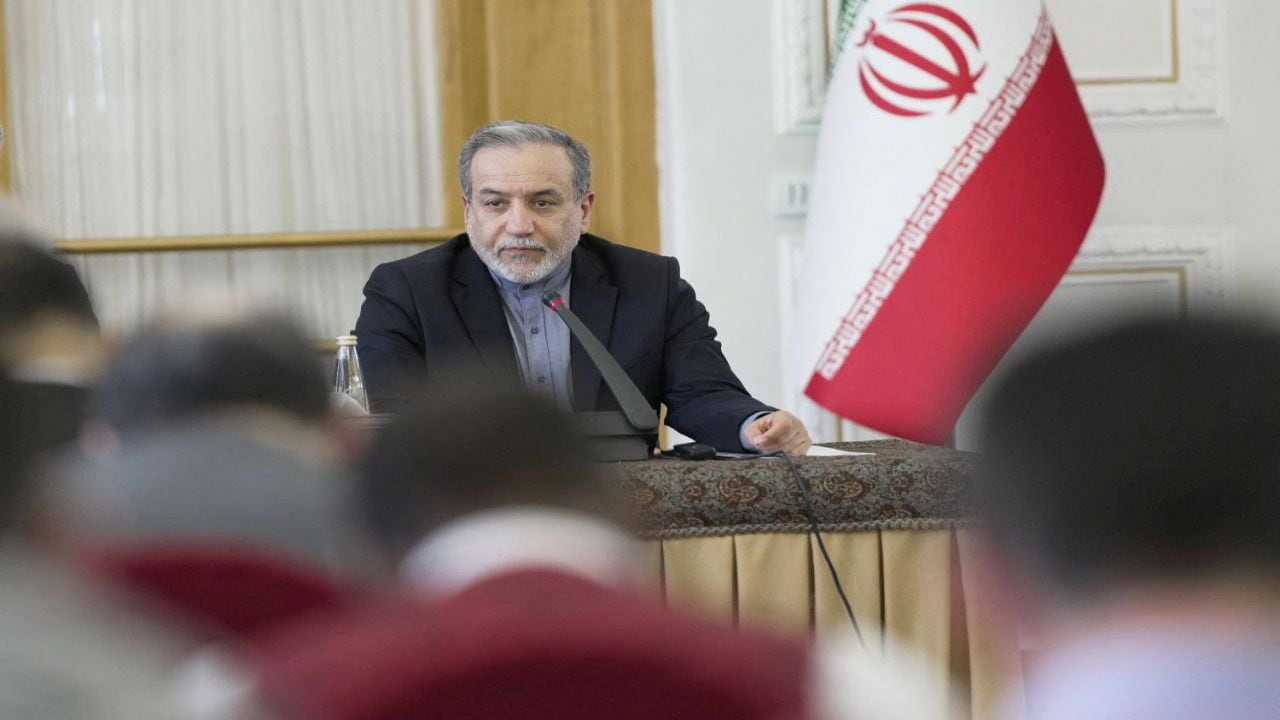
Diplomacy is a game of theater where the actors forget their lines and blame the audience for hearing them wrong. After the February 26 Geneva talks, Iranian Foreign Minister Abbas Araghchi pulled a classic move: he claimed his remarks on enriched uranium were "misinterpreted."
This is not a translation error. It is a calculated pivot. Read more on a similar topic: this related article.
While the mainstream media obsesses over whether Iran is at 60% or 90% purity, they are missing the mechanical reality of nuclear physics. The "misinterpretation" defense is a smokescreen for a simple truth: the technical threshold between "peaceful use" and "weaponization" is a fiction maintained by bureaucrats to keep their jobs.
The Linear Fallacy of Enrichment
Most journalists talk about uranium enrichment as if it were a flat, uphill climb. They assume that getting from 5% to 60% is most of the work, and the jump to 90% is another massive hurdle. Additional journalism by USA Today explores similar perspectives on this issue.
They are dead wrong.
Nuclear enrichment is a front-loaded process. The heavy lifting happens at the very beginning. To understand why Araghchi’s "clarification" is irrelevant, you have to understand the Separative Work Unit (SWU).
To produce 90% weapons-grade uranium from natural ore, roughly 75% of the total effort is spent just getting to 5%. By the time a nation hits 20% enrichment, about 90% of the total work required for a bomb is already finished.
When Araghchi talks about 60% enrichment for "medical purposes" or "research," he is technically telling a version of the truth, but logically he is describing a car idling at the starting line of a drag strip. The distance from 60% to 90% is a rounding error in terms of physics.
I have watched policy analysts waste years debating "breakout times" based on these percentages. They treat these numbers like static milestones. In reality, they are kinetic energy. Once the centrifuges are spinning and the cascades are linked, the transition is a matter of turning a few valves.
The Myth of the Misinterpretation
Araghchi’s backtracking in Geneva isn’t about semantics. It’s about managing the "Boiling Frog" strategy.
If Iran openly declares it is seeking 90% enrichment, the geopolitical response is immediate and kinetic. If they sit at 60% and occasionally "mispeak" about their capabilities, they create a gray zone. This gray zone allows Western powers to avoid taking decisive action because they can hide behind the "diplomatic process."
The "People Also Ask" sections of the internet want to know: Is Iran's uranium enrichment a threat? The answer is brutally honest: The threat isn't the uranium; it's the infrastructure.
You don't build a Ford F-150 factory if you only ever intend to drive a tricycle. Iran’s hardened facilities at Fordow and Natanz are over-engineered for "medical isotopes." You don't bury a medical research lab under a mountain of granite unless you expect someone to try and blow it up with a bunker-buster.
Why "Monitoring" is a Failed Concept
We are told that the IAEA (International Atomic Energy Agency) is our eyes and ears. We are led to believe that "snap inspections" and "sealed cameras" provide a safety net.
I’ve seen how these inspections work on the ground. It’s a shell game.
- The Lead Time: Inspectors don't just kick in the door. There are protocols, visas, and logistical hurdles. In that window, a lot can happen.
- The "Missing" Data: Cameras "malfunction." Seals are "accidentally" broken. Data disks are wiped due to "technical glitches."
- Dual-Use Deception: The exact same centrifuge (the IR-6 or IR-9) used for 5% enrichment is used for 90%. You cannot "monitor" intent.
The status quo believes that as long as the cameras are rolling, we are safe. This is a dangerous delusion. Monitoring a nuclear program is like watching a bank robber load a shotgun and being satisfied as long as he hasn't pulled the trigger yet.
The Economic Absurdity of the Peaceful Atom
If you want to dismantle the lie of "peaceful enrichment," look at the balance sheet.
Enriching uranium domestically is an economic nightmare. It is exponentially cheaper to buy reactor fuel on the open market from established providers like Russia or France. No rational nation-state would sink billions into indigenous enrichment cascades, endure soul-crushing sanctions, and risk total war just to produce fuel for a single power plant at Bushehr.
The "peaceful" argument fails the basic test of capitalism.
The only reason to enrich your own fuel to high levels is to ensure that no one can turn off your supply during a conflict. It is a strategic hedge for a weapons program, period. Araghchi knows this. The negotiators in Geneva know this. But admitting it would mean the end of the "diplomatic solution," so everyone agrees to pretend that "misinterpretations" are the problem.
The Strategy of Strategic Ambiguity
We need to stop asking if Iran is building a bomb and start asking why we are allowing them to build the capability to build a bomb.
There is a difference between a "nuclear-armed state" and a "nuclear-capable state." Japan is nuclear-capable; they have the tech, the material, and the brains to build a device in weeks if they chose to. But Japan has no reason to hide their intent or "mispeak" in Geneva.
Iran is pursuing a "Threshold Status." They want to be five minutes away from a warhead without ever actually crossing the line. This gives them all the leverage of a nuclear power with none of the immediate consequences of being an international pariah like North Korea.
Araghchi’s comments in Geneva were a test. He floated a higher level of "technical readiness," gauged the room’s reaction, saw the panic, and then pulled back. It’s a stress test for Western resolve.
The Nuance the Media Ignores
The competitor article you read probably focused on the tension between the US and Iran. It likely framed the Geneva talks as a "fragile hope" for peace.
That is lazy.
The real story is the internal friction within the Iranian regime between the "diplomats" (the faces we see in Geneva) and the "technocrats" (the people actually running the centrifuges). Araghchi is the PR department. He doesn't control the cascades. When he "mispeaks," he is often being corrected by the hardliners at home who want the world to know exactly how close they are to the finish line.
The danger isn't that Araghchi was misunderstood. The danger is that he was understood perfectly, and the West is too terrified to admit what they heard.
Stop Looking at the Percentage
If you want the truth, stop looking at the enrichment percentage.
Look at the mass.
Having 5 grams of 90% uranium is a science experiment. Having 40 kilograms of 60% uranium is a ticking clock. Once you have a sufficient stockpile of 60% material, the "breakout" to weapons-grade is no longer a matter of months; it is a matter of days.
We are currently debating the color of the fuse while the match is already lit.
The conventional wisdom says we need more talks, more "clarifications," and more Geneva summits. The contrarian reality is that every hour spent "clarifying" remarks is another hour the cascades are spinning.
The "misinterpretation" wasn't a mistake. It was a victory for Iran. They moved the goalposts again, and the world spent a week debating the definition of a goalpost instead of looking at the score.
Stop asking for "clarity" from people whose entire job is to be opaque. Start looking at the physics, the economics, and the granite mountains. The uranium doesn't lie, even if the ministers do.
Check the SWU math. Look at the stockpiles. Forget the headlines.