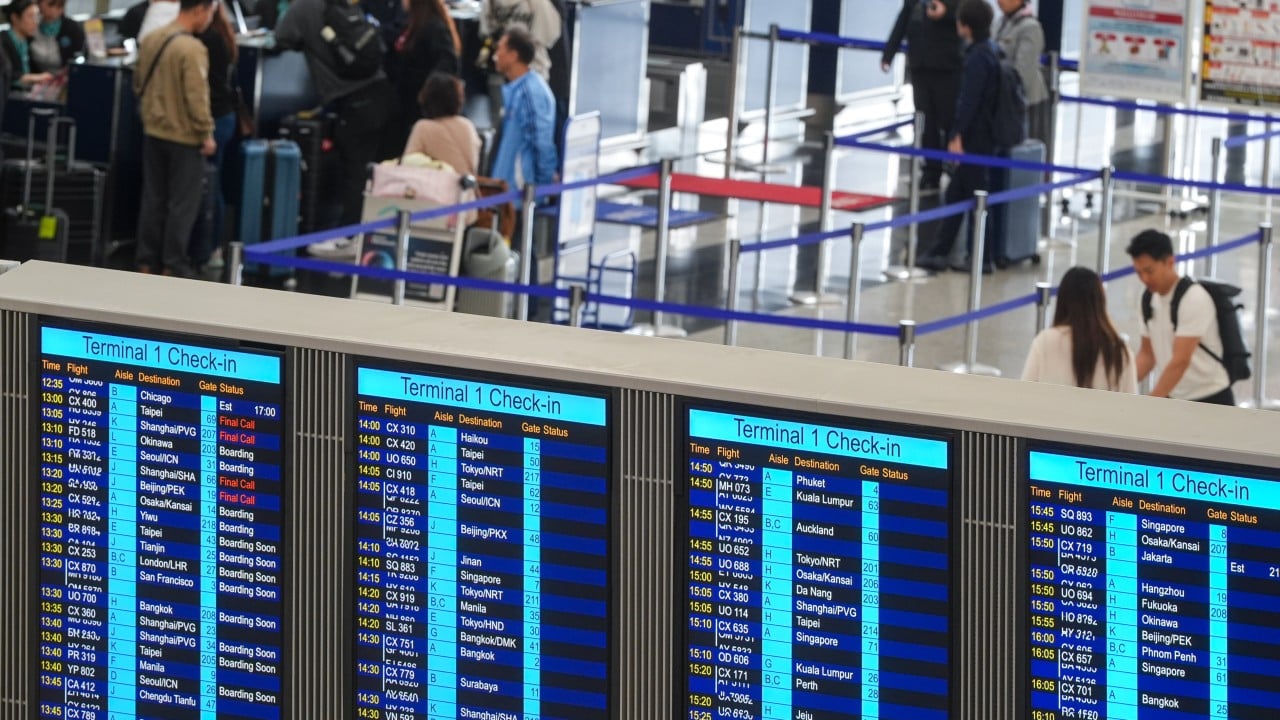
You’re sitting at the gate with a lukewarm $14 sandwich, watching the departure board flip from "On Time" to "Delayed" and finally to the dreaded red "Canceled." Suddenly, you’re not a passenger anymore. You’re a statistic. You're one of the hundreds of thousands stranded because the global aviation system decided to take a nap. It feels like a freak accident, but it’s not. This is the fragile reality of how we fly today.
When a major hub shuts down or a carrier grounds its fleet, the ripples don't just move; they accelerate. The industry operates on such razor-thin margins of time and equipment that a single software glitch or a nasty thunderstorm in a pivot city like Chicago or London creates a kinetic chain reaction. You aren't just stuck because of a local problem. You're stuck because a plane meant to pick you up is sitting three states away under a ground stop.
The Myth of the Seamless Connection
Most people think of air travel as a series of independent hops. In reality, it’s a high-stakes game of Tetris played with multi-million dollar assets that cannot stay still for more than an hour without costing the airline a fortune. When you see news of mass strandings, it’s usually the result of "network collapse."
Take the recent technical outages that crippled major carriers. It wasn't just that the planes couldn't fly. The crews couldn't be tracked. Federal regulations are strict about how many hours a pilot or flight attendant can work. Once those digital systems go dark, the airline loses track of who is legal to fly and who needs to sleep. Even if the sun is shining and the plane is fueled, if the computer doesn't know where the captain is, you're staying on the ground.
This creates a backlog that takes days, sometimes weeks, to clear. Airlines don't have "spare" planes just sitting around for a rainy day. Every aircraft is booked to its limit. If Monday's flights are canceled, Tuesday's flights are already full. There's literally no room for you.
Why Infrastructure is Failing Faster Than We Can Fix It
Airports were built for the traffic of twenty years ago, not the literal millions of bodies moving through them now. When a hub like Hartsfield-Jackson or Heathrow experiences a shutdown, the physical space becomes a bottleneck. There aren't enough benches, enough floor space, or enough hotel vouchers to handle a 200,000-person surge in unscheduled guests.
We also have to talk about the tech debt. A lot of the backend systems managing our "modern" flights are aging relics held together by digital duct tape. When these systems face a massive stress test—like a sudden weather event or a botched update—they don't just slow down. They break.
The Human Cost of Rigid Scheduling
- Pilot "Timing Out": A plane might be ready, but if the crew sat on the tarmac for four hours, they hit their legal limit. They walk. You wait.
- Gate Deadlock: If arrivals can't leave, departures can't park. It turns the taxiway into a parking lot.
- The Rebooking Nightmare: Customer service lines become 10-hour marathons because the "self-service" apps usually crash under the weight of a hundred thousand simultaneous users.
How to Actually Survive a Mass Grounding
If you find yourself in the middle of a total airport shutdown, stop acting like a victim and start acting like a logistics manager. The people who get out first aren't the ones screaming at the gate agent. They're the ones who knew the backup plan before they even left their house.
First, get out of the terminal line. If you're standing in a queue with 300 other people, you've already lost. Call the airline's international support line—if you're in the US, try calling their Canadian or UK office. You'll get through to an agent in minutes while the domestic line stays busy for hours.
Second, check your credit card benefits immediately. Many "premium" cards (and even some basic ones) have built-in trip delay insurance. This is often the difference between sleeping on a cold linoleum floor and getting a $300 hotel room covered by the bank. Don't wait for the airline to offer a voucher. They'll run out. Book the hotel yourself and file the claim later.
The Realities of Compensation
Don't expect a windfall. In the US, airlines aren't legally required to compensate you for "acts of God" like weather. They only owe you if the grounded planes are their fault—think mechanical issues or staffing shortages. If you're flying in Europe, you have the protection of EC 261, which is much more aggressive about sticking it to the airlines. Know where you stand before you start demanding free stuff.
Stop Relying on the Best Case Scenario
The era of "set it and forget it" travel is over. If you have a wedding, a cruise, or a high-stakes business meeting, you're rolling the dice if you fly in the day of the event. The system is too lean. The buffers are gone.
Start booking the "unpopular" flights. The first departure of the morning is statistically the least likely to be canceled because the plane is already there from the night before. Avoid the last flight of the day like the plague. If that one gets scrapped, you're spending the night in the terminal.
Pack a "survival" kit in your carry-on. This isn't just about snacks. It's about an extra long charging cable, a high-capacity power bank, and a change of clothes. If your checked bag is stuck in the bowels of a shut-down airport, you might not see it for three days.
Don't let the shiny ads fool you. Aviation is a miracle, but it's a fragile one. The moment a plane is grounded, the clock starts ticking against you. Own your logistics, have your apps updated, and never trust a "scheduled" arrival time as a guarantee. It's just a suggestion.
Check your flight status now on an independent tracker like FlightAware rather than the airline's own app. These third-party tools often show the incoming flight’s location before the airline admits there's a delay. If that plane hasn't even taken off from its previous city, start looking for your hotel room now. Beat the crowd.