The mud in the Donbas does not care about diplomacy.
It is a thick, black, sucking clay that pulls the boots off grown men and swallows the steel tracks of tanks. When the artillery opens up, it doesn't just explode; it liquefies the earth. For the men shivering in the trenches near Chasiv Yar, this mud is the entire universe. It is their bed, their plate, and often, their shroud.
Olena knows this mud well. She is a combat medic, thirty-two years old, with eyes that have seen so much trauma they have gone flat, like stones at the bottom of a cold river. Hypothetically, let us place her in a dugout smelling of damp pine and wet wool, just three kilometers from the Russian lines. This scenario plays out in a hundred different variations across a thousand-kilometer front every single day.
Right now, Olena is trying to stop a nineteen-year-old named Pavlo from bleeding to death. A fragment of a Russian glide bomb has torn through his thigh. Outside, the horizon is a constant, stuttering strobe of orange and white light. The ground shakes. Dust filters down from the timber ceiling of the bunker, coating Pavlo’s pale face.
He is crying for his mother. Olena is lying to him, telling him he will be fine, while her hands work with the mechanical speed of someone who has packed the same wound a thousand times.
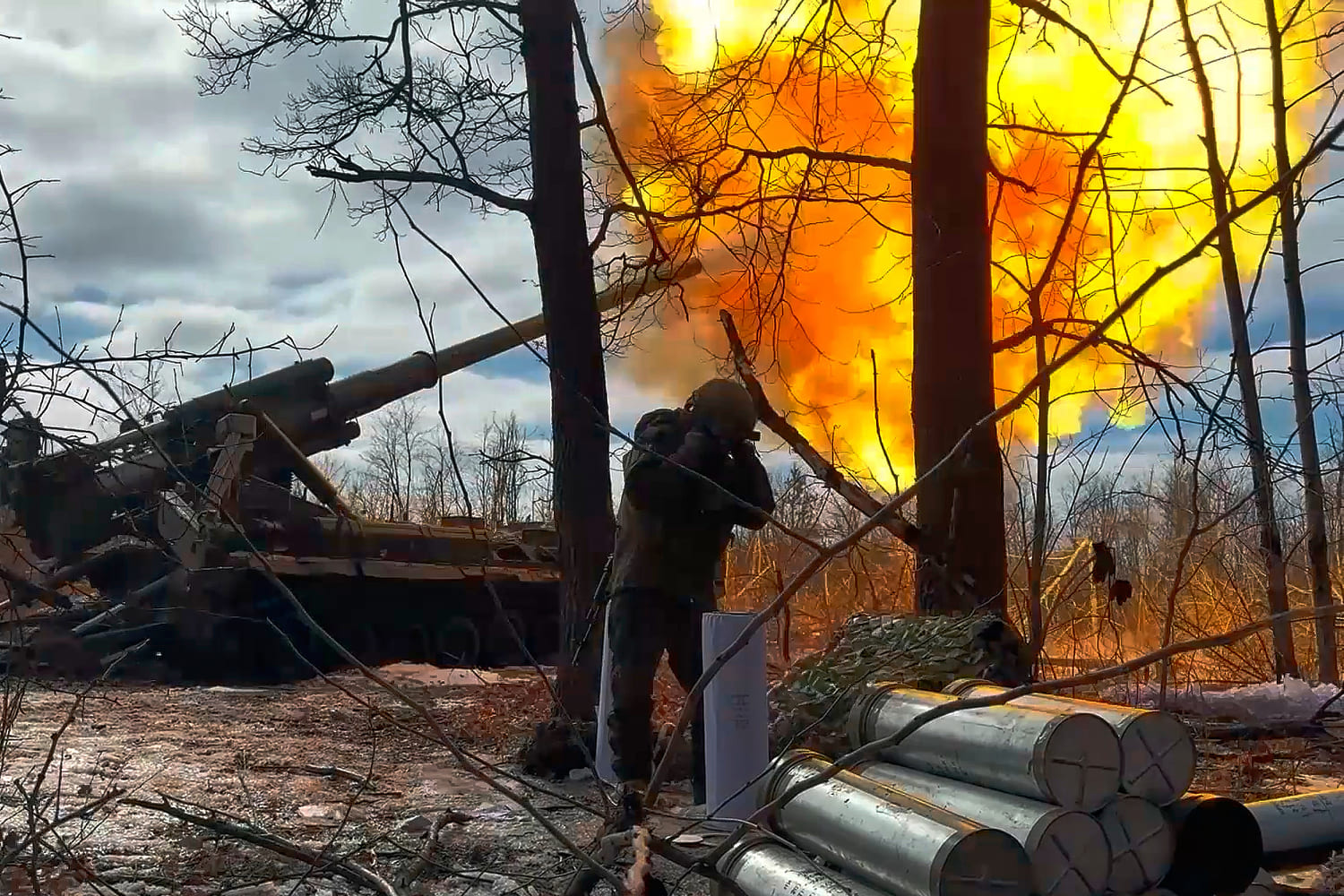
But there is a different kind of silence falling over Olena’s trench lately. It is not the absence of gunfire. The Russian guns are louder and more frequent than ever, firing thousands of shells a day in a relentless, grinding attempt to break the Ukrainian spirit.
No, the silence is coming from the west.
For the first eighteen months of this full-scale invasion, Olena and her unit felt the eyes of the world squarely on them. They were the center of the global drama. Billions of dollars in aid, endless news cycles, and the moral outrage of the free world backed them up.
Then, the Middle East exploded.
A sudden, horrifying escalation of conflict involving Iran, its proxies, and Israel has sucked the oxygen out of every room in Washington, London, and Brussels. The cameras packed up and moved south. The front pages shifted. The moral outrage found a new focal point.
Ukraine is becoming yesterday’s war.
Consider the brutal arithmetic of modern warfare. It is not fought with bravery alone. It is fought with logistics, manufacturing capacity, and above all, attention.
To understand why the shift in global focus is a matter of life and death for people like Olena, we have to look at the numbers. They are stark. Russia has shifted its entire economy to a war footing. They are producing millions of artillery shells a year, supplemented by shipments from North Korea. They are manufacturing drones at an industrial scale.
Ukraine cannot match this alone. It relies on a lifeline of Western support.
But that lifeline is fraying. Not necessarily because people have stopped caring, but because they have started caring about something else more urgently.
When the news breaks that ballistic missiles are flying across the skies of the Middle East, a senator in Washington has to make a choice. Where do the air defense interceptors go? Who gets the emergency funding package? The stockpiles of Patriot missiles are not infinite. Neither is the political capital required to authorize their shipment.
The result on the ground is terrifyingly simple.
A year ago, Olena’s unit had enough artillery support to answer every Russian barrage with one of their own. They could suppress the enemy. They could force the Russian gunners to keep their heads down.
Now, the math has flipped. For every shell the Ukrainians fire, the Russians fire five, sometimes ten.
Imagine standing in a field while ten people throw rocks at you, and you are only allowed to throw one back. That is the tactical reality for the Ukrainian army today. It is a slow, suffocating imbalance that costs lives not by the dozens, but by the thousands.
The Russian strategy has shifted to reflect this. They are no longer attempting lightning strikes or brilliant armored breakthroughs. They have realized they do not need to be clever. They just need to be relentless.
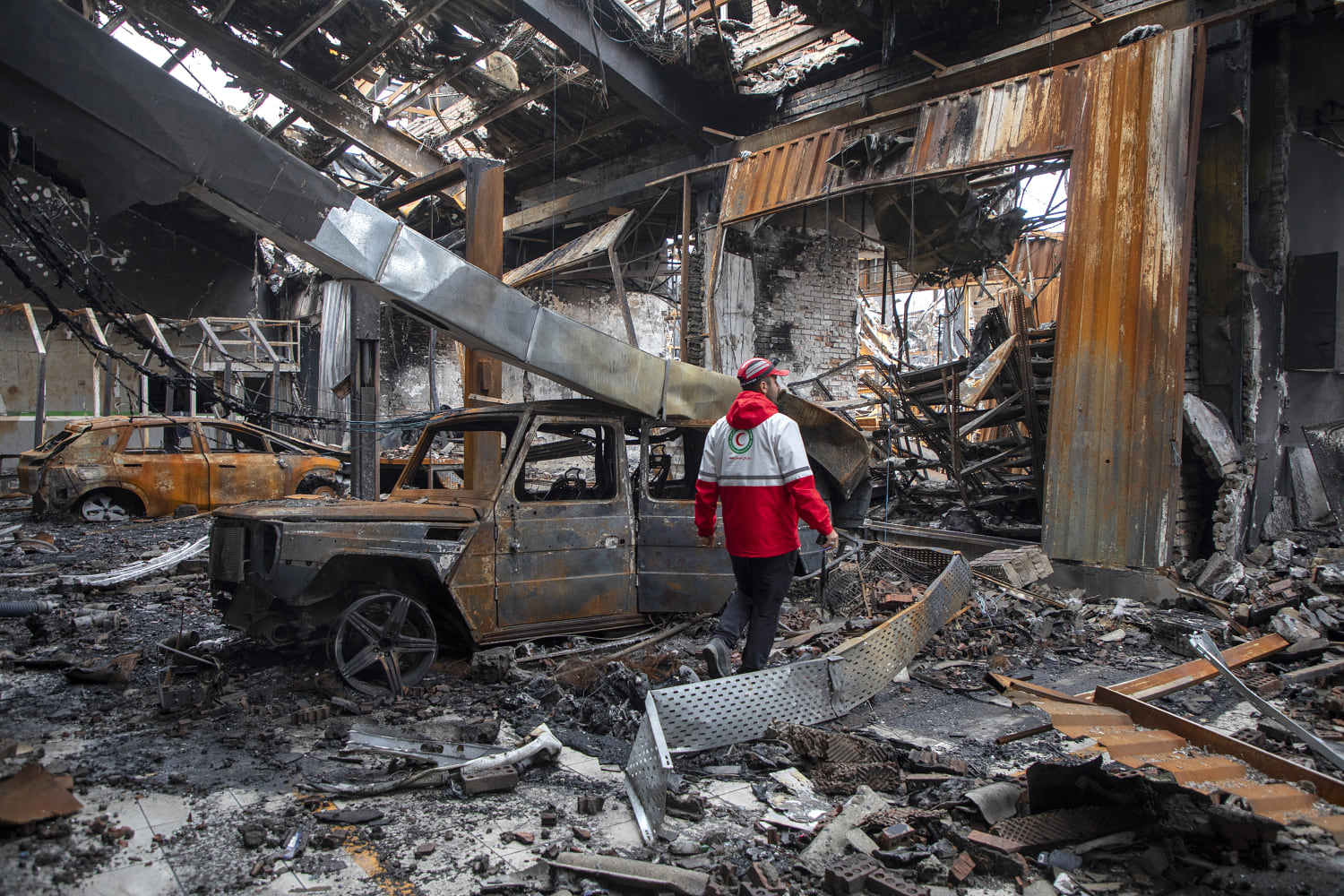
They use massive glide bombs—Soviet-era explosives fitted with cheap satellite guidance wings. These bombs weigh up to fifteen hundred kilograms. When they strike a Ukrainian defensive position, they do not just destroy the bunker; they erase the landscape. No amount of concrete or dirt can withstand them.
The strategy is to pulverize a town until there is nothing left to defend, and then send in waves of infantry to occupy the ruins. It is a medieval siege conducted with twenty-first-century weapons.
Back in the dugout, Olena finishes bandaging Pavlo’s leg. He has stopped crying. Now he is just staring at the ceiling, his breathing shallow and rapid. He is in shock.
Olena reaches into her pocket and pulls out her phone. There is no signal down here, but sometimes, if she holds it near the entrance, a single bar will flicker to life. She wants to check the news. She wants to see if the world has remembered them today.
The top headline is about oil prices spiking after a drone attack in the Persian Gulf. The second is about a diplomatic emergency session at the United Nations regarding Tehran. You have to scroll past five screens of maps, analysis, and opinion pieces about the Middle East before you find a small, three-paragraph update on the fighting in the Donbas.
"Russian forces make incremental gains near Bakhmut," it says.
Incremental gains. It sounds so clinical. So bloodless.
To Olena, an incremental gain means that the field five hundred meters to their left is now full of dead boys she used to share cigarettes with. It means the hospital where she used to send her wounded is now within range of Russian tube artillery and can no longer operate.
The true cost of a distracted world is measured in these tiny, unrecorded tragedies.
It is the ammunition that doesn't arrive on Tuesday, leading to the lost trench on Wednesday, leading to the funeral on Sunday.
There is a psychological weight to this neglect that is hard to overstate. In the early days of the war, Ukrainian soldiers felt like they were the shield of Europe. They were fighting not just for their own homes, but for the very idea of a world where borders cannot be redrawn by force. That belief is a powerful fuel. It keeps a man awake at three in the morning when the temperature is fifteen degrees below zero and his feet are frozen inside his boots.
But what happens when the shield begins to feel forgotten?
Doubt is a more dangerous enemy than any Russian tank. It whispers in the dark. It asks: Why are we dying here if no one is watching? If the world has moved on, why shouldn't we? ***
We have a habit of treating global crises like television shows. We get gripped by a storyline, follow it passionately for a season, and then get bored when a new, more dramatic spin-off premieres on another channel.
But history is not a streaming service. The plots do not pause when we change the channel.
The conflict involving Iran and the wider Middle East is profoundly important. It threatens global energy supplies, risks a massive regional conflagration, and involves nuclear ambitions that could reshape global security for generations. The attention it receives is entirely justified.
The error is not in looking at the Middle East. The error is in thinking we can only look at one thing at a time.
Geopolitics is not a series of isolated incidents. It is a web. The actors are watching each other.
Do you imagine for a second that Moscow is upset by the chaos in the Middle East? On the contrary, it is the greatest strategic gift Vladimir Putin could have asked for. It divides Western attention. It drains Western resources. It creates friction between allies who disagree on how to handle the crisis in Gaza or the threat from Tehran.
Every day the world’s focus remains locked on the Middle East is a day Russia can press its advantage in Ukraine with less scrutiny, less pushback, and less resistance.
The two theaters are connected in even more direct ways. Iranian-designed Shahed drones hum through the Ukrainian sky every single night, targeting power grids, apartment buildings, and grain silos. The same weapons being used to threaten shipping lanes in the Red Sea are being used to freeze Ukrainian grandmothers in their beds in Kyiv.
To treat these as separate wars is to fundamentally misunderstand the nature of the challenge facing the democratic world.
The shelling stops.
In the sudden, heavy silence that follows, the only sound in the dugout is Pavlo’s wet, rattling breath.
Olena knows he won't make it unless they get him to a proper stabilization point within the hour. But the evacuation vehicle—an old, armored ambulance donated by a charity in Latvia—is out of fuel. The fuel shipment was delayed because the logistics hub fifty miles back was hit by a missile three days ago. Air defense was stretched too thin to protect it.
She sits down on an empty ammunition crate and buries her face in her hands. The dirt on her skin is gritty against her palms.
She doesn't blame the people in Iowa or or Berlin or Tokyo for looking away. She knows how hard it is to maintain outrage. She knows that human empathy has a saturation point, and the world has been saturated with horror for years now.
But she also knows that the mud doesn't care.
The offensive will continue tomorrow. The glide bombs will fall. The lines will creep forward, meter by bloody meter, while the world debates oil futures and naval deployments thousands of miles away.
Olena looks at Pavlo. His eyes are closed now. He looks very young. In the dim light of the bunker, stripped of his mud-caked uniform, he could be any boy in any city in Europe, asleep after a long day.
Outside, in the dark, the heavy clank of tank treads begins again, vibrating up through the black earth and into the soles of her boots.