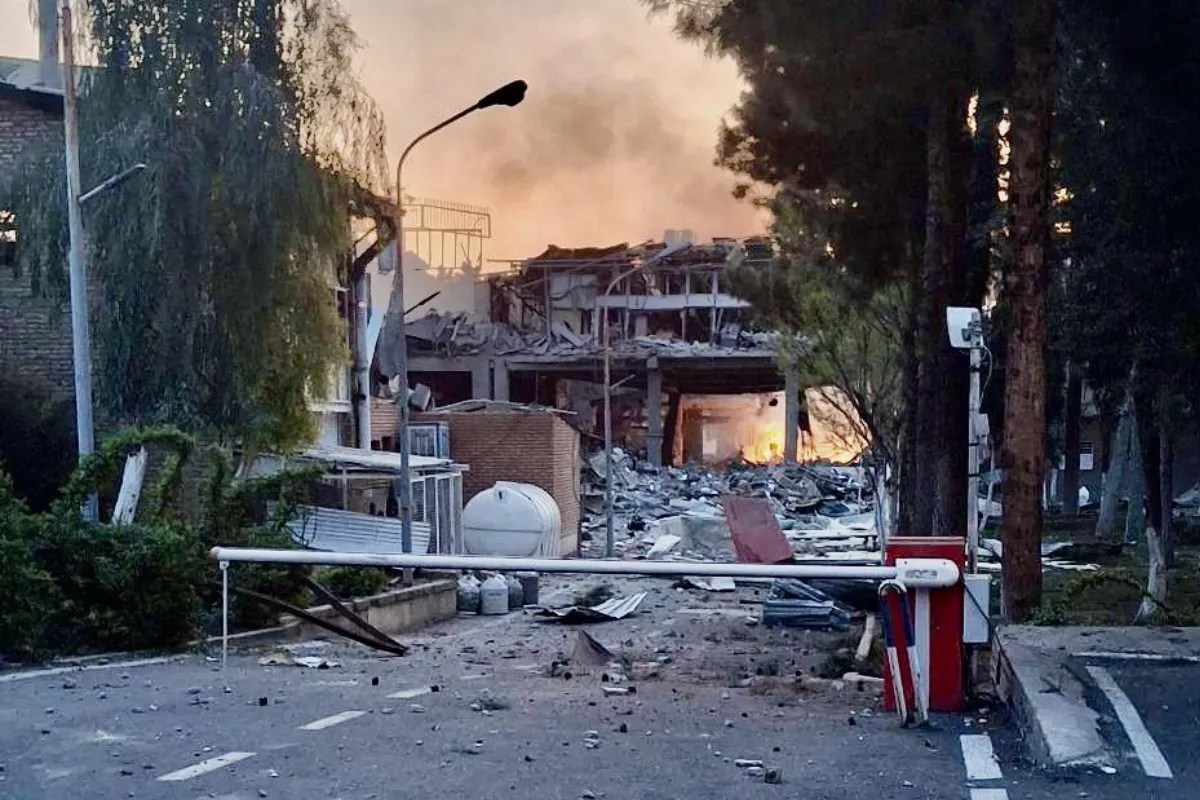
The dust did not settle; it hovered. It tasted of lime, ancient brick, and something metallic—the sharp, copper tang of medicine spilled on scorched earth. When the vibrations finally ceased at the Pasteur Institute of Iran’s research outpost, the silence that followed was heavier than the explosion itself. This wasn't just a building. It was a century of biological defense, a library of viruses and cures, reduced to a jagged silhouette against the sky.
Imagine a scientist named Dr. Arash. He is a hypothetical composite of the men and women who have spent their lives within those walls, but his grief is very real. Arash didn't lose a home or a car. He lost the cold-chain freezers holding decades of local serum samples. He lost the sequence data for regional pathogens that don't exist anywhere else in the world. As he stands amidst the rubble, he isn't thinking about the geopolitics of the Iran-US conflict. He is thinking about the next child who gets bitten by a venomous snake in the rural highlands, only to find the specific antivenom research has been buried under a ton of concrete.
War is often sold as a surgical strike on power. We hear about "strategic assets" and "infrastructure hits." But when a hundred-year-old medical research center is caught in the crossfire, the "asset" being destroyed is the collective health of a population.
The Weight of a Century
The Pasteur Institute wasn't born out of a desire for weapons. It was born out of a desperate need to stop the plague. In the early 20th century, as the world shrank and diseases traveled faster than news, Iran established this hub to stand as a sentinel. It survived revolutions. It survived the grueling eight-year war with Iraq. It survived decades of suffocating sanctions that made importing a simple pipette a feat of diplomatic gymnastics.
Through all of it, the scientists kept the lights on. They brewed vaccines. They studied the specific mutations of tuberculosis that haunt the borders. When you strike a place like this, you aren't just hitting a target on a map. You are erasing a generational memory of survival.
The reports coming out of the site describe a total collapse. The World Health Organization (WHO) has been called upon to investigate, a plea for some semblance of international order in a region where the rules of engagement seem to have evaporated. The demand for action isn't just about seeking reparations. It is a scream for the recognition that even in the darkest conflicts, there are certain spaces that must remain sacrosanct. Hospitals are one. Research centers that prevent the next pandemic are another.
The Invisible Casualties
Data is the lifeblood of modern medicine. When a laboratory is destroyed, the physical loss is only the beginning. The real catastrophe is the "knowledge gap."
Consider the process of tracking a localized outbreak. It requires a baseline—a record of what the virus looked like ten, twenty, or fifty years ago. This allows researchers to see how it is evolving. By destroying these archives, the strike has effectively blinded the region’s health monitors. If a new strain of avian flu or a mutated respiratory virus emerges in this corridor, we won't know where it came from or how it changed. We are back to guessing.
This isn't a metaphor. It is a regression.
Critics might argue that in the fog of war, mistakes happen. Or perhaps they claim the facility was being used for something beyond its stated medical purpose. Yet, the burden of proof for leveling a century-old health institution should be astronomical. Without that proof, what remains is the image of a world where even the cure is considered a combatant.
The Ripple Effect
The debris from this explosion travels far beyond the borders of Iran. Global health is a web. We learned this the hard way in 2020. A gap in the surveillance of one country is a weakness for the entire planet.
When we allow medical research centers to become legitimate targets, we set a precedent that will eventually come for everyone. If the Pasteur Institute is fair game today, what happens to the research hubs in other volatile regions tomorrow? We are dismantling the very systems designed to protect our species from threats that don't care about flags or borders.
The WHO now faces a choice. It can issue a standard statement of concern, a document that will be filed away and forgotten by morning. Or it can treat this as the threshold-crossing event it actually is.
Shattered Vials and Broken Promises
Walking through the ruins of a lab is a surreal experience. You see things that shouldn't be together. A charred textbook on immunology resting next to a piece of a jagged missile casing. A broken petri dish reflecting the sun.
The human cost here isn't measured in immediate casualties. It is measured in the "excess mortality" of the years to come. It’s the missed diagnoses, the stalled vaccine trials, and the loss of expertise as the country’s brightest minds look at the rubble of their life’s work and decide it’s finally time to leave. This is the "brain drain" triggered by high explosives.
We talk about war in terms of winning and losing territory. We rarely talk about it in terms of losing time. This strike has set regional medical science back by decades. That is time we don't have. The microbes are still mutating. The climate is still shifting, pushing tropical diseases into new latitudes.
The building is gone. The equipment is scrap. But the most haunting part of the wreckage is the realization that we have reached a point where even the pursuit of healing is no longer safe from the pursuit of destruction.
The wind picks up, swirling the dust of a hundred years around the empty foundation. There is no sound of sirens anymore. Just the low, persistent whistle of the air moving through the holes where windows used to be, a hollow reminder of what happens when the world decides that some history is worth less than the tactical advantage of a single afternoon.