The fluorescent lights of a high-end grocery store possess a specific, clinical kind of magic. They bounce off the organic honeycrisp apples, making them look like polished jewels. They catch the mist hovering over the kale, creating a sense of pristine, curated nature. We go there—to places like the Whole Foods in Valencia—not just to buy eggs, but to inhabit a space where the world feels controlled, clean, and fundamentally safe.
But safety is a fragile thing. It is a thin sheet of glass. It is the unspoken agreement that everyone around you is playing by the same social rules. When that agreement breaks, the produce section stops being a sanctuary. It becomes a crime scene.
On a Tuesday that started like any other, the Santa Clarita Valley Sheriff’s Station received a call that cut through the mundane hum of afternoon errands. An incident of indecent exposure. A man, standing amidst the shoppers, decided to shatter the collective peace of the store. He didn’t rob the registers or break the windows. He did something far more intimate and invasive: he forced the public into his private, distorted reality.
The Invisible Ripples of a Public Violation
The facts of the case are straightforward in a police report. At the Whole Foods on McBean Parkway, deputies arrived to investigate a report of a man exposing himself. By the time the cruisers pulled into the parking lot, the suspect was gone. No arrests were made on the spot. The investigation remains open.
That is the skeleton of the story. But the skeleton doesn't tell you how it feels to be the person standing by the artisan cheese when you realize what you are seeing.
Consider a hypothetical shopper—let’s call her Sarah. Sarah is checking the expiration date on a carton of almond milk. She is thinking about her 4:00 PM meeting. She is thinking about what to cook for dinner. She is in that "grocery store trance," a state of low-level autopilot. Then, she looks up. In an instant, her sense of bodily autonomy and environmental security is hijacked.
The psychological cost of indecent exposure isn't about the physical act itself; it’s about the theft of comfort. When a person exposes themselves in a space meant for families and neighbors, they are asserting a form of soft power. It is an act of aggression disguised as an act of impulse. It says: I can make you look at me. I can change your day. I can make this place feel small and dangerous.
The Santa Clarita Valley is often marketed as a suburban fortress, a place where the chaos of Los Angeles is kept at a distance by rolling hills and master-planned communities. Valencia, specifically, is the crown jewel of that promise. When an incident like this occurs at the local Whole Foods—the very heart of the community's upscale identity—the reaction is often one of profound disbelief.
The Logistics of the Search
Law enforcement in Santa Clarita is currently parsing through hours of digital memory. The modern grocery store is a grid of surveillance. There are cameras at the entrance, cameras at the registers, and cameras tucked behind the rows of specialty grains.
Detectives are looking for more than just a face. They are looking for a pattern. Indecent exposure is rarely a one-time occurrence. It is often a behavior that escalates or repeats until the perpetrator is intercepted. The challenge for the Sheriff’s Department lies in the timing. In retail environments, a suspect can blend into the flow of foot traffic and vanish into a parking lot in under sixty seconds.
The "Valencia incident," as it's being whispered about in local Facebook groups, highlights a growing tension in suburban life. We want our public spaces to be open and welcoming, but we are increasingly aware of the gaps in that openness. We rely on the "good neighbor" policy, assuming that the person standing next to us in the checkout line shares our basic values of decency.
Why We Can’t Just Look Away
There is a temptation to dismiss these stories. It’s "just" a flash. No one was physically hurt. No blood was spilled.
But talk to anyone who has been on the receiving end of such a display. The brain doesn't categorize it as a minor inconvenience. It categorizes it as a boundary violation. It triggers the same fight-or-flight response as a physical threat because, in that moment, the victim doesn't know where the behavior ends. Is this a person who stops at exposure, or is this a person who is testing the waters for something worse?
The uncertainty is the poison.
In the days following the report, the atmosphere at the McBean Parkway location shifted, if only slightly. You see it in the way people scan the aisles. A little less autopilot, a little more hyper-vigilance. The staff, usually focused on restocking the kombucha or perfecting the bread display, are now the front-line witnesses to a social breakdown. They are tasked with being more than retail workers; they are now the informal security guards of our collective modesty.
The Search for the Unknown Subject
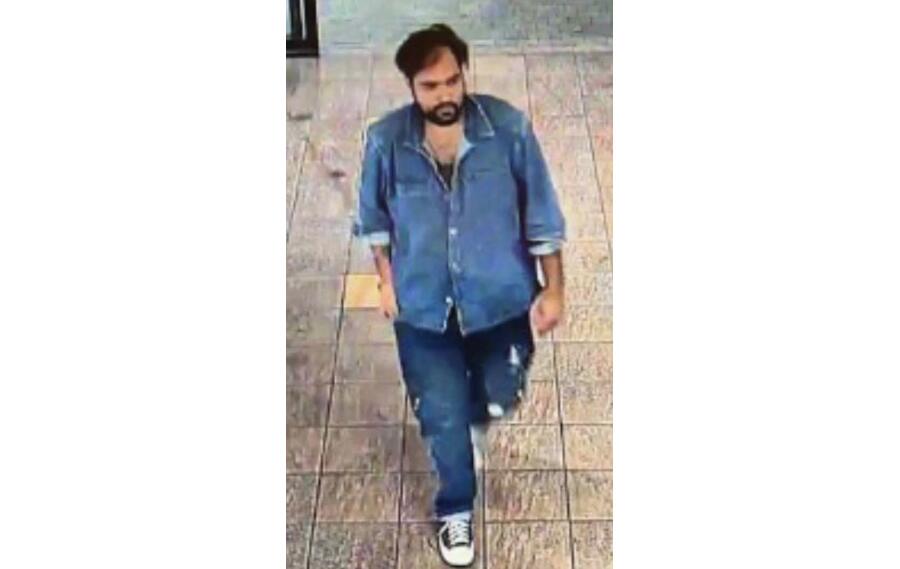
The Sheriff’s Station has been tight-lipped about specific descriptions, likely to avoid a "manhunt" mentality that could lead to the harassment of innocent bystanders. However, the call for information remains active. They are asking for the one thing that a camera can't always capture: context. Did someone see a car speeding away? Did someone notice a man acting erratically in the cafe area before the incident?
This is where the community's role becomes vital. A neighborhood isn't defined by its property values or the quality of its grocery stores. It is defined by its refusal to let the glass stay broken.
The investigation into the Valencia Whole Foods case is a reminder that the world we build—the one with the polished apples and the soft jazz over the speakers—requires constant, active maintenance. It’s not just the police who maintain it. It’s the people who refuse to look away when something is wrong, and the people who demand that their "sanctuaries" remain sacred.
The man who walked into that store and chose to expose himself took something from everyone who was there. He took their ability to be bored while buying groceries. He replaced a mundane afternoon with a sharp, cold memory.
As the sun sets over the Santa Clarita hills, the Whole Foods continues to glow, a beacon of suburban order. The glass has been cleaned. The aisles are straight. But beneath the surface, there is a new awareness. We are reminded that the peace we enjoy is a choice we make every day—and that sometimes, someone will choose to break it.
The detectives continue to pull the thread of the video footage, waiting for a name to match the face. Until then, the shoppers of Valencia will keep pushing their carts, looking a little more closely at the faces they pass, wondering if the person in the next aisle is there for the groceries or for the shadows.
It is a quiet, heavy vigilance. It is the price we pay for the realization that the world is never quite as safe as the lighting makes it seem.