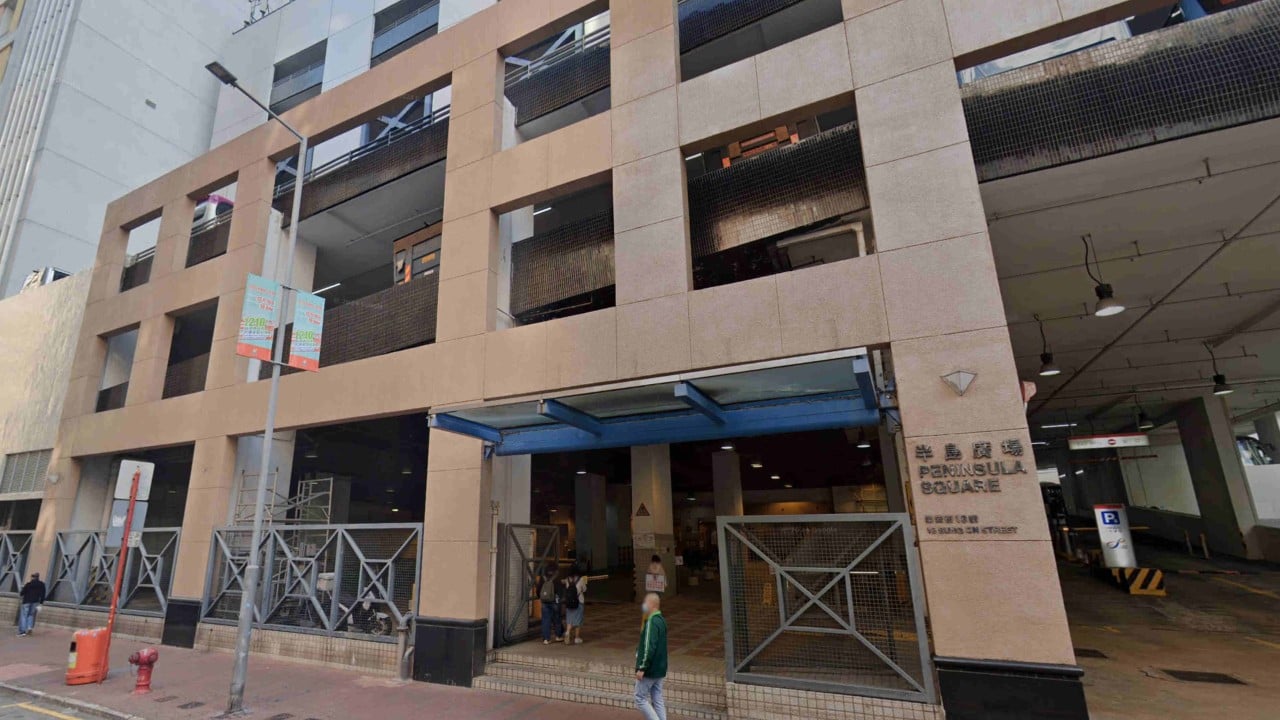
The weight of 200 kilograms of gold is not just a physical burden. It is a mathematical gravity that dictates how a person moves, how a tires hiss against the pavement, and how quickly a life can be dismantled. In the industrial heart of Hung Hom, where the air usually tastes of diesel and salt from the nearby Victoria Harbour, that gravity shifted.
US$12 million does not simply walk out of a high-security logistics center. It evaporates.
When the news broke that three men had intercepted a massive shipment of gold bullion in one of Hong Kong’s most surveilled districts, the public reaction was a mix of shock and a strange, grudging admiration for the audacity. But behind the headlines of a "daring heist" lies a much colder reality. This wasn't a cinematic spectacle with laser grids and synchronized watches. It was a clinical exploitation of the one thing no security system can fully patch: the predictable rhythm of human trust.
The Anatomy of a Heavy Lift
Gold is honest. It doesn't compress. It doesn't lose value when the lights go out. To move $12 million of it, you need more than a getaway car; you need a strategy for the sheer, stubborn mass of the element. Imagine thirty-two standard gold bars. Each one weighs about 12.4 kilograms. They are heavy enough to strain a wrist, cold enough to feel like ice against the palm, and valuable enough to buy a luxury apartment in the Mid-Levels with just two of them.
The suspects didn't strike at a vault. They struck at the transition. In the world of high-value logistics, the "last mile" or the "loading bay" is the soft underbelly. It is the moment when the asset is between the safety of a reinforced room and the speed of a moving vehicle.
The three men moved with a terrifying economy of motion. They knew exactly which van held the prize. They knew the timing of the guards. They knew that in the chaos of Hong Kong’s logistics hubs—where thousands of crates move every hour—an extra van or a diverted path can go unnoticed for the crucial minutes required to disappear into the labyrinth of Kowloon.
The Ghost in the Logistics Machine
We often think of crime as a disruption of order. In Hong Kong, a city built on the frictionless flow of capital, this kind of theft is actually a dark mirror of our own efficiency. The police are now scouring thousands of hours of CCTV footage, tracing the "shadow" of a vehicle that likely changed plates three times before it even left the district.
But consider the invisible stakes for the people left in the wake of the sirens.
There is a driver whose career ended the moment the back doors were forced open. There is a logistics manager who will never sleep soundly again, wondering if the "leak" came from a casual conversation at a dai pai dong or a sophisticated hack of an encrypted manifest. The theft of US$12 million in gold isn't just a loss for an insurance conglomerate or a precious metals firm. It is a puncture wound in the reputation of Hong Kong as the world’s safest counting house.
The city operates on a social contract of absolute fiscal security. When that contract is torn, the tremors are felt from the boardrooms of Central to the gold shops of Mong Kok.
The Problem with Liquid Wealth
Why gold? In an era of digital ledgers and cryptocurrency, gold remains the ultimate ghost. Bitcoin leaves a trail on the blockchain. Bank transfers can be frozen with a keystroke. But gold, once melted down, loses its history. It has no memory.
If the suspects can reach a clandestine foundry, those bars—stamped with serial numbers and refinery marks—become anonymous puddles of molten sun within hours. By the time the police have set up roadblocks on the Tuen Mun Road, the evidence could already be transformed into generic jewelry or smaller, untraceable biscuits destined for the black markets of Southeast Asia.
This is the "Value Density" problem. You can carry a king’s ransom in a backpack.
The police are currently focusing on the getaway route, eyeing the narrow arteries of Hung Hom and the sprawling containers of Kwai Chung. They are looking for a silver van. They are looking for three men who likely haven't blinked in forty-eight hours. But they are also looking for the "Inside Man"—the hypothetical specter that haunts every investigation of this scale.
Statistical reality suggests that you don't find 200 kilograms of gold by accident. You find it because someone told you where the sun was hiding that day.
The Silence of the Nine Dragons
As the investigation widens, the city watches. There is a tension in the air, a realization that for all our smart-city technology and facial recognition, we are still vulnerable to the oldest profession in the world: the heist.
The three suspects are currently ghosts in a city of seven million. They are navigating the "Grey Hong Kong"—the basements, the windowless industrial units, and the unregistered fishing boats that skirt the edges of the territorial waters.
The weight of the gold is now their greatest enemy. It slows them down. It makes the floorboards creak. It requires a specific kind of strength to carry that much sin.
While the authorities release grainy stills and plea for public assistance, the gold sits in the dark, indifferent to its owners, waiting to be reborn into a different form. The $12 million hasn't left the world; it has simply changed its state, moving from the ledger of the lawful into the pockets of the shadows.
Somewhere in a quiet corner of the New Territories, a torch is being lit. The blue flame hisses, ready to erase the stamps of the refinery, turning a fortune into a secret.
The gravity hasn't gone away. It’s just moved underground.