The air in Riyadh feels different when the wind carries the scent of dust and distant static. For a Chief Investment Officer at a major Gulf sovereign wealth fund—let’s call him Omar—the heat is less of a concern than the cold reality of a Bloomberg terminal. Omar sits in a glass-walled office that overlooks a city rising from the sand, but his mind is six thousand miles away. He is watching the geography of risk shift in real-time.
For decades, the math of global finance was simple. You parked your billions in London or New York. You trusted the plumbing of the Western financial system. You assumed that the "safe haven" was a static coordinate on a map. But the map is burning. As tensions between Israel and Iran escalate from shadow boxing to ballistic exchanges, the very definition of safety is being rewritten by necessity.
Omar isn't just looking for a place to grow money anymore. He is looking for a place to hide it from the fallout of a Middle Eastern conflagration and the increasingly unpredictable reach of Western sanctions. He is looking at Hong Kong.
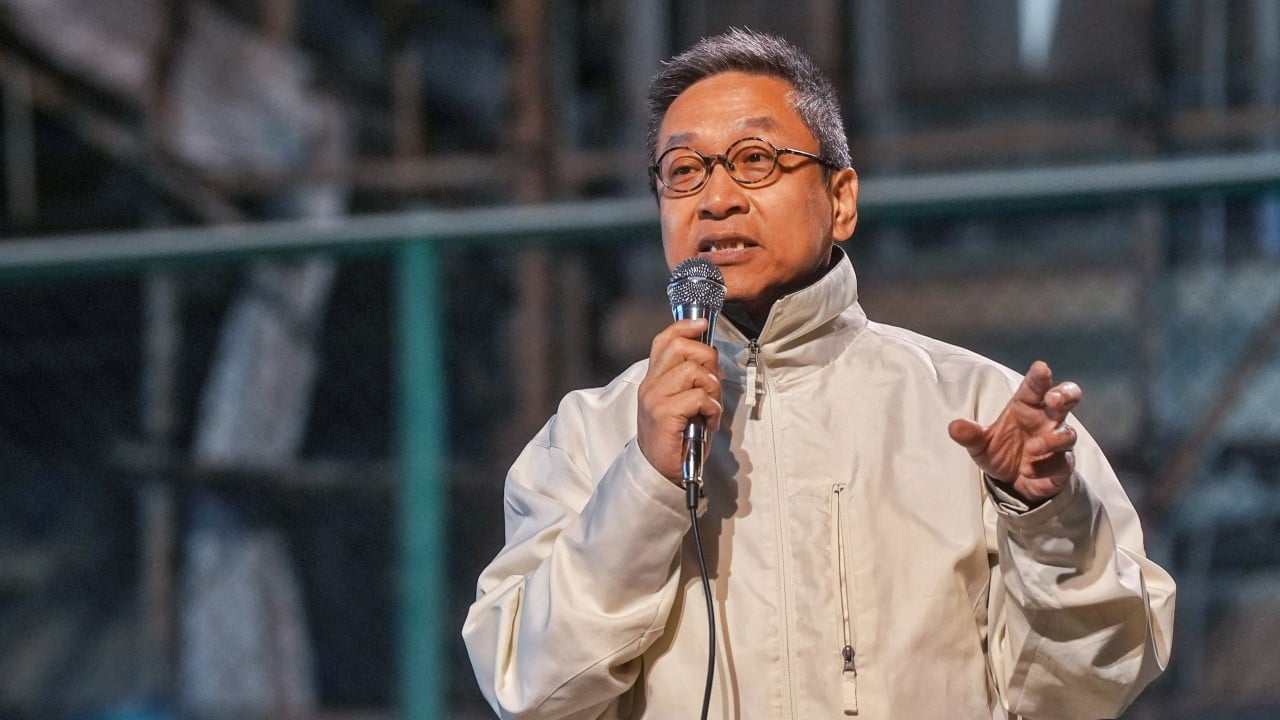
Alpha Lau, the head of InvestHK, isn't surprised by this. She spends her days speaking to people like Omar. She sees the quiet migration of capital that doesn't make it into the loud, daily headlines. While the world's cameras are focused on the rubble and the drones, the silent movement of "family office" wealth and institutional reserves is carving a new path toward the South China Sea.
The Geography of Anxiety
Money is a coward. It flees at the first sign of true instability. In the Middle East, the instability has become a permanent feature of the architecture. When Iran launched its unprecedented direct strikes on Israel, and the world waited for the inevitable response, the boardrooms of the Levant and the Arabian Peninsula felt a collective shiver.
It wasn't just about the physical danger of war. It was about the systemic danger. If a regional conflict spirals, if the Strait of Hormuz is choked, or if diplomatic alignments shift further, the traditional Western banking hubs start to look less like sanctuaries and more like potential traps. We saw what happened to Russian assets. Every major player in the Middle East saw it, too. They realized that "rule of law" can be a flexible concept when geopolitics get messy.
Hong Kong offers something the West currently cannot: distance from the immediate fire and a different kind of sovereignty.
Consider the hypothetical, yet highly plausible, scenario of a mid-sized private equity firm in Dubai. They manage the wealth of three generations of a merchant family. Traditionally, their "rainy day" fund sat in a Swiss bank. But Switzerland isn't as neutral as it used to be. The family patriarch asks a single, devastating question: "If the Americans decide they don't like our neighbors next month, whose side will the Swiss take?"
The answer to that question is why the flights from Dubai to Hong Kong are increasingly filled with men in tailored suits carrying encrypted laptops.
The Lure of the Fragrant Harbor
Why Hong Kong? It isn’t just about the tax rate or the lack of capital gains levies, though those are nice perks. It is about the "One Country, Two Systems" framework, which, despite the headlines of the last few years, provides a unique legal buffer that the Gulf finds comforting.
Alpha Lau has been vocal about this trend. She notes that Middle Eastern investors are particularly drawn to the city's sophisticated infrastructure for family offices. In 2023, Hong Kong introduced a new tax concession regime specifically for these entities. It was a signal fire. And the Middle East answered.
The city serves as a portal. For a Saudi prince or a Kuwaiti investment house, Hong Kong is the front door to mainland China’s massive, albeit complex, economy. But more importantly, it is a neutral ground where the US dollar still flows freely, yet the political winds blow from the East.
There is a specific irony here. For years, the Western narrative was that Hong Kong was losing its shine. We were told the city was over. But from the perspective of a billionaire in Doha, Hong Kong looks like a fortress. It has deep liquidity. It has a legal system based on common law. And it is under the protection of a superpower that is currently the Middle East’s biggest oil customer and a key diplomatic mediator.
The Human Stakes of Hedging
To understand this, you have to look past the spreadsheets. You have to understand the burden of legacy.
Imagine a woman named Leila. She manages a family office in Abu Dhabi. Her grandfather started a construction empire with nothing but a truck and a dream in the 1960s. Now, she is the steward of that history. Her job is not to make an extra 2% this quarter; her job is to ensure that two hundred years from now, her great-grandchildren still have the resources to thrive.
Leila watches the news and sees the Red Sea becoming a graveyard for cargo ships. She sees the rhetoric in Washington becoming increasingly polarized. She feels the fragility of the status quo.
When she looks at Hong Kong, she sees a hedge. By diversifying into Asian assets and utilizing Hong Kong’s banking system, she is decoupling her family’s future from a single, volatile region. She is buying insurance against the end of the world as she knows it.
This is the "human element" that the dry business reports miss. This isn't just "portfolio rebalancing." This is a frantic, high-stakes game of musical chairs where the music is being played by generals and revolutionaries.
The Digital Shift and the New Gold
The migration isn't just happening in physical vaults. It’s happening in the digital ether. Middle Eastern banks are increasingly interested in Hong Kong’s push to become a global hub for virtual assets and fintech.
There is a logic to this. If the traditional banking rails—the SWIFT system, the US dollar clearing houses—ever become weaponized against Middle Eastern interests, they need an alternative. Hong Kong is building that alternative. Whether it’s through central bank digital currencies (CBDCs) or a regulated crypto ecosystem, the city is positioning itself as the tech-forward lifeboat for those who fear being frozen out of the old world.
The numbers back this up. InvestHK has seen a surge in inquiries from the MENA (Middle East and North Africa) region. They aren't just asking about office space. They are asking about regulatory certainty. They are asking about the longevity of the peg between the Hong Kong dollar and the US dollar. They are looking for a place where the rules won't change overnight because of a tweet or a sudden change in a foreign capital's administration.
The Silent Pivot
The West often views the world through a lens of "with us or against us." But the Middle East is practicing the art of the pivot. They are realizing that being "with" everyone is the only way to survive.
This isn't a betrayal of Western partnerships. It is a cold-blooded recognition of reality. If you are sitting on a mountain of wealth in a region that has been the world’s most frequent battlefield, you don’t put all your eggs in one basket—especially when that basket is held by someone on the other side of the Atlantic who might decide to drop it to make a political point.
Hong Kong is the beneficiary of this global trust deficit.
The city has weathered its own storms, certainly. It has transformed. It is no longer the Hong Kong of 1997, or even 2017. But for an investor from Riyadh or Muscat, the "new" Hong Kong is exactly what they need: a stable, high-functioning, Chinese-backed financial center that speaks the language of global capitalism while remaining insulated from the specific pressures of Western domestic politics.
Alpha Lau and her team are essentially the concierges for this transition. They are facilitating the movement of billions, one family office at a time. They are selling more than just a jurisdiction; they are selling peace of mind.
The Unseen Flow
If you walk through the IFC mall in Hong Kong today, you might not notice the change immediately. The luxury boutiques are still there. The bankers still hurry through the corridors with their overpriced lattes. But listen closely to the languages being spoken in the private dining rooms of the Four Seasons.
You’ll hear Arabic. You’ll hear the quiet, intense negotiations of people who have seen how quickly a "safe" life can be upended.
They aren't here for the sights. They are here because the world is tilting. The old anchors are dragging. The Atlantic is starting to look very far away, and very unpredictable. The Pearl River, by contrast, looks steady.
The story of Middle Eastern banks eyeing Hong Kong is often told as a dry tale of interest rates and trade corridors. It is actually a story about the oldest human instinct of all: the need to find high ground before the tide comes in.
Omar, Leila, and the thousands of nameless actors moving their capital eastward aren't just making a "business decision." They are responding to the smell of smoke on the wind. They are moving their legacies to a place where the fire can’t reach them.
The Gilded Lifeboat is already in the water. It’s just waiting for the next wave to hit.
The lights of the Victoria Harbour skyline flicker, reflecting on the water like a promise kept. For those fleeing the uncertainty of the desert, those lights look less like a city and more like a lighthouse. They are betting everything that the East is where the sun will stay up the longest.