The Strait of Hormuz serves as the global economy’s primary jugular vein, a narrow chokepoint where the physics of geography meets the volatility of international relations. When a U.S. administration demands that allies provide their own warships to secure this passage, it is not merely a rhetorical flourish; it is a fundamental challenge to the post-WWII maritime security architecture. This shift signals a transition from a unilateral security guarantee provided by the U.S. Navy to a "user-pays" model of collective defense. Understanding the implications of this shift requires a cold-eyed analysis of energy flow mechanics, the limits of naval power projection, and the specific vulnerabilities of global supply chains.
The Chokepoint Physics of the Strait of Hormuz
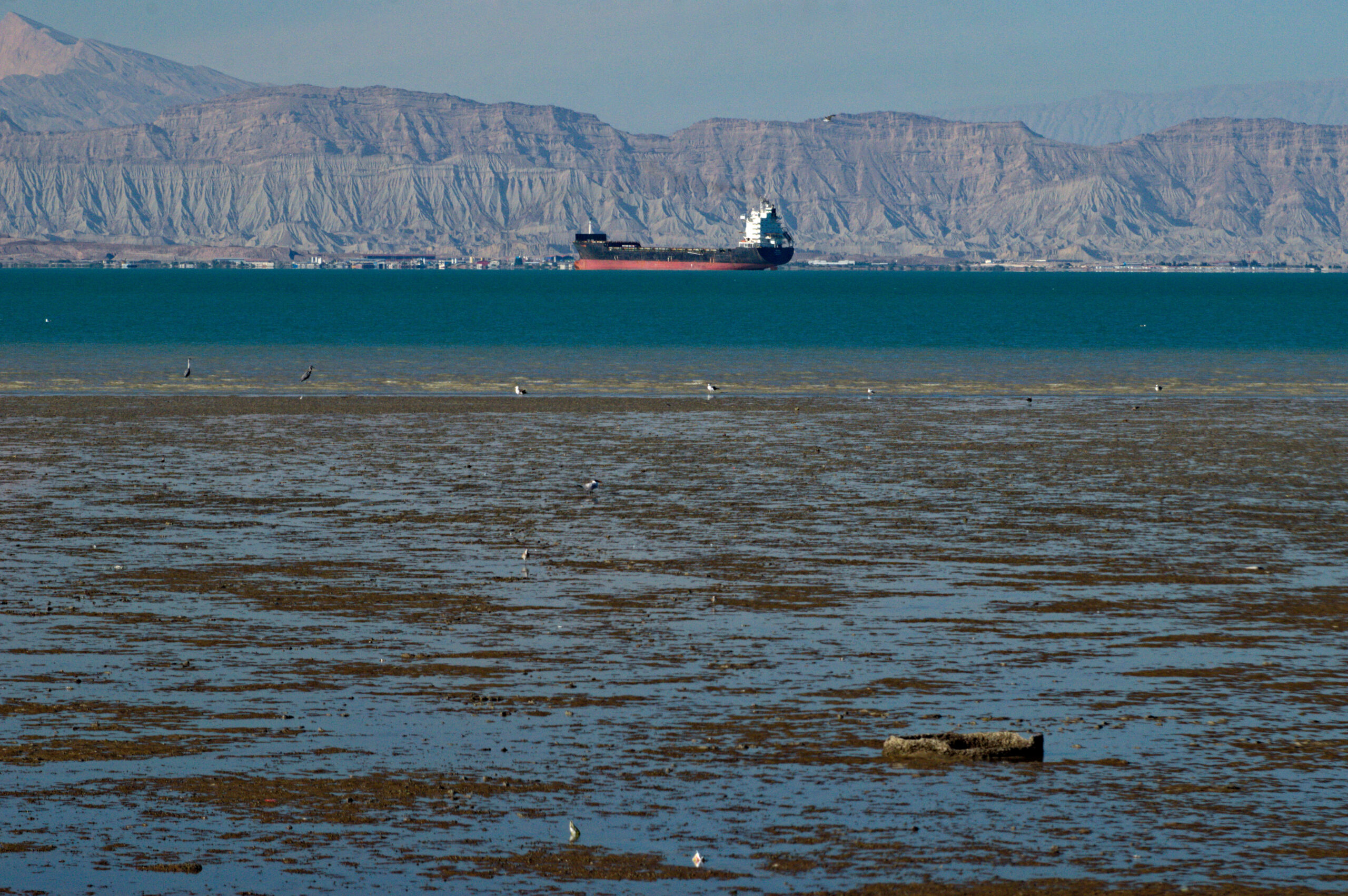
To quantify the risk, one must first understand the spatial constraints of the Strait. At its narrowest point, the shipping lane is only two miles wide in each direction, separated by a two-mile buffer zone. This proximity to the Iranian coastline creates a tactical environment defined by "asymmetric denial." Also making waves in this space: The Kinetic Deficit Dynamics of Pakistan Afghanistan Cross Border Conflict.
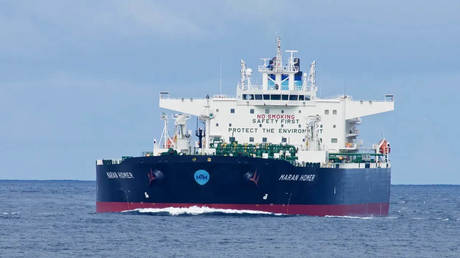
- The Velocity of Transit: Approximately 21 million barrels of oil pass through this corridor daily. This represents roughly 21% of global liquid petroleum consumption.
- The Lack of Redundancy: While pipelines like the East-West Pipeline in Saudi Arabia and the Abu Dhabi Crude Oil Pipeline exist, their combined spare capacity is less than 4 million barrels per day. The world cannot bypass Hormuz; it can only hope to mitigate a blockage.
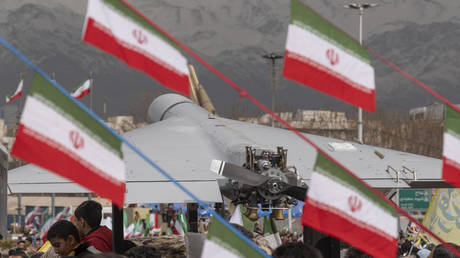
- The Threat Profile: The primary risk is not a traditional ship-on-ship naval battle, but rather the deployment of sea mines, fast-attack craft (FAC), and shore-based anti-ship cruise missiles (ASCMs).
The Three Pillars of Maritime Burden Sharing
The demand for allies—specifically major energy importers like Japan, South Korea, India, and China—to provide their own escorts rests on three logical pillars that redefine the cost-benefit analysis of global policing.
1. The Decoupling of Security and Consumption
Historically, the United States provided the "global public good" of open seas. However, the U.S. has reached a state of near-energy independence through shale production. The primary beneficiaries of Hormuz’s stability are now Asian economies. From a structural standpoint, the U.S. is subsidizing the energy security of its economic competitors. The demand for warships is an attempt to align the "Security Provider" with the "Energy Consumer." More insights into this topic are detailed by USA Today.
2. The Deterrence Calculation
A multi-flagged maritime task force changes the calculus of an aggressor. If a single nation (the U.S.) protects the strait, an attack is a bilateral conflict. If a coalition of ten nations, including regional powers, provides escorts, any kinetic action by a disruptor triggers a multi-front diplomatic and economic crisis. This is the "tripwire" effect applied to maritime corridors.
3. Naval Resource Allocation
The U.S. Navy's fleet size has contracted while its mission set has expanded. By offloading the "constabulary" duties of merchant vessel escort to allies, the U.S. can reallocate its high-end assets—specifically Carrier Strike Groups (CSGs) and Virginia-class submarines—to the Indo-Pacific theater. This is a strategic pivot necessitated by the math of hull counts.
The Cost Function of Naval Escort Operations
Securing a merchant vessel is not as simple as sailing alongside it. It involves a complex set of operational variables that increase exponentially with the level of threat.
- The Ratio of Escort to Escorted: To provide effective point defense against swarming tactics, a ratio of at least one frigate or destroyer per three merchant vessels is often required. Given the hundreds of tankers in transit, the sheer volume of hulls needed is staggering.
- The Persistence Problem: Modern warships require significant maintenance and crew rotation. Maintaining one ship "on station" in the Persian Gulf typically requires a fleet of three: one on station, one in transit, and one in refit.
- Aegis vs. Asymmetric Threats: Using a $2 billion destroyer equipped with $2 million interceptor missiles to fend off a $50,000 suicide drone or a $10,000 sea mine is a losing economic proposition. This "cost-exchange ratio" favor the disruptor, not the protector.
Tactical Vulnerabilities and the Logic of "Opening the Way"
When a political leader states that the Strait will open "one way or the other," they are referencing the application of overwhelming kinetic force to suppress shore-based threats. However, the mechanism of "opening" a blocked strait involves a specific sequence of high-risk operations.
Mine Countermeasures (MCM)
If the Strait is mined, global trade stops instantly. No insurer will cover a hull entering a known minefield. Clearing these mines is a slow, methodical process involving specialized vessels that are themselves highly vulnerable. The U.S. and its allies have a chronic shortage of dedicated MCM platforms, creating a significant bottleneck in any "re-opening" scenario.
Suppression of Enemy Air Defenses (SEAD)
To protect tankers from shore-based missiles, a coalition must establish air superiority over the entire coastal region. This escalates a "security mission" into a full-scale air campaign. The logic of "opening the way" implies a willingness to strike targets on mainland territory, moving beyond defensive posturing into offensive engagement.
The Insurance Premium Feedback Loop
The mere threat of conflict in Hormuz triggers a spike in "War Risk" insurance premiums. Even if no ship is sunk, the increased cost of shipping acts as a de facto tax on global energy. A successful strategy must not only keep the water physically clear but also keep the perceived risk low enough to maintain the economic viability of the route.
The Strategic Pivot to Technological Alternatives
Given the high cost of traditional naval escorts, the long-term solution lies in shifting the burden to unmanned and autonomous systems.
- Unmanned Surface Vessels (USVs): Deploying "sensor-forward" USVs allows a coalition to monitor vast areas of the Strait without risking human life. These platforms can identify threats early, allowing manned destroyers to stay at a safe distance while providing over-the-horizon protection.
- Directed Energy Weapons: To solve the cost-exchange ratio problem, the integration of laser systems on escort ships is critical. These systems provide a "near-infinite magazine" to deal with drone swarms at a cost of cents per shot, rather than millions.
- Alternative Logistics: The acceleration of hydrogen and ammonia as energy carriers, coupled with increased investment in trans-continental pipelines, serves as a "macro-escort" strategy by reducing the total volume of liquid petroleum that must transit the Strait.
Identifying the Break Point
The primary limitation of the "Allies must pay" strategy is the varying levels of naval capability among partners. Many nations that depend on Hormuz oil lack "Blue Water" navies capable of sustained operations far from their home ports. This creates a security vacuum where only a few nations—the U.S., UK, France, and perhaps India or China—can actually perform the task.
If the U.S. withdraws its guarantee without a pre-negotiated, technologically integrated replacement, the result will not be a collaborative security environment but a chaotic one. Individual nations may attempt to cut "side deals" with regional powers to ensure their own tankers are unmolested, leading to a fragmented and unreliable global energy market.
The strategic play is the immediate formation of a "Maritime Digital Integration Zone." This involves the U.S. providing the high-level ISR (Intelligence, Surveillance, and Reconnaissance) data and command-and-air-cover umbrella, while allies contribute the physical "hulls" for point defense and mine sweeping. This hybrid model recognizes the reality of U.S. shale independence while maintaining the essential stability of the global energy supply. Anything less is a gamble on the physical properties of a two-mile-wide channel that the world cannot afford to lose.