The sea around Kharg Island does not look like water. It looks like heavy, unrefined silk. On a quiet night, the Persian Gulf holds the heat of the day long after the sun has dipped below the horizon, creating a humid, pressing weight that sits on the lungs of every dockworker and engineer. Kharg is a teardrop of coral and rock, barely nine miles long, yet it serves as the pulsing jugular of an entire nation’s economy. If you stand on its western edge, you are standing on the threshold of global energy.
Everything changed at 02:00.
The silence of the Gulf is usually punctuated only by the low hum of massive tankers, vessels the size of horizontal skyscrapers, waiting to be fed from the island’s pipelines. Then came the sound. It was not a whistle. It was a tearing noise, like the fabric of the sky being ripped in half by an invisible giant.
The Calculus of Fire
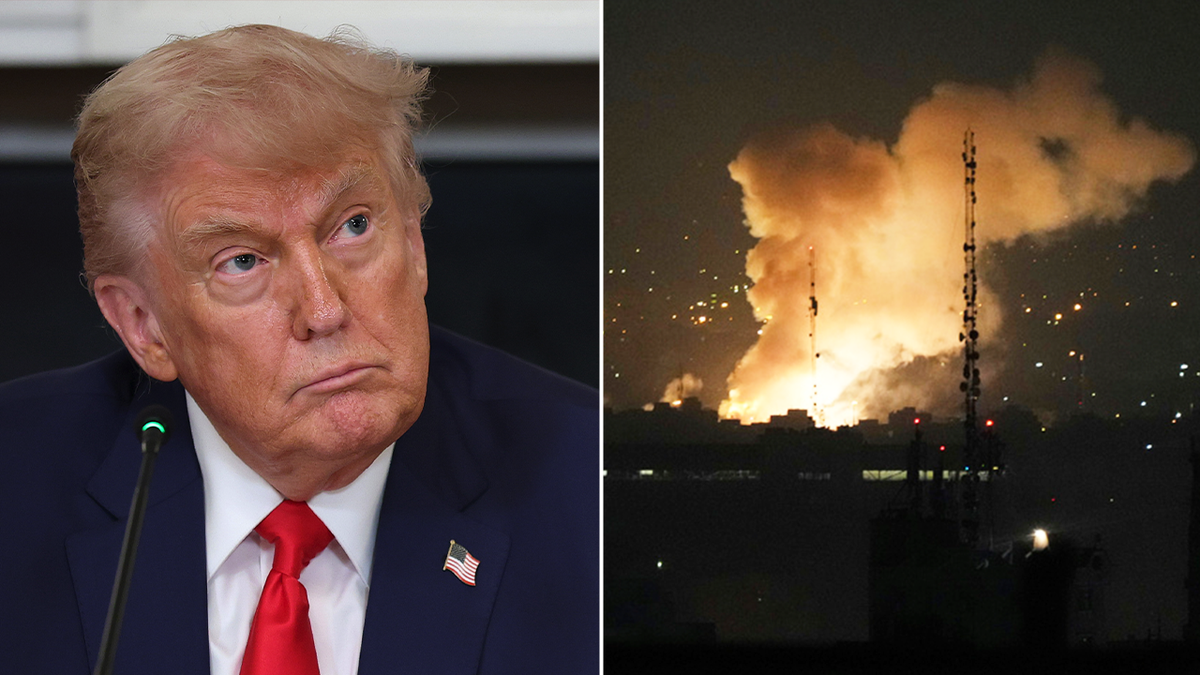
Donald Trump’s recent declaration that the United States "obliterated" military targets on Kharg Island isn't just a headline in a financial ledger or a briefing note for a security council. It is a fundamental shift in the geometry of Middle Eastern warfare. For decades, Kharg was the "red line" that no one dared cross. It was the untouchable asset. To strike it is to reach into the very chest of the Iranian state and squeeze.
Consider the perspective of a hypothetical terminal supervisor named Reza. For twenty years, Reza has watched the pressure gauges. He knows the rhythmic thrum of the pumps. When the explosions started, the vibration didn't come from the air; it came through the soles of his boots. The ground itself became an instrument of terror.
The strategy behind "obliteration" is rarely about the physical debris. It is about the message sent to the people who keep the lights on. By targeting military assets nested within the oil infrastructure, the strike creates a psychological pincer move. It tells the defender that their shield is not only broken but is actually a magnet for further destruction.
Recent reports indicate that the precision of these strikes was absolute. We aren't talking about carpet bombing from a bygone era. We are looking at the terrifying efficiency of modern kinetic energy. Small, guided munitions designed to vaporize a radar installation or a surface-to-air battery without necessarily igniting the four million barrels of crude sitting just a few hundred yards away. It is surgery performed with a sledgehammer.
The Invisible Stakes of a Ghost Fleet
While the fireballs on Kharg captured the cameras, the real war is being fought in the dark. Iran has long relied on a "ghost fleet"—a shifting, nameless collection of tankers that turn off their transponders to bypass international sanctions. These ships are the lifeblood of the resistance economy.
When the military targets on the island were neutralized, the ghost fleet lost its eyes.
Imagine a captain on the bridge of a rusted Suezmax tanker, ten miles off the coast. His screens are dark. The shore-based guidance he relies on to navigate the treacherous, crowded waters of the Strait of Hormuz is gone. He is blind in a sea full of predators. The threat to "obliterate" the oil infrastructure itself is the final card in a high-stakes game of poker where the chips are measured in millions of tons of carbon.
The logic is brutal. If the military can't protect the island, the island can't load the ships. If the ships can't load, the currency collapses. When the currency collapses, the bread lines grow. This is how a kinetic strike on a rocky island in the Gulf ends up on a dinner table in Tehran.
A Sky Full of Math
The sheer technical audacity of these operations often gets lost in the political shouting. We are witnessing the deployment of autonomous systems that can loiter for hours, waiting for a specific thermal signature before committing to a terminal dive.
This isn't a "game-changer"—a word that has lost all meaning in the mouth of every pundit. It is a realization of a nightmare. The "invisible stakes" are the bits and bytes. Cyber-warfare likely preceded the physical explosions, blinding the Iranian air defense systems long before the first missile crossed the coastline.
Wait.
The silence that follows a strike like this is louder than the blast itself. It is the silence of a nation holding its breath, wondering if the next wave will target the pipes instead of the guns. Trump’s rhetoric has moved past the "maximum pressure" of sanctions into the "maximum impact" of direct action.
The world watches the price of Brent Crude as if it were a heartbeat monitor. Every time a plume of black smoke rises from the Gulf, the numbers on a screen in London or New York tick upward. We are all connected to Kharg Island by a thousand invisible threads of plastic, fuel, and synthetic fabric. We are participants in this war every time we turn a key in an ignition.
The Human Cost of Precision
Statistics tell us how many batteries were destroyed. They don't tell us about the fear in the coastal villages. For the families living along the Bushehr province, the orange glow on the horizon wasn't a tactical success. It was the end of the world.
There is a specific kind of terror that comes from high-tech warfare. It is the realization that you are being watched by something you cannot see, and judged by a logic you cannot influence. The "military targets" are manned by sons and brothers. When a command center is "obliterated," a dozen families stop receiving phone calls.
The transition from peace to "limited engagement" is a sliding scale that nobody seems to know how to stop.
We often think of these conflicts as a chess match between giants, but the board is made of glass. One heavy move and the whole thing shatters. The threat to hit the oil infrastructure next is not just a threat to Iran; it is a threat to the fragile equilibrium of the global market. We are flirting with a reality where energy becomes a weapon of mass extinction rather than a utility.
The rubble on Kharg is still cooling. The tankers are still circling, wary and dark. In the distance, the lights of the mainland flicker, powered by the very resources that are now under the crosshairs of a superpower.
The Gulf remains. It is deep, ancient, and indifferent to the ambitions of men. But for one night, the water wasn't black or blue. It was the color of a furnace, reflecting a fire that started in a boardroom and ended in a scream.
The next time you see a map of the Middle East, don't look at the borders. Look at the water. Look at the small, rocky outcroppings that hold the world’s heat. Then, listen for the tearing sound in the sky. It is closer than you think.