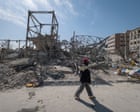
The transition from shadow warfare to direct kinetic engagement between Israel and Iran signals a structural shift in Middle Eastern security architecture. While media reports focus on the immediate visual data of missile strikes, the strategic reality is defined by a series of interlocking escalatory feedback loops involving domestic Canadian fiscal policy, Israeli deep-strike capabilities, and the attrition of Iranian defensive systems. Understanding this conflict requires moving beyond headlines to analyze the specific levers of power—monetary, military, and diplomatic—that dictate the probability of a broader regional conflagration.
The Monetary Constraints of Middle Eastern Intervention
The commentary by Mark Carney, former Governor of the Bank of Canada and the Bank of England, regarding Canada’s potential involvement in a regional war is not merely a political posture; it is an economic signaling event. Canada’s military engagement is traditionally gated by two specific variables: NATO Article 5 obligations and the "Fiscal Space" available for sustained high-intensity operations. For an alternative look, read: this related article.
Carney’s refusal to rule out involvement highlights a shift in the Canadian strategic calculus. For an economy currently grappling with productivity stagnation and debt-servicing costs, the decision to join a coalition in the Middle East involves a direct opportunity cost. The mechanism of "War Finance" in a modern Western economy involves an immediate reallocation of capital from domestic infrastructure and social programs toward the defense industrial base. If Canada commits, the primary effect is not merely on the ground in Iran, but in the tightening of the Bank of Canada’s future interest rate paths to manage the inflationary pressures of wartime spending.
The risk of a "War Premium" on oil prices remains the most significant global economic variable. A sustained conflict near the Strait of Hormuz creates a bottleneck in global energy transit, potentially adding a $15 to $30 premium per barrel of crude. For Canada, a net energy exporter, this provides a temporary fiscal buffer, yet the global inflationary ripple effect would likely force the Bank of Canada into a restrictive monetary stance, offsetting any gains from increased energy revenue. Similar coverage on the subject has been shared by The New York Times.
The Israel-Iran Strategic Pivot: From Proxy to Direct Kinetic Engagement
The recent strikes on Tehran represent the failure of the "Grey Zone" strategy. For decades, Israel and Iran operated in a theater of plausible deniability—using cyberattacks, maritime sabotage, and proxy militias. That era has ended. The current phase of the conflict is defined by the Asymmetric Attrition Model.
Israel’s tactical objective is the systematic degradation of the Iranian "Ring of Fire"—the network of proxies including Hezbollah in Lebanon, the Houthis in Yemen, and various militias in Iraq and Syria. By striking Tehran directly, Israel is testing the credibility of Iran’s internal security and the survivability of its Integrated Air Defense Systems (IADS).
The Three Pillars of Israeli Deep-Strike Strategy
- Suppression of Enemy Air Defenses (SEAD): Israeli F-35I Adir aircraft prioritize the destruction of Iranian S-300 batteries. Without these systems, Iran’s critical infrastructure, including nuclear enrichment sites at Natanz and Fordow, becomes vulnerable to conventional bunker-buster munitions like the GBU-28.
- Leadership Decapitation: High-value target (HVT) operations in Tehran serve to paralyze the command and control (C2) structure of the Islamic Revolutionary Guard Corps (IRGC). This creates a "Decision-Making Friction" where the response time to Israeli incursions increases as IRGC commanders prioritize their own survival.
- Economic Disruption: Targeting energy refineries or transport hubs creates domestic pressure within Iran, aiming to trigger civil unrest that mirrors the "Woman, Life, Freedom" protests of 2022.
The Iranian response function is constrained by its limited conventional air power. To compensate, Iran relies on its vast ballistic missile and Unmanned Aerial Vehicle (UAV) inventory. The effectiveness of the "Shahed-136" loitering munitions and "Fattah" hypersonic missiles is the primary variable in the Iranian counter-strategy. If Iran can saturate the "Iron Dome," "David’s Sling," and "Arrow" systems, it can achieve a strategic stalemate through the threat of mass civilian casualties in Tel Aviv.
Logistics and the Supply Chain of Modern Warfare
Modern warfare is a contest of industrial throughput. The conflict in the Middle East is now competing with the ongoing war in Ukraine for the same pool of Western munitions. Specifically, 155mm artillery shells and interceptor missiles for the Patriot air defense system are in high demand across both theaters.
The "Lead-Time Bottleneck" is a critical vulnerability for Israel and its allies. If the conflict escalates into a multi-month engagement, the rate of consumption for precision-guided munitions (PGMs) will outpace the rate of production in the United States and Europe. This creates a "Strategic Inventory Depletion" risk, where Western powers may be forced to limit their involvement to maintain their own minimum readiness levels.
Canada’s potential contribution, while militarily smaller in scale than the United States, focuses on niche capabilities: signals intelligence (SIGINT), tactical transport, and special operations forces (SOF). The integration of Canadian assets into a coalition would provide "Operational Multipliers," particularly in the realm of maritime security in the Red Sea and Persian Gulf.
The Geography of Escalation: Mapping the Flashpoints
A direct war with Iran is not a localized event. It is a regional reconfiguration. The geographic scope of the conflict is determined by the "Reach and Resupply" capabilities of both sides.
- The Levant: Israel faces a persistent threat from Hezbollah. The Lebanese border is the most dangerous front because Hezbollah possesses over 150,000 rockets, many of which are GPS-guided. A full-scale war here would require Israel to commit its ground forces, diverting resources away from the direct strikes on Iran.
- The Red Sea: The Houthis act as a maritime disruption force. By targeting commercial shipping, they can force the global economy to reroute around the Cape of Good Hope, adding significant costs to international trade and increasing the logistical burden on coalition navies.
- The Persian Gulf: This is the primary theater for Iranian asymmetric naval warfare. Speedboat swarms and sea-mines can effectively close the Strait of Hormuz, through which 20% of the world's oil flows.
The "Escalation Ladder" in this context is not linear. A single miscalculation, such as a missile hitting a major civilian center or a nuclear facility, could trigger an "Automatic Response Protocol," leading to a full-scale regional war before diplomatic channels can intervene.
The Technological Frontier: Cyber and Electronic Warfare
Beyond the kinetic strikes, a silent war is occurring in the electromagnetic spectrum. Israel’s cyber capabilities, demonstrated by past operations like Stuxnet, are now being deployed to disrupt Iranian military communication networks and civilian infrastructure.
Iran’s response in the cyber domain is increasingly sophisticated, targeting Western financial institutions and utility grids. This "Symmetric Cyber Retaliation" means that if Israel strikes Iran’s power grid, Iran—or its Russian and Chinese partners—may target the power grids of Israeli allies. This expands the theater of war far beyond the borders of the Middle East, reaching directly into the domestic infrastructure of countries like Canada.
The Strategic Play: Calculating the End State
The current trajectory of the Israel-Iran conflict points toward a "High-Intensity Attrition" scenario rather than a decisive victory for either side. The strategic goal for Israel is not the total conquest of Iran—an impossible task given Iran’s geography and population—but the "Strategic Neutralization" of its nuclear program and proxy network.
For Iran, the goal is "Survival through Deterrence." By maintaining the ability to inflict severe pain on Israel and the global economy, the Iranian leadership hopes to force a diplomatic settlement that preserves its regional influence and domestic power structure.
The decision by Canada to join a potential war will be driven by the "Coalition of the Willing" framework. If the United States decides that a direct strike on Iran’s nuclear facilities is necessary, the diplomatic pressure on Ottawa to provide logistical and moral support will be immense. The Canadian government will have to weigh the "Alliance Credibility" against the "Domestic Fiscal Risk."
The most likely outcome in the near term is a series of "Calibrated Escalations." Each side will strike hard enough to signal resolve, but not so hard as to force a total war that neither can afford. However, as the frequency of these strikes increases, the margin for error shrinks. The "Probability of Miscalculation" is currently at its highest level in forty years.
Military commanders and policy analysts must focus on the "Kill Chain" efficiency of Iranian proxies versus the "Interception Sustainability" of Israeli and coalition air defenses. The war will be won or lost in the factories of the defense industrial base and the spreadsheets of central banks as much as on the battlefield in Tehran.
The strategic play for Western allies is to accelerate the "Energy Transition" to reduce the leverage of the Iranian "Oil Weapon" while simultaneously expanding the "Abraham Accords" to create a more integrated regional security framework that isolates Tehran. Failure to achieve this dual-track strategy will leave the global economy permanently vulnerable to the volatility of the Middle Eastern escalation cycle.