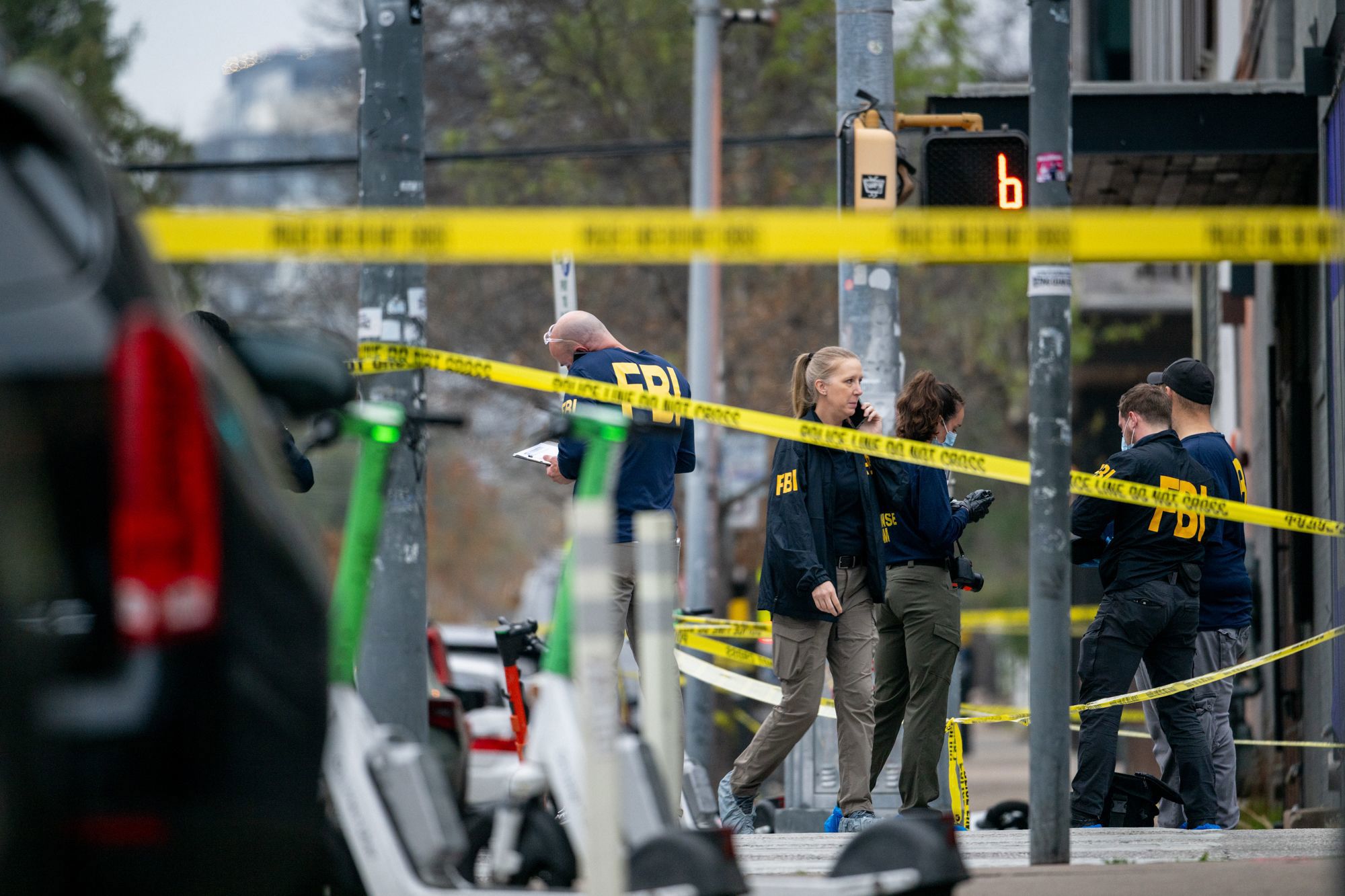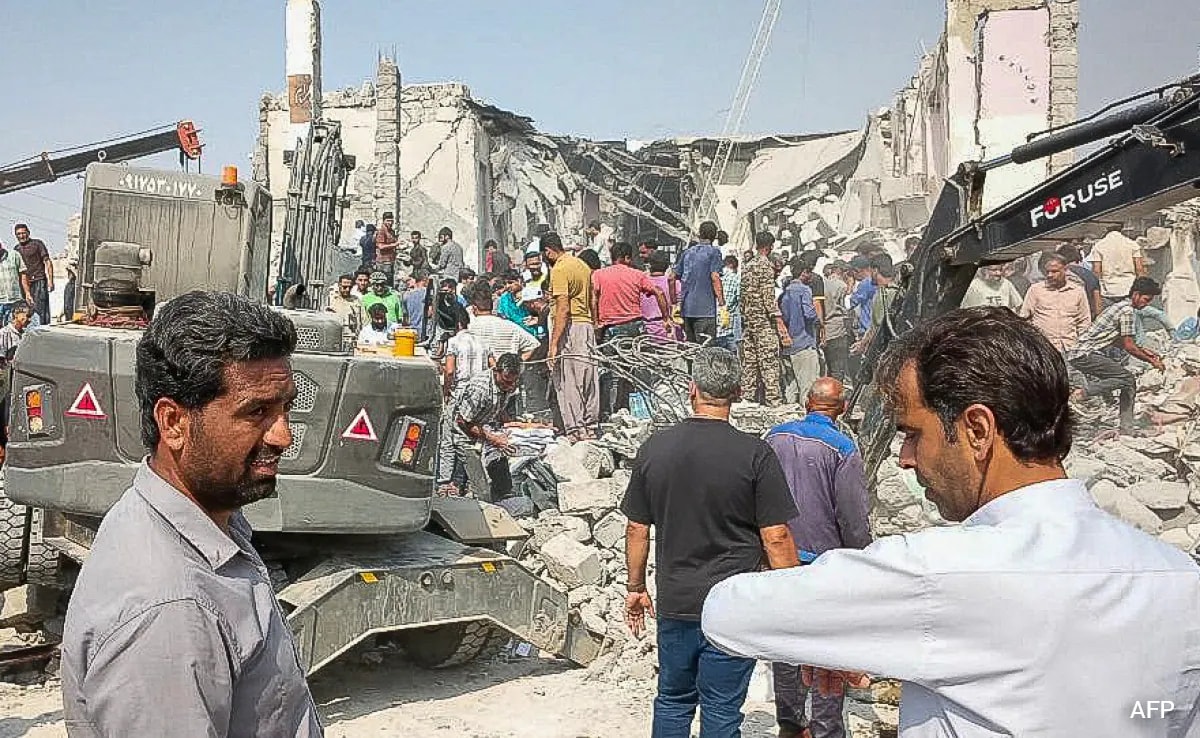
The casualty count from the recent strike on a girls' school in Kerman, Iran, has reached 165, signaling a shift in the operational threshold of regional kinetic engagements. While initial reporting focuses on the visceral tragedy of the event, a strategic analysis reveals a deliberate intersection of psychological warfare, precision-guided munitions (PGM) failure or intent, and the systemic fragility of civil infrastructure in high-tension corridors. To understand the 165-fatality figure, one must deconstruct the strike not merely as an isolated act of violence, but as a data point in the broader calculus of asymmetric deterrence.
The Architecture of Mass Casualty Events
The scale of the Kerman strike is a function of three specific variables: structural density, timing synchronization, and the "Blast Overpressure Effect." When a high-explosive yield is introduced into a confined educational environment, the casualty rate is not linear; it is exponential.
The Three Pillars of Lethality in Urban Strikes
- Structural Compromise and Fragmentation: In standard school architecture, the primary cause of death is rarely the fireball itself. Instead, it is the transformation of the building’s own materials into secondary projectiles. Concrete spalling and shattered glass account for approximately 70% of non-immediate fatalities in these environments.
- Occupancy Density Ratios: Schools represent the highest concentration of "soft targets" within a specific square-meter radius. By executing a strike during peak hours, the perpetrator maximizes the probability of high-fatality counts without requiring an increase in explosive payload.
- The Delayed Emergency Response Loop: In regions with strained civil defense, the "Golden Hour" of medical intervention is frequently lost. The jump from 100 to 165 deaths suggests a failure in the triage-to-trauma pipeline, where survivable injuries become fatal due to the sheer volume of patients overwhelming local surgical capacities.
The Mechanics of Targeting Failure versus Intent
A fundamental question remains: Was the school the primary objective, or the result of a guidance deviation? Analyzing this requires a look at the Circular Error Probable (CEP) of modern regional missile systems.
The precision of a strike is governed by the $CEP$ formula, which defines the radius within which 50% of munitions will land. If the intended target was a nearby military or logistics hub, a CEP of 50–100 meters in a dense urban environment virtually guarantees collateral damage of this magnitude. However, the concentration of the blast within the school’s main auditorium suggests a "point-target" designation.
Logical Framework for Assessing Intent
- Hypothesis A: Systematic Terror: The strike follows the logic of "Total War," where the objective is to break the domestic morale of the adversary by targeting the next generation. This strategy assumes that the political cost of continuing a conflict will eventually outweigh the ideological gains.
- Hypothesis B: Intelligence Degradation: The target may have been identified as a "dual-use" facility. In asymmetric warfare, schools and hospitals are frequently accused of housing command-and-control (C2) nodes. If the intelligence was faulty or outdated, the kinetic result remains the same, but the strategic intent shifts from terror to a failed decapitation strike.
- Hypothesis C: Signal Interference: Electronic Warfare (EW) suites in the region are capable of "spoofing" GPS and GLONASS signals. A redirected munition, losing its lock-on-target, will default to its last known coordinates or a ballistic trajectory, often impacting the most prominent structural silhouette in the area.
The Cost Function of Regional Instability
Every life lost in the Kerman strike represents a compounding cost to the Iranian state’s internal security apparatus. This isn't just a humanitarian crisis; it is an economic and logistical bottleneck.
The Direct Economic Impact
The loss of 165 individuals, primarily youth, represents a massive excision of future human capital. In an economy already struggling under the weight of international sanctions, the long-term productivity loss is measurable in the tens of millions of dollars. Furthermore, the immediate cost of reconstruction and the redirection of military funds to civil defense creates a "budgetary drain" that weakens the frontier defenses.
The Indirect Political Volatility
Mass casualty events involving children create a unique "Emotional Flashpoint" that bypasses standard state-controlled narratives. The government faces a binary trap:
- Retaliate immediately, risking a full-scale regional war they may not be prepared to finance.
- Show restraint, risking the perception of weakness among the hardline domestic base.
The Technological Gap in Civil Protection
The Kerman incident exposes the critical vulnerability of modern cities to high-altitude or standoff-range munitions. Traditional air defense systems like the S-300 or local variants are optimized for intercepting aircraft or large ballistic missiles, not necessarily low-RCS (Radar Cross Section) drones or loitering munitions that might have been utilized in such a strike.
The absence of reinforced shelters in public buildings creates a "Protection Deficit." In modern conflict zones, the definition of a school must evolve from a place of learning to a hardened structure capable of withstanding at least secondary blast effects. The failure to modernize these structures is a systemic risk factor that guarantees high death counts in any future engagements.
Analyzing the 165: Data Reliability and Verification
We must address the variance in reporting. Iranian state media is the primary source for the 165-death figure. In information warfare, numbers are often used as "force multipliers."
The "Inflationary Data Model" suggests that a state might increase casualty counts to garner international sympathy or to justify a disproportionate military response. Conversely, the "Suppression Model" would suggest the numbers are actually higher, but suppressed to prevent widespread panic. Given the saturation of social media and leaked hospital records, the 165 figure appears to be a verified stabilization of the initial chaotic reports, representing a catastrophic success of the munition’s deployment.
Strategic Recommendation for Regional Actors
The Kerman strike has redefined the "Red Line" for regional engagement. For state actors and international observers, the strategic play is no longer about preventing minor border skirmishes, but about hardening the infrastructure of the interior.
To mitigate the fallout and prevent a recursive loop of escalation:
- Deployment of Integrated Point Defense: Transitioning from broad-spectrum air defense to localized "Hard-Kill" systems for civilian centers.
- Intelligence Transparency: Establishing a neutral "Flash-Point" verification body to determine the origin and intent of munitions, thereby preventing accidental wars sparked by "Hypothesis C" (Signal Interference).
- The Hardening Mandate: Public infrastructure in contested zones must be retrofitted with blast-resistant films and reinforced structural supports.
The Kerman school strike is a grim reminder that in the modern theater, the distance between "civilian" and "combatant" is being erased by the cold logic of kinetic efficiency. The 165 deaths are not just a statistic; they are a demonstration of the current reality where urban density is the greatest force multiplier for any actor willing to exploit it. Future stability depends entirely on the ability to decouple high-value civilian targets from the proximity of military-adjacent infrastructure.