The security of Israel’s northern frontier is currently dictated by a binary logic: the restoration of civilian life requires the physical degradation of Hezbollah’s Radwan Force. While diplomatic observers frequently discuss "tensions," the operational reality is a breakdown of the 2006 status quo, where the cost of defensive posture has exceeded the cost of preemptive attrition. For the roughly 60,000 to 80,000 Israelis displaced from the Galilee, the conflict is not a matter of intermittent fire but a structural failure of the "buffer zone" concept. To understand why a diplomatic resolution remains elusive, one must analyze the geographic necessity of depth, the psychological threshold of the resident population, and the shifting tactical parity introduced by suicide drones and anti-tank guided missiles (ATGMs).
The Three Pillars of Northern Insecurity
The current impasse is supported by three distinct but interlocking variables. If any of these variables remain unaddressed, the northern border remains a dormant front regardless of a theoretical ceasefire. Read more on a related issue: this related article.
- Topographic Vulnerability: The Upper Galilee is characterized by high ridges overlooking Israeli civilian centers. Hezbollah’s presence in villages like Meiss el-Jabal or Marwahin provides direct line-of-sight for Kornet missiles. This geographic advantage negates traditional early warning systems, as the flight time for an ATGM at a range of 2-5 kilometers is measured in seconds.
- The Radwan Incursion Model: The psychological anchor for the displacement is the October 7 massacre. The Israeli civilian population now views the Presence of Hezbollah’s elite Radwan units not as a deterrent force, but as an invasion-ready echelon. Security is no longer defined by the absence of shelling, but by the absence of proximity.
- The Economic Attrition Loop: Emptying the north has created an internal refugee crisis that drains the national budget through hotel subsidies, lost agricultural output in the Hula Valley, and the erosion of the high-tech ecosystem in Haifa and Kiryat Shmona.
The Failure of UNSCR 1701 as a Functional Constraint
The legal framework intended to govern this region, United Nations Security Council Resolution 1701, aimed to keep the area between the Blue Line and the Litani River free of any armed personnel other than the Lebanese Army and UNIFIL. In practice, this failed due to "nested militarization." Hezbollah integrated its infrastructure into the social and physical fabric of southern Lebanese villages.
This creates a tactical bottleneck for the Israel Defense Forces (IDF). To clear the threat, the IDF must engage in high-intensity urban combat within Lebanese sovereign territory, which carries a massive international diplomatic cost. Conversely, a purely defensive stance allows Hezbollah to maintain a "permanent threat state" at zero marginal cost. The mismatch in the cost-benefit ratio is the primary driver of Israeli civilian skepticism regarding any deal that does not involve a verifiable withdrawal of Hezbollah forces to the north of the Litani River. Further reporting by TIME delves into related perspectives on the subject.
The ATGM and UAV Cost Function
Traditional Israeli missile defense, specifically the Iron Dome, was designed to intercept ballistic trajectories—rockets that go up and come down. Hezbollah has pivoted toward "flat-trajectory" warfare.
- Anti-Tank Guided Missiles (ATGMs): Weapons like the Russian-made Kornet or the Iranian Almas utilize man-in-the-loop guidance. They do not follow a predictable arc, making them nearly impossible for current active protection systems to intercept over wide areas. They are being used as "sniping artillery" against individual houses and vehicles.
- One-Way Attack UAVs (Suicide Drones): These platforms have low radar cross-sections and often fly through mountainous terrain to mask their acoustic and thermal signatures. They bypass the traditional "bubble" of air defense by flying low and slow, exploiting the topographical "dead zones" of the Galilee.
The cumulative effect of these technologies is the "dead zone" creation. Even without a full-scale invasion, Hezbollah has effectively annexed a 5-to-10-kilometer strip of Israeli territory by making it uninhabitable through persistent, low-cost precision fire.
Structural Requirements for Civilian Return
For the Israeli government to facilitate the return of its citizens, it must transition from "active defense" to "structural exclusion." This involves three specific operational shifts:
Verifiable Distance
The demand is no longer for Hezbollah to "stop firing," but for Hezbollah to "not be there." Verification is the friction point. Given that UNIFIL lacks a mandate for enforcement, the Israeli military intelligence (Aman) requires a new mechanism to monitor the south of Lebanon. This likely involves a permanent increase in overhead persistent surveillance and a "grey zone" policy where any identified military infrastructure south of a specific line is unilaterally struck, regardless of whether a formal state of war exists.
Kinetic Reshaping of the Border
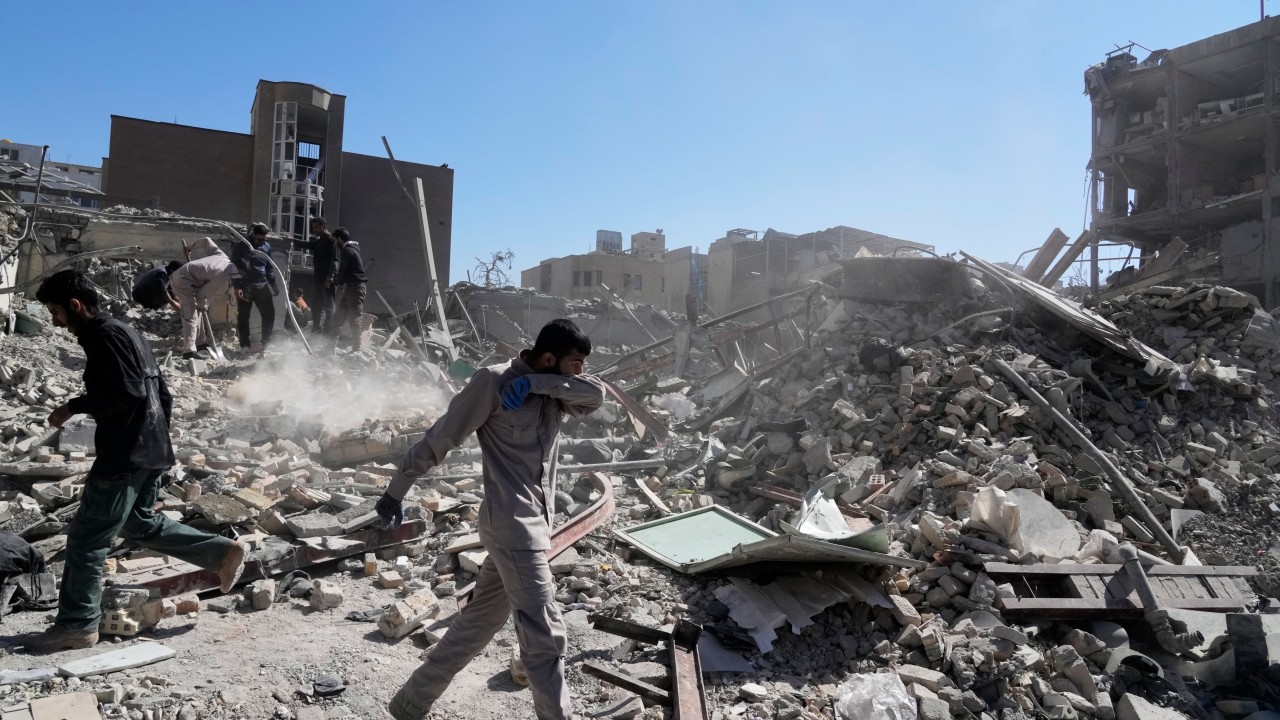
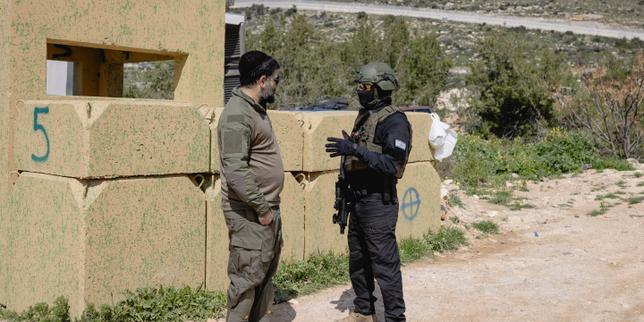
The IDF has moved toward a policy of "clearing the line of sight." This involves the systematic destruction of Hezbollah observation posts, storage containers, and repurposed civilian buildings along the Blue Line. By stripping the border of its cover, the IDF increases the "cost of approach" for Radwan teams. However, this also hardens the resolve of the Lebanese population caught in the crossfire, potentially creating a new generation of local hostility.
The Buffer Zone Dilemma
A physical buffer zone inside Lebanon is a historical trigger for long-term insurgency, as seen during the 1982-2000 occupation. Yet, the alternative—a buffer zone inside Israel—is politically untenable and represents a sovereign defeat. The current strategy is to create a "fire-controlled buffer," where Israel does not occupy the land but maintains total fire dominance over it, preventing any meaningful military presence.
Logic of the Escalation Ladder
Every strike in this theater follows a calibrated move on an escalation ladder. Hezbollah limits its depth of fire to keep the conflict below the threshold of total war, which would jeopardize its standing in the Lebanese domestic political landscape and risk its primary arsenal. Israel limits its ground maneuvers to avoid a multi-front entanglement while the Gaza operation continues.
However, this "managed conflict" has a shelf life. The internal pressure from the displaced northern residents creates a political timer. If the diplomatic track—led by US and French mediators—cannot produce a withdrawal of Hezbollah's heavy weaponry, the Israeli cabinet faces a choice: accept the permanent shrinkage of the state’s borders or initiate a high-risk ground operation to push the line manually.
The second option carries the risk of a regional conflagration involving Iran, but from the perspective of Israeli national security doctrine, a state that cannot guarantee the safety of its borders ceases to function as a sovereign entity. The logic of "mowing the grass" (intermittent strikes to degrade capability) has been replaced by the logic of "changing the landscape."
Strategic Forecast: The Necessity of the "Litani Shift"
The most probable outcome is a phased escalation. Israel will likely intensify "targeted attrition"—the elimination of mid-to-high-level Hezbollah commanders—to degrade the command-and-control structure before any formal diplomatic deadline. If Hezbollah does not pivot toward a Litani-based deployment by the end of the current fiscal quarter, the likelihood of a limited ground incursion focused specifically on the "first-line" villages increases to over 70%.
The strategic goal for Israel is not the total destruction of Hezbollah—an unrealistic objective given the group's social integration—but the decoupling of the "Lebanese Front" from the "Gaza Front." Hezbollah insists these are linked; Israel must prove, through kinetic pressure, that the cost of maintaining that link is higher than the benefit of the alliance.
Decision-makers must now prioritize the hardening of northern infrastructure and the deployment of directed-energy weapons (lasers) to counter the UAV threat, while preparing the public for a conflict that will likely be more destructive than 2006. The window for a "paper-only" resolution has closed; only a change in the physical distribution of forces will allow the Galilee to be re-populated.
Establish a "No-Man's-Land" policy via fire dominance 10km north of the Blue Line, decoupling northern Israeli security from the outcome of Lebanese parliamentary negotiations.