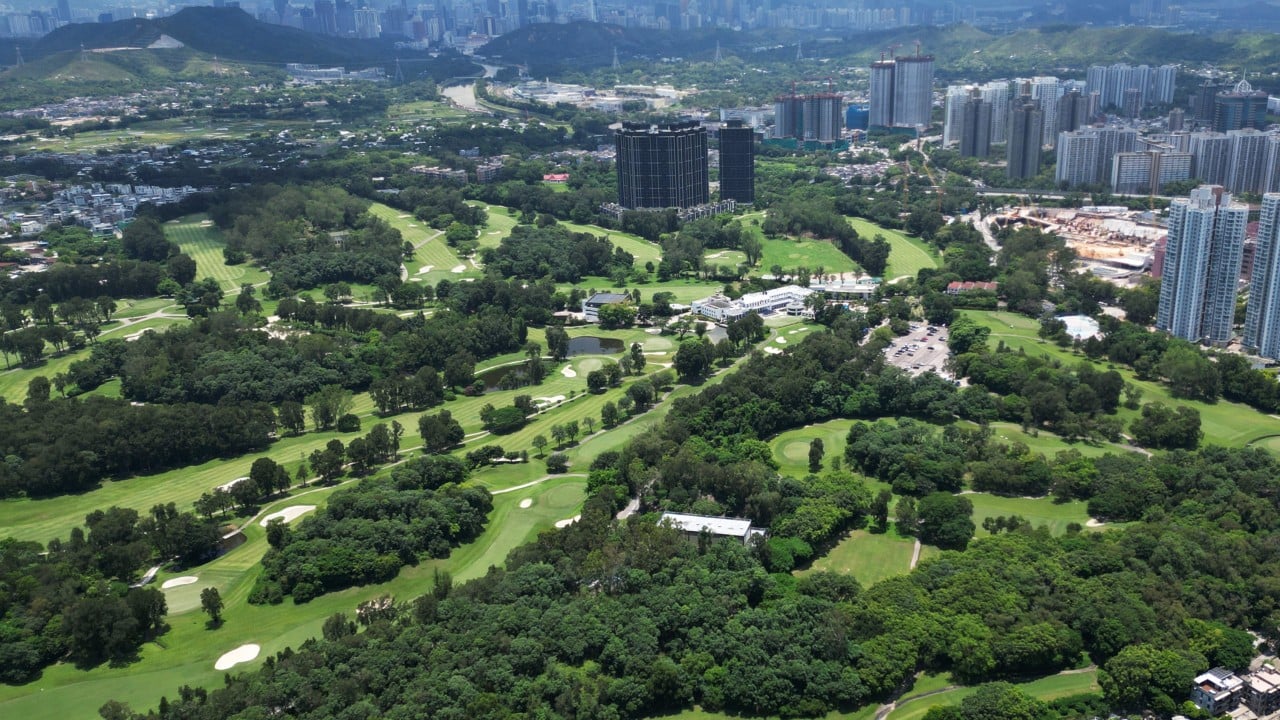
Morning mist still clings to the manicured greens of the Fanling golf course, a sprawling emerald lung in a city that usually gasps for air. For decades, this land has been a sanctuary for the few, a place where business is conducted in hushed tones over the thwack of a driver. But for those living in the shadow of Hong Kong’s vertical concrete forests—families of four squeezed into two hundred square feet—those greens represent something else entirely. They represent hope. Or, at least, they used to.
The conflict over the Fanling golf course isn't just a dispute about land. It is a battle over the soul of a city that has run out of room to breathe. Discover more on a similar topic: this related article.
In the latest chapter of this long-running saga, the Hong Kong government has stepped into a courtroom to defend its plan to build public housing on a small slice of this elite playground. The Hong Kong Golf Club is fighting back, seeking a judicial review to stop the development. They point to an Environmental Impact Assessment (EIA) that they claim is flawed. In response, the government’s legal team recently made a startling, clinical assertion: the technical studies used to justify the housing project have "no legal effect" in the context of this appeal.
It sounds like a dry, bureaucratic pivot. It isn't. It is the sound of a door slamming shut on a dream. More analysis by The Guardian highlights related views on the subject.
The Architect and the Activist
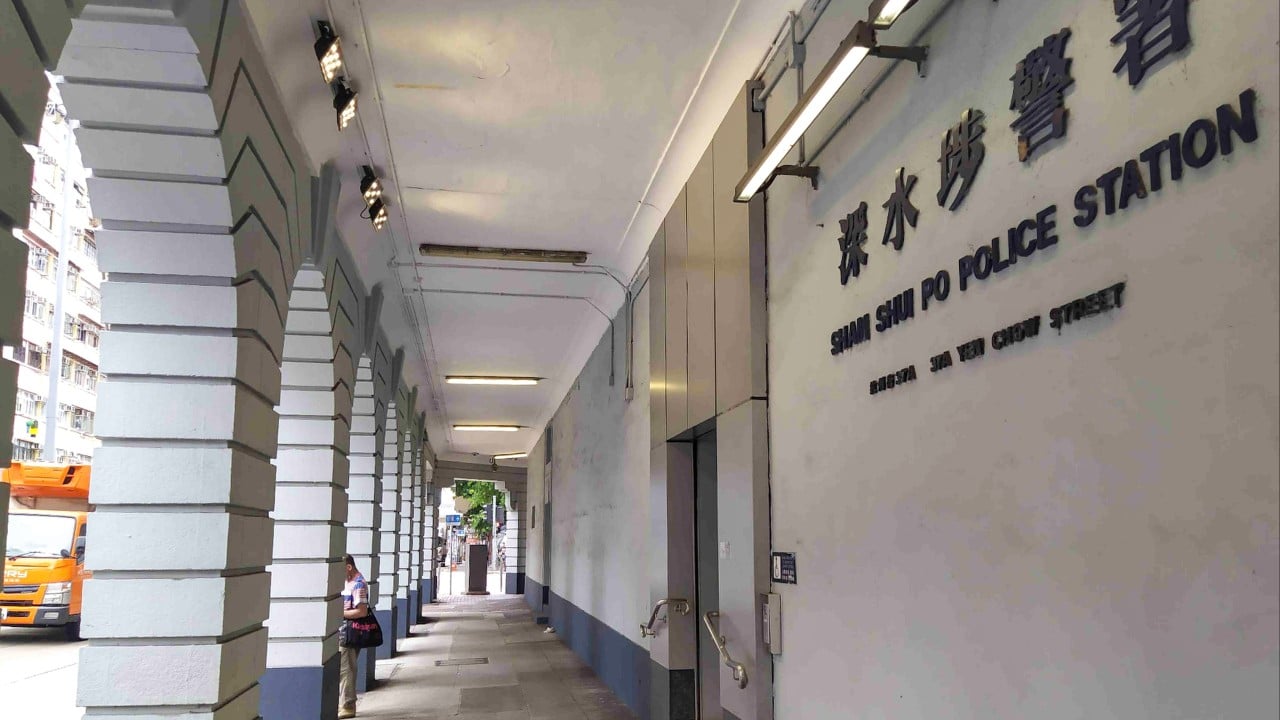
Consider a woman we will call Mei. She isn't a statistic, though the government would label her as one of the 220,000 people living in "subdivided units." Mei works as a cleaner in Central. Every night, she travels back to a room in Sham Shui Po that is barely wide enough for her to stretch her arms. Her "kitchen" is a portable induction cooker inches from her "bathroom," which is a drain in the floor next to a toilet.
To Mei, the Fanling golf course is a mythical place. She has seen it on the news—the rolling hills, the ancient trees, the sheer, offensive abundance of space. When the government announced it would take back 32 hectares of that land to build 12,000 public flats, Mei felt a flicker of something she hadn't felt in years. Fairness.
Now, imagine the Club Member. Let’s call him Arthur. Arthur has walked these fairways since the 1980s. To him, the course is a heritage site, a world-class sporting venue, and a vital ecosystem. He sees the government’s plan not as a solution to housing, but as a populist attack on excellence. He believes that destroying this land won't fix the housing crisis—it will only destroy a piece of Hong Kong's international prestige.
These two worlds are currently colliding in a High Court chamber, mediated by lawyers in wigs who are debating the nuances of environmental law.
The Weight of a Study That Does Not Weigh
The crux of the current legal standoff involves the Environmental Impact Assessment. The Club argues that the study failed to account for the impact on old trees and the "cultural heritage" of the turf. They want the court to throw the study out, which would effectively stall the housing project indefinitely.
The government’s counter-argument is a masterclass in legal pragmatism. They argue that because the Director of Environmental Protection has already approved the report with conditions, the "study" itself is now a spent force. It has served its purpose. By saying it has "no legal effect," the government is trying to shield the project from being picked apart by technicalities.
But there is a bitter irony here.
For years, the government told the public that every step of this process was vital, rigorous, and legally binding. They told people like Mei that the "science" was being done. Now, in the heat of a courtroom battle, that same science is being described as a mere procedural stepping stone—a ghost in the machine.
If the study has no legal effect, what does? If the data used to justify building a home can be dismissed as a technicality, then what is the foundation of the promise made to the people waiting for those homes?
The Ecology of Inequality
The Golf Club’s defense often hinges on the environment. They speak of the "rare" flora and the "centuries-old" trees that would be lost to the shadows of high-rise blocks. It is a potent argument. No one wants to be the villain who cuts down an ancient tree.
But the ecology of a city includes its humans.
When we talk about the environmental impact of a golf course, we must also talk about the environmental impact of a subdivided flat. We must talk about the heat trapped in unventilated rooms, the psychological toll of never having a window that looks at anything but another grey wall, and the "human impact" of a childhood spent in a space the size of a parking spot.
The government’s plan only targets 9.5 hectares for actual housing. The rest of the 32 hectares would be turned into a "park." Yet, even this modest compromise is being treated as a catastrophic loss by the Club.
The Language of the Courtroom
Courtrooms are designed to strip away emotion. They turn a mother’s hope for a bigger kitchen into "Project No. 12345." They turn a golfer’s sense of entitlement into "Heritage Conservation Concerns."
During the appeal, the government’s lawyer argued that the Golf Club was trying to "micro-manage" the Director of Environmental Protection. The message was clear: stay in your lane. The government has the right to manage its land, and the technicalities of a report shouldn't be used as a weapon to paralyze the state.
But this strategy is a double-edged sword. By arguing that the study lacks legal weight, the government risks appearing as though they are bulldozing their way through the law. It reinforces a growing sentiment in Hong Kong that the rules are whatever the authorities say they are at any given moment.
To the lawyers, it is a brilliant tactical move to protect a housing project. To the observer, it looks like the erosion of the very standards the government once touted as "paramount." (Though we avoid that word, the feeling remains.)
A City Built on Scarcity
Hong Kong has always been defined by what it lacks. We lack flat land. We lack affordable rent. We lack the luxury of time.
The Fanling dispute is the ultimate distillation of this scarcity. It pits the "Old Hong Kong"—the colonial-era elite who grew up in a world of clubs and privileges—against the "New Hong Kong"—a city desperate to prove it can still provide a basic standard of living for its citizens.
The government is in an impossible position. If they lose this case, they look weak. They look like they are still being held hostage by the wealthy interests that have long dictated the city’s land policy. If they win by dismissing the legal weight of their own studies, they look like they are playing fast and loose with the environment and the law.
And what of the 12,000 flats?
They exist currently only as lines on a map and figures in a budget. If they are built, they will be a drop in the bucket of a waiting list that stretches for years. But for 12,000 families, they would be a different life. A life where a child can have a desk. A life where a meal can be cooked in a kitchen that isn't also a bathroom.
The Invisible Stakes
The real tragedy of the "no legal effect" argument is that it reinforces the idea that the public’s participation in these debates is a performance.
When the government holds public consultations, when they commission million-dollar studies, when they invite feedback on environmental impacts—the public assumes those things matter. We assume they form the legal and ethical bedrock of the decision. To be told in court that these documents are effectively disposable once the "go" button is pressed is a profound blow to civic trust.
It suggests that the decision was made long ago, and the studies were just the wrapping paper.
Whether the motive is "good" (building housing) or "bad" (ignoring environmental risks), the result is a feeling of powerlessness. Mei feels it in her cramped room. Arthur feels it as he looks at the fairways he might lose. The law, which is supposed to be the one thing that applies to the man in the golf cart and the woman with the mop equally, starts to feel like a series of trapdoors and escape hatches.
The Last Tee
The sun begins to set over Fanling, casting long shadows over the disputed 32 hectares. For now, the golfers are still there. The birds are still in the ancient trees. And Mei is still in Sham Shui Po, waiting for a letter that may never come.
The court will eventually deliver its verdict. It will rule on the "legal effect" of studies and the validity of environmental mandates. The lawyers will move on to the next case. The government will issue a press release.
But the fundamental question remains unanswered. In a city of eight million people, who does the land belong to? Does it belong to the history of the game, or the future of the people?
The fairways are quiet tonight. But beneath the grass, the earth is shifting. The city is watching. Not for the legal ruling, but to see if a promise made in public still carries any weight when the cameras are turned off and the doors of the courtroom are locked.
The most dangerous thing in Hong Kong isn't a housing shortage. It is the belief that no matter what the studies say, no matter what the laws dictate, the outcome was decided before the first ball was ever teed up.
The grass will grow back. Trust is much harder to cultivate.