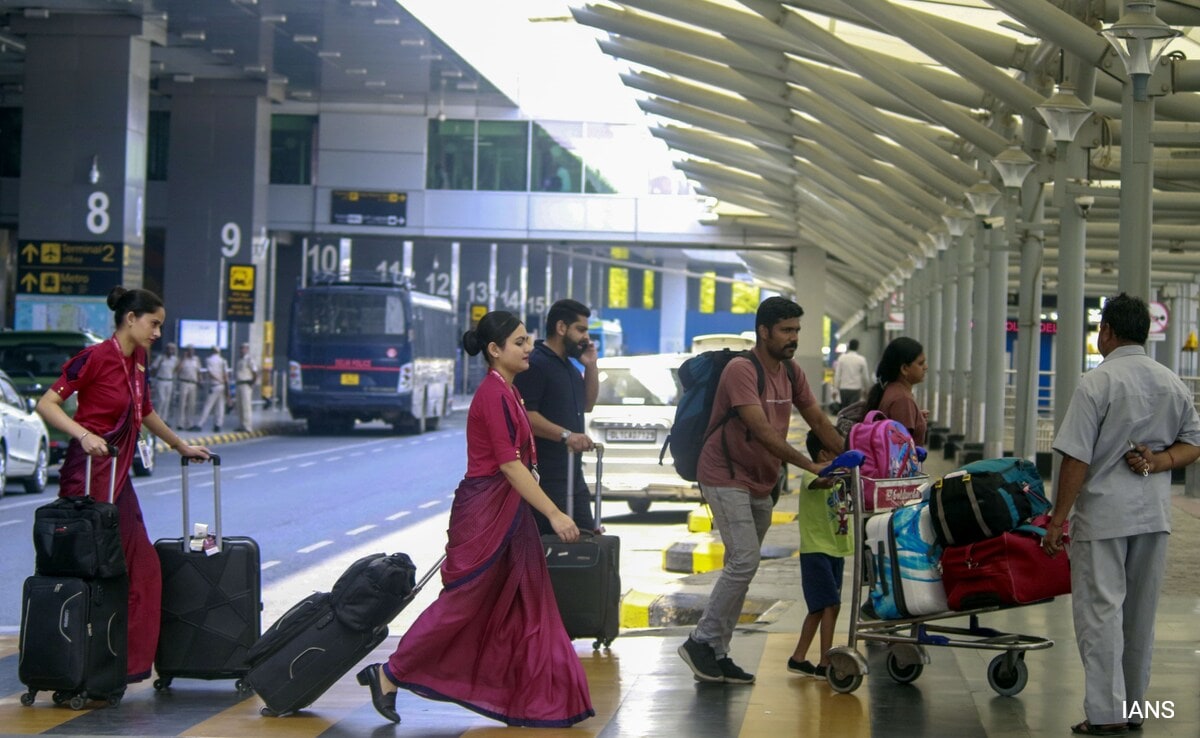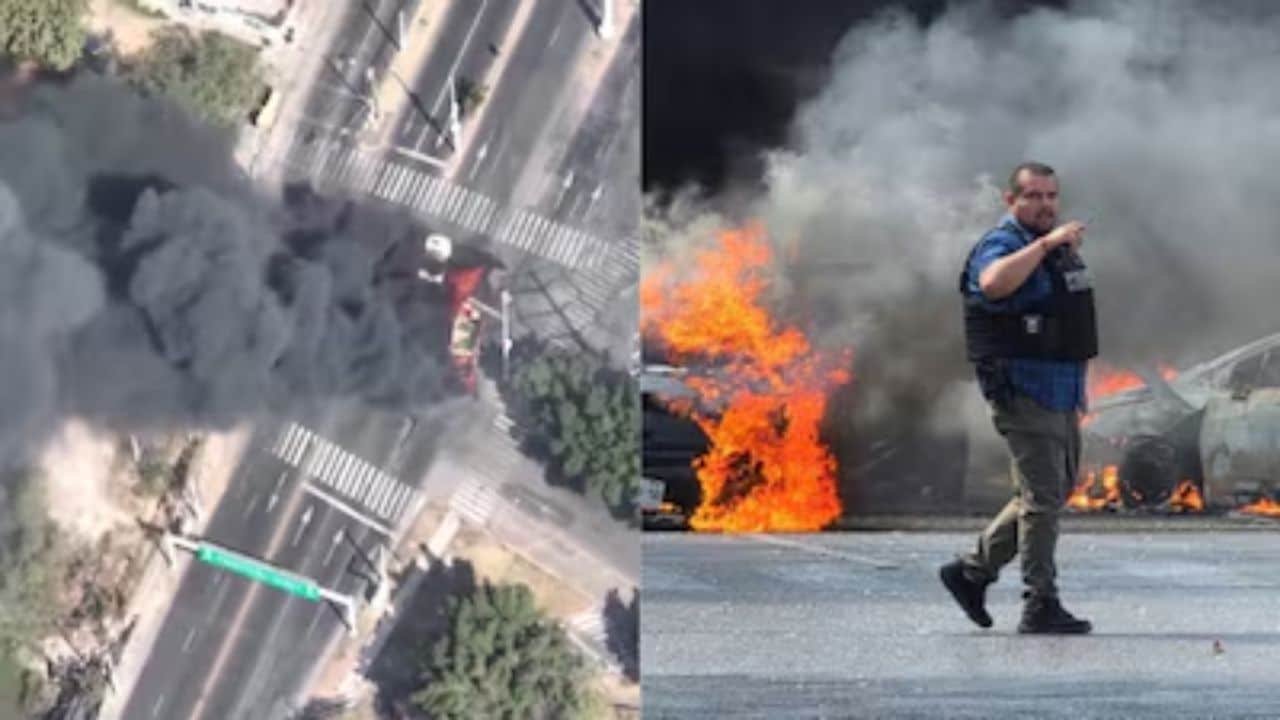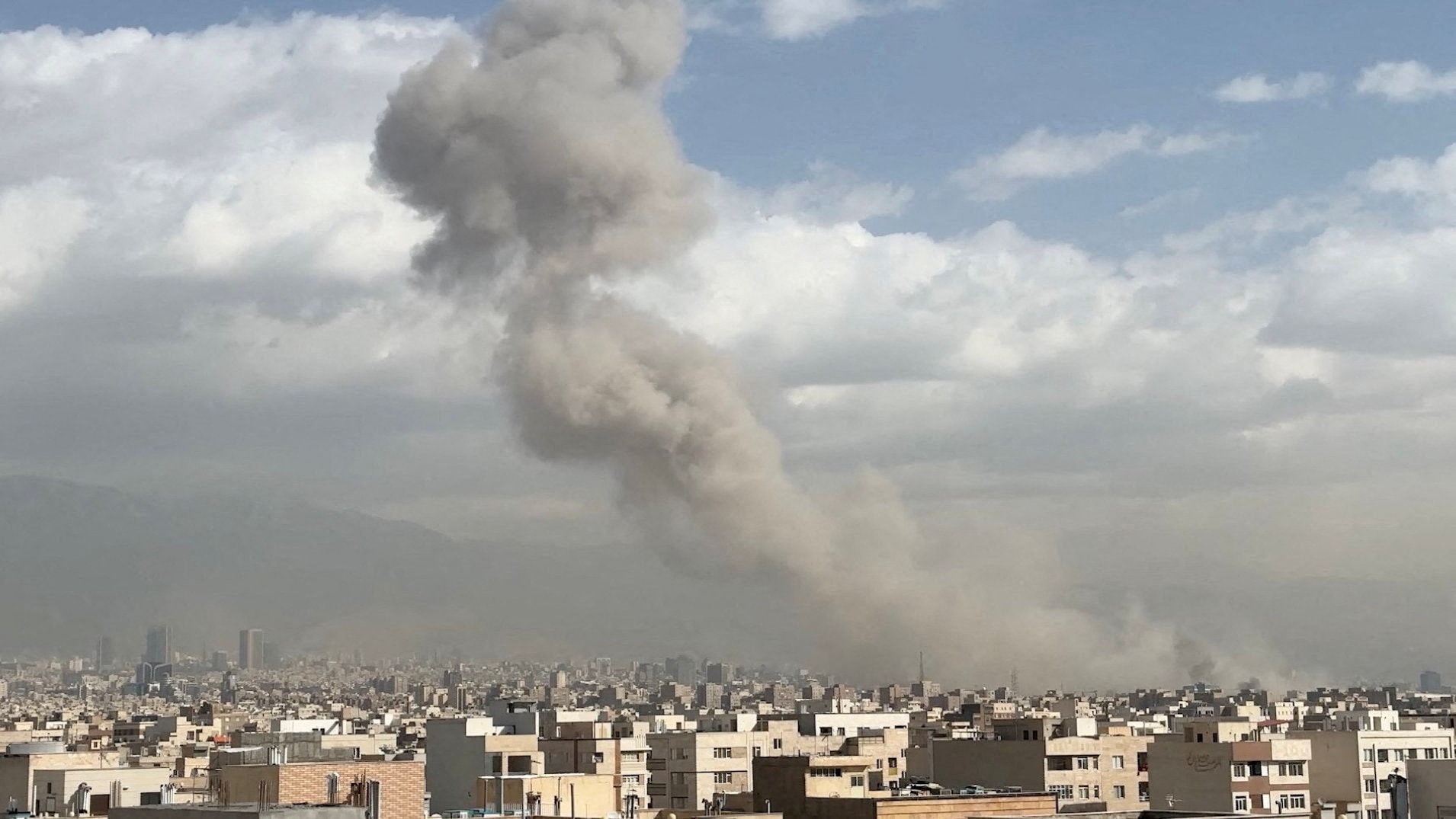
The closure of Iranian and Israeli airspace represents more than a logistical inconvenience; it is a forced restructuring of global aviation economics. When sovereign nations weaponize their flight information regions (FIRs), they impose a "friction tax" on international carriers that cascades through fuel burn, crew duty cycles, and aircraft utilization rates. The immediate return of Air India’s Delhi-Tel Aviv flight (AI139) serves as a case study in the rapid transition from operational normalcy to emergency risk mitigation.
The Mechanics of Airspace Interdiction
Aviation relies on the stability of the Upper Information Regions (UIRs). When these corridors are compromised, the impact is governed by three primary variables:
- The Geometry of Diversion: Air routes are rarely straight lines, but they follow Great Circle tracks to minimize distance. Closing Iranian or Israeli airspace forces carriers into the "Suez Bottleneck" of the skies—a narrow corridor over Saudi Arabia and Egypt. For ultra-long-haul flights between Europe and Southeast Asia, this can add 45 to 90 minutes of flight time.
- Fuel-Payload Penalty: Aviation fuel consumption is not linear. Increased flight time requires extra fuel, which adds weight, which in turn increases the burn rate per hour. If a diversion adds enough time, a carrier may be forced to reduce "payload" (passengers or cargo) to stay under the Maximum Take-Off Weight (MTOW) while carrying the necessary contingency fuel.
- The Duty Clock Breach: Flight crews operate under strict legal limits. A two-hour diversion caused by an airspace closure can push a crew past their legal "Flight Duty Period" (FDP). This leads to unscheduled technical stops, not for fuel, but for crew swaps, doubling the ground handling costs and shattering the airline's hub-and-spoke synchronization.
The Air India AI139 Incident Analysis
The decision for Air India’s Delhi-Tel Aviv flight to execute a mid-air U-turn highlights the threshold of "Point of No Return" (PNR) calculations. Unlike a standard diversion to a nearby airport, a return to the origin indicates a total collapse of the mission’s risk-to-reward ratio.
The carrier's calculus was likely driven by the Information Asymmetry inherent in rapid-onset conflicts. When a NOTAM (Notice to Air Missions) is issued or intelligence suggests a high probability of GPS jamming or missile activity, the carrier must evaluate the "Stranded Asset Risk." Landing a multi-million dollar airframe in a zone where airspace might remain closed indefinitely creates an unacceptable liquidity trap. By returning to Delhi, Air India preserved the asset's utility for other routes, even at the cost of immediate fuel loss and passenger compensation.
The Economic Ripple of Persian Gulf Bypass
Forcing traffic out of Iranian airspace (the Tehran FIR) creates an immediate capacity crisis in the neighboring Ankara (Turkey) and Baghdad (Iraq) FIRs. This creates a secondary layer of operational friction:
- Flow Control Delays: As more aircraft are squeezed into fewer corridors, Air Traffic Control (ATC) must increase the longitudinal separation between planes. This results in "ground holds" at departure airports thousands of miles away.
- Overflight Fee Reallocation: Airspace is a revenue-generating asset. Iran and Israel lose significant overflight royalties, but the surrounding nations—Jordan, Saudi Arabia, and Turkey—gain them. However, if the congestion becomes too high, the administrative cost of managing the traffic can outweigh the fee revenue.
- Insurance Premium Spikes: War risk insurance is triggered the moment a region is classified as an active conflict zone. These premiums are often surcharged per flight, not per month. For a carrier like Lufthansa or United, the daily cost of operating near these zones rises regardless of whether they actually enter the airspace.
The Fragility of the India-Israel Tech Corridor
The Delhi-Tel Aviv route is a critical artery for the high-tech sector. The suspension of these flights does more than stop tourism; it severs the physical link for "Just-in-Time" engineering talent and specialized hardware components.
The reliance on El Al, which continues to fly through high-risk periods using the "C-Music" directional infrared countermeasure (DIRCM) systems, creates a bifurcated market. Carriers without military-grade missile defense systems are forced to exit, granting a temporary monopoly to the national carrier of the embattled state, albeit at significantly higher operating costs and risks.
Strategic Diversion Frameworks
Airlines generally categorize their response to these closures into three tiers of escalation:
- Tactical Re-routing: Shifting the flight path by 5-10 degrees to skim the edge of the affected FIR. This is the lowest cost but offers the least protection against rapid escalations.
- Strategic Hub Shifting: Moving long-term capacity to hubs that don't require the contested airspace. We are seeing a shift where carriers favor North Atlantic or Trans-Pacific routes to reach Asian markets, bypassing the Middle East entirely.
- Service Suspension: The nuclear option. When the "Risk Premium" (Insurance + Fuel + Crew + Uncertainty) exceeds the "Yield" (Ticket Revenue + Cargo), the route is terminated.
The Infrastructure of Uncertainty
The current conflict underscores the obsolescence of fixed route planning. We are moving toward an era of Dynamic Airspace Management, where AI-driven flight planning tools must integrate real-time geopolitical intelligence with weather and fuel data.
The volatility in the Middle East acts as a catalyst for the "Arctic Route" renaissance. As Middle Eastern corridors become unreliable, the industry is looking toward the "Great Circle" routes over the North Pole to connect the US East Coast and Europe to South Asia. While these routes present their own challenges—such as limited emergency landing sites and cosmic radiation concerns—they offer a level of geopolitical stability that the Levant and the Persian Gulf currently cannot provide.
The strategic priority for global carriers now shifts from "Efficiency Optimization" to "Resilience Redundancy." This requires maintaining higher fuel reserves as a standard operating procedure and renegotiating crew contracts to allow for greater flexibility in duty hours during periods of international crisis.
The immediate tactical move for stakeholders is the diversification of codeshare agreements. Carriers that rely on a single gateway through the Middle East must establish "Shadow Routes" through Central Asian or North African corridors to ensure that a single NOTAM does not decapitate their entire long-haul network. The era of the predictable, low-cost "Silk Road of the Skies" is effectively paused; the new map is defined by the geography of avoidance.
Would you like me to analyze the specific fuel-burn impact on a per-kilometer basis for the diverted Delhi-Tel Aviv route compared to the standard track?