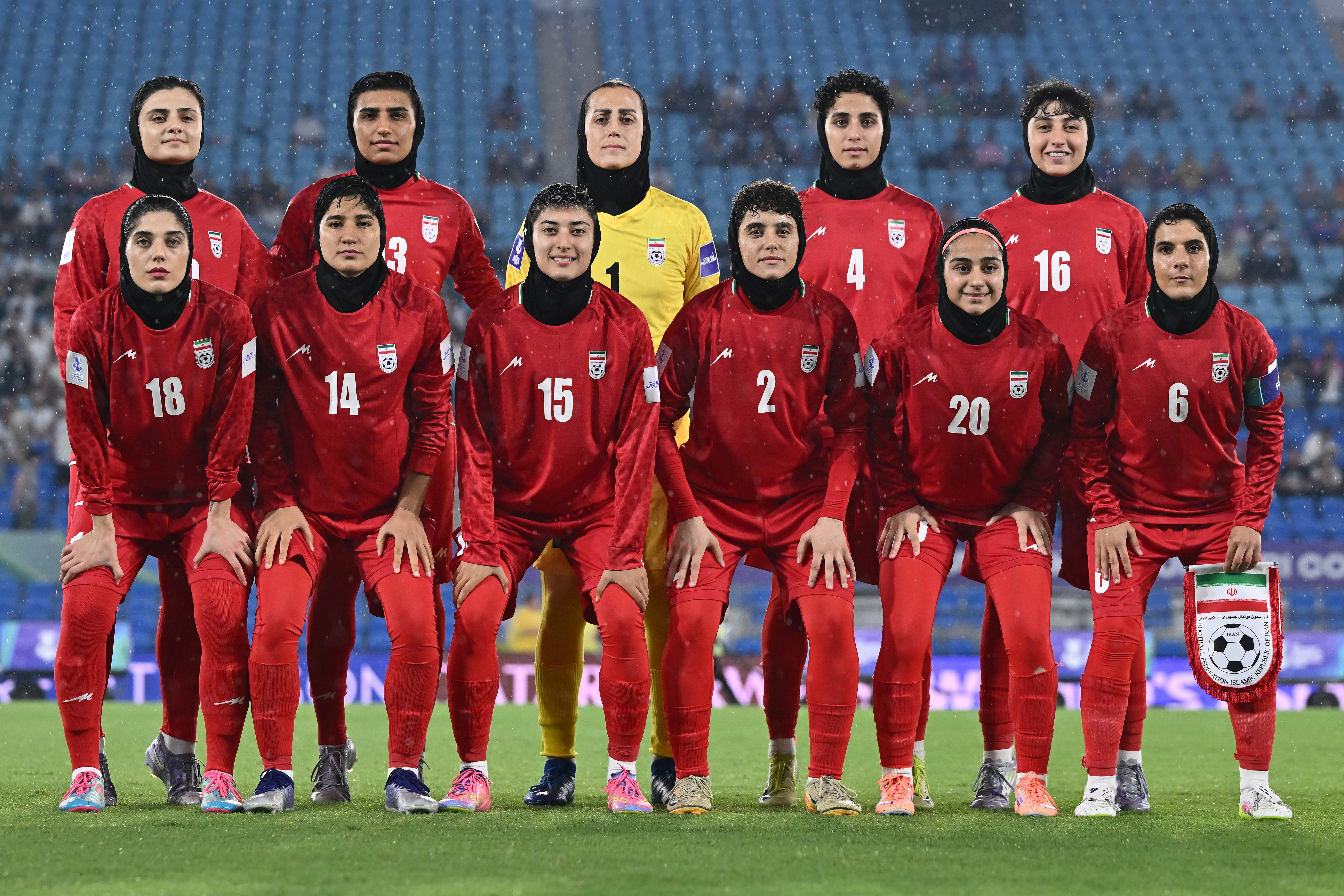
The denial of entry visas to members of an international sports delegation is rarely a clerical oversight; it is the manifestation of a Friction Point where soft power diplomacy collides with rigid national security protocols. When members of the Iranian football delegation are excluded from a host nation—in this instance, likely the United States or a close ally—the event functions as a stress test for the International Football Federation (FIFA) statutes. These statutes theoretically mandate "free entry" for all participants in official competitions, yet they possess no legal mechanism to override the sovereign border controls of a nation-state.
The current situation involving the Iranian delegation is not an isolated administrative error. It is the result of a predictable intersection between The Reciprocity Principle and The Risk Assessment Matrix used by immigration authorities.
The Three Pillars of Athletic Inadmissibility
To analyze why specific members of a delegation are flagged while others are cleared, we must categorize the variables that trigger a visa rejection. These variables are rarely disclosed by state departments, but they follow a specific internal logic based on institutional risk.
1. The Institutional Affiliation Variable
National football federations in certain jurisdictions do not operate as independent NGOs. In many instances, they are state-funded and state-managed. If a coach, trainer, or administrator has a documented history of service in a sanctioned government branch—such as the Islamic Revolutionary Guard Corps (IRGC)—they transition from "sports personnel" to "prohibited entity" under specific domestic laws, such as Section 212(a)(3)(B) of the U.S. Immigration and Nationality Act. This creates a binary conflict: FIFA views the individual as an essential technical staff member, while the host government views them as a security threat.
2. The Reciprocity and Diplomatic Leverage Function
Visas are often used as non-kinetic signaling tools. If Country A perceives that Country B has restricted the movement of its citizens or diplomats, Country A may apply "Administrative Friction" to Country B’s high-profile citizens. Sports delegations are high-visibility targets for this signaling because the fallout is public and immediate. The cost of a denial is low for the host government but high for the visiting team, creating an asymmetrical leverage point.
3. The Dual-Use Identity Problem
Modern scouting and technical analysis in football rely heavily on data and digital infrastructure. Members of a "football delegation" may include data scientists or logistics experts who possess technical backgrounds that trigger secondary screening. Immigration algorithms often flag individuals with "sensitive technology" backgrounds (the Technology Alert List), leading to Administrative Processing delays that effectively function as a denial if the processing window exceeds the match date.
The Cost Function of Delegation Disruption
The impact of missing staff members is not merely a personnel issue; it degrades the Operational Efficiency of the team. We can quantify this disruption through three specific performance bottlenecks.
- Tactical Information Asymmetry: If lead analysts are denied entry, the real-time feedback loop between the stands and the dugout is severed. The loss of a specialized set piece coach or a video analyst reduces the team’s ability to adjust to opponent shifts by a measurable margin—estimated in high-performance sports as a 3% to 5% reduction in tactical execution accuracy.
- Psychological Load and Team Cohesion: The "Delegation Effect" suggests that uncertainty regarding staff presence creates a distraction that permeates the player roster. When players observe their leadership being treated as persona non grata, the focus shifts from the pitch to the political context of the match.
- Logistical Fragility: A football delegation is a specialized supply chain. Each missing member represents a broken link in nutrition, physiotherapy, or kit management. The remaining staff must absorb these roles, leading to "Task Saturation," which increases the probability of human error in athlete recovery protocols.
FIFA’s Neutrality Paradox
FIFA’s Article 3 states that the organization is "neutral in matters of politics and religion." However, this stance is structurally impossible to maintain when a host nation exercises its sovereignty.
FIFA faces a Jurisdictional Bottleneck. While it can threaten to move a tournament or fine a federation, it cannot compel a sovereign state to issue a visa. This creates a precedent where the host nation effectively determines the "technical composition" of the opposing team. If a host nation can selectively deny visas to the best tactical minds or the most experienced trainers of a visiting nation, the "sporting integrity" of the match is compromised before the whistle blows.
The mechanism at play here is "Soft Exclusion." The host nation does not ban the team—which would cause a massive PR crisis—but instead prunes the delegation of its most effective supporting elements. This creates a plausible deniability framework: "The team was allowed to play; we simply could not verify the security credentials of the third assistant coach."
Strategic Framework for Future Host Selection
The recurring nature of these visa crises suggests a fundamental flaw in the bidding process for international tournaments. To mitigate these risks, the selection of host nations must move toward a Sovereignty-Agostic Access Model.
This would require host nations to sign a legally binding "Athlete and Staff Accord" (ASA) prior to being awarded hosting rights. This accord would mandate:
- Pre-clearance Windows: Establishing a 180-day window for visa processing, during which any security concerns must be resolved or arbitrated by a neutral third party (such as the Court of Arbitration for Sport).
- Neutral-Site Contingency: A clause stating that if more than $X%$ of a delegation is denied entry for non-criminal reasons, the match is automatically moved to a neutral venue within 72 hours.
- Standardized Security Profiles: Agreeing on a narrow definition of "security threat" that excludes past mandatory military service or civil service in the home country, unless linked to specific internationally recognized crimes.
The Impending Crisis of the 2026 World Cup
The Iranian delegation's current struggle is a precursor to the 2026 FIFA World Cup, which will be hosted across the United States, Canada, and Mexico. Given the current geopolitical climate, the probability of multiple nations facing visa hurdles is near 100%.
The United States has some of the most stringent entry requirements globally. Without a specialized "World Cup Visa" category that bypasses traditional political screening, we will see a fragmented tournament where several teams are forced to compete with "skeleton crews." This does not just affect Iran; it potentially impacts any nation with strained diplomatic ties to the U.S., including several high-ranking AFC and CAF nations.
The data suggests that the "success" of these mega-events is increasingly dependent on immigration policy rather than stadium infrastructure. The bottleneck is no longer the pitch; it is the consular window.
Tactical Recommendation for Affected Federations
National federations must stop treating visa applications as an administrative task and start treating them as a Strategic Intelligence Operation.
- Diversification of Technical Staff: Federations should maintain a "B-Team" of technical staff who hold passports from neutral nations or have no prior state-sector employment. This creates redundancy in the system.
- Aggressive Filing Timelines: Submit applications the moment a fixture is confirmed, forcing the host nation to either issue the visa or issue a denial early enough to be challenged in the Court of Arbitration for Sport (CAS).
- Leveraging Corporate Sponsors: Major sponsors of FIFA have more leverage over host governments than the football federations themselves. Federations should coordinate with sponsors to highlight how visa denials devalue the "Product" (the match) and impact the return on investment.
The resolution of the Iranian visa issue will set the tone for the next quadrennial cycle. If the international community accepts the selective pruning of delegations under the guise of security, the precedent will be used by future hosts to systematically disadvantage opponents. The strategic play is not to argue the politics, but to enforce the technical requirements of a fair competition through contractual mandates that hold host nations accountable for the mobility of every accredited participant.