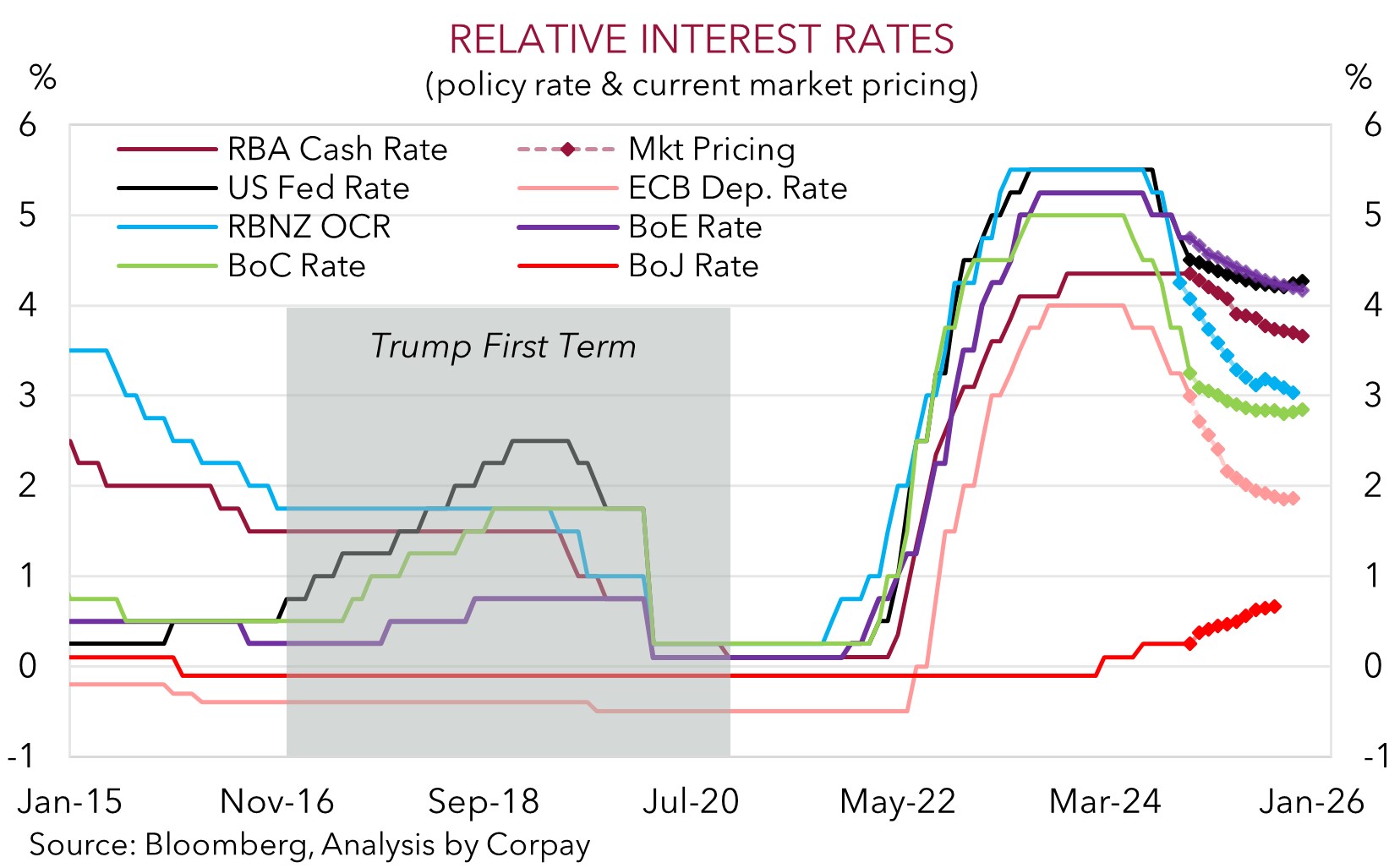
The recent escalation of conflict involving Iran has triggered a violent repricing of the US Treasury curve, marking the most significant expansion of borrowing costs since the post-inflationary adjustments of 2024. This movement is not a localized reaction to energy prices but a fundamental shift in the Term Premium—the extra compensation investors demand for holding long-term debt in an environment of heightened systemic uncertainty. While equity markets often focus on immediate earnings impacts, the debt market is currently pricing a structural transformation in fiscal sustainability and global liquidity flows.
The surge in yields is driven by three distinct mechanisms: the fiscal-monetary feedback loop, the erosion of "Safe Haven" exclusivity, and the inflationary impulse of maritime trade disruption.
The Mechanics of the Term Premium Expansion
To understand why a regional conflict in the Middle East dictates the interest rate on a 10-year Treasury note, one must analyze the components of the nominal yield. A nominal yield is the sum of expected short-term rates and the term premium.
$$Yield = E[r] + TP$$
In periods of geopolitical stability, the term premium ($TP$) often sits near zero or even turns negative as "Flight to Quality" drives massive inflows into US debt. However, the current Iran conflict has inverted this relationship. Investors are no longer just seeking safety; they are calculating the cost of a multi-front regional war on an already strained US balance sheet.
1. The Fiscal Sustainability Constraint
Unlike previous cycles, the US enters this period of geopolitical tension with a debt-to-GDP ratio exceeding 120%. War, or even the credible threat of sustained military engagement, necessitates a shift in fiscal posture. The market is pricing in an "Emergency Spending Premium."
- Supply Dynamics: Any escalation requires increased issuance of Treasury securities to fund defense supplements.
- Absorption Capacity: With the Federal Reserve in a phase of Quantitative Tightening (QT), the private sector must absorb this debt.
- Price Discovery: To attract sufficient private capital to cover increased deficits, the yield must rise to a level that compensates for the risk of further currency debasement or future tax volatility.
2. Strategic Petroleum Reserves and Energy-Linked Inflation
The risk of a closure or disruption at the Strait of Hormuz—through which roughly 20% of the world's total oil consumption passes—creates a binary risk profile for inflation. While the US is now a net exporter of petroleum, it is not immune to global price parity.
The "Cost Function of Energy Disruption" acts as a floor for interest rates. If Brent crude sustains a position above $100 per barrel, the Federal Reserve’s "higher for longer" stance transitions from a policy choice to a mathematical necessity. The market recognizes that the Fed cannot ease rates while energy-driven headline inflation is accelerating, even if economic growth begins to stall. This creates a "stagflationary wedge" where borrowing costs rise despite weakening domestic indicators.
The Erosion of the Hegemonic Discount
For decades, US Treasuries enjoyed a "hegemonic discount"—the ability to borrow at lower rates than fundamentals would suggest because there was no viable alternative for global reserves. The Iran conflict is accelerating a trend toward fragmented liquidity.
When a primary geopolitical adversary is involved in a conflict that triggers US sanctions or heavy military spending, non-aligned central banks (specifically in the "Global South") reassess their concentration risk in dollar-denominated assets. This does not result in a total collapse of the dollar, but it does result in a marginal reduction in demand for long-dated Treasuries.
The reduction in foreign central bank demand forces the Treasury to rely more heavily on domestic price-sensitive buyers (hedge funds, pension funds, and insurance companies). These buyers do not have a political mandate to hold US debt; they require a market-clearing price that accounts for the risk of holding a volatile asset.
Logical Chains of Transmission
The transmission of geopolitical shock to borrowing costs follows a specific sequence:
- Kinetic Escalation: Military strikes or blockade threats increase the probability of direct US involvement.
- Credit Default Swap (CDS) Sensitivity: The cost of insuring US sovereign debt against default rises, signaling a shift in perceived creditworthiness.
- Real Yield Adjustment: Investors demand higher inflation-protected returns ($TIPS$), fearing that the government will choose to "inflate away" the cost of the conflict.
- Corporate Spread Widening: As the risk-free rate (the Treasury yield) rises, corporate borrowing costs rise in lockstep, but often with an added risk premium as markets fear that high rates will trigger a wave of defaults in the highly leveraged private sector.
The Strategic Bottleneck: Debt Servicing Costs
The most critical data point missed by superficial analyses is the Interest Expense Feedback Loop. As the average interest rate on the total outstanding US debt rises, the interest expense becomes a dominant line item in the federal budget, rivaling social security and defense.
- Current annualized interest payments are approaching $1 trillion.
- Every 100-basis-point increase in the average interest rate adds roughly $350 billion to the annual deficit over time as debt rolls over.
This creates a paradox: to fund the defense requirements of the Iran conflict, the US must issue more debt. The issuance of more debt, combined with the geopolitical risk, pushes yields higher. Higher yields increase the deficit further, requiring even more debt issuance. The market is currently testing the limits of this cycle.
Asset Class Implications and Portfolio Shielding
In this environment, the traditional 60/40 portfolio (60% equities, 40% bonds) fails because the correlation between stocks and bonds turns positive. Both assets sell off as rates rise. Strategic positioning requires a shift toward "Hard Assets" and "Short-Duration Fixed Income."
The Commodity-Fixed Income Arbitrage
Investors are increasingly looking at commodities not just as a hedge against inflation, but as a proxy for geopolitical stability. Gold, in particular, has decoupled from real rates. Historically, when real rates (yields minus inflation) rise, gold falls. In the current context, both are rising. This anomaly suggests that the market is pricing in a systemic regime shift where the "Safe Haven" status of the US Treasury is being challenged by "Neutral Assets."
Sector-Specific Vulnerabilities
The rise in borrowing costs hits three sectors with disproportionate force:
- Commercial Real Estate (CRE): Massive refinancing requirements in 2026 and 2027 become untenable if the 10-year yield remains above 4.5%.
- Small-Cap Equities (Russell 2000): These companies typically carry more floating-rate debt and have less access to long-term bond markets than mega-cap tech firms.
- Highly Leveraged Infrastructure: Projects with long horizons and heavy upfront capital requirements see their Net Present Value (NPV) collapse as the discount rate (the 10-year yield) increases.
Determinative Forecast
The trajectory of US borrowing costs is now tethered to the scale of the Iranian response and the subsequent US/Israeli counter-response. We are moving away from a world of "low for long" into a "volatile and high" regime.
If the conflict remains contained to proxy engagements, the term premium will likely stabilize, but it will not return to pre-2024 levels. The floor has been permanently raised. However, if the conflict expands to include direct state-on-state kinetic actions or a sustained disruption of the Strait of Hormuz, the 10-year Treasury yield will likely breach the 5.5% threshold. This would trigger a mandatory revaluation of all global risk assets.
Corporate treasurers and institutional investors must move from a posture of "waiting for the pivot" to "optimizing for the plateau." The strategic play is to reduce exposure to long-dated nominal bonds and increase allocations to floating-rate credit and tangible commodities that serve as a hedge against both geopolitical friction and fiscal expansion.
The immediate priority for capital allocators is to stress-test portfolios against a sustained 500-basis-point environment. The era of the "Geopolitical Discount" is over; the "Geopolitical Tax" is now being collected through the bond market.
<next_step>
Would you like me to generate a comparative analysis of how different commodity classes (Gold vs. Oil vs. Copper) have historically performed during periods of Treasury Term Premium expansion?
</next_step>