The strategic alignment between Cuba and Iran is not a product of cultural or geographical proximity, but a calculated response to the economic and diplomatic constraints imposed by the United States. This relationship operates as a survival mechanism where both nations trade specific sovereign assets—geopolitical positioning, intelligence, and energy resources—to mitigate the impact of isolation. As tensions escalate between Washington and Tehran, Cuba’s role shifts from a regional ideological adversary to a critical node in a broader transcontinental defiance strategy. Understanding this shift requires a deconstruction of the functional pillars that sustain this partnership.
The Tri-Node Framework of Resistance
The Cuba-Iran relationship is sustained by three distinct functional drivers: the circumvention of financial sanctions, the exchange of technical and biological IP, and the creation of secondary fronts for U.S. intelligence allocation.
1. Sanctions Evasion and Shared Financial Architecture
Both Havana and Tehran are excluded from the SWIFT banking system and face significant hurdles in USD-denominated trade. This shared exclusion creates a "Closed-Loop Economy" where trade is conducted via barter or non-traditional currency swaps. For example, the exchange of Iranian oil for Cuban medical expertise and biotechnology does not require the movement of hard currency through Western-monitored channels. This reduces the efficacy of U.S. Treasury enforcement by removing the digital paper trail that triggers secondary sanctions.
2. The Biotechnology and Defense Nexus
Cuba possesses a sophisticated biotechnology sector, a legacy of the Cold War era's investment in human capital. Iran, facing a "brain drain" and restricted access to Western medical technology, utilizes Cuba as a primary research partner. The co-development of the Soberana 02 vaccine is the most visible outcome of this, but the underlying mechanism is the shared development of dual-use biological research. In a high-conflict scenario with the U.S., these capabilities provide both nations with a degree of internal resilience against pharmaceutical blockades.
3. Intelligence and Proximity
Cuba’s geographic location—90 miles from the Florida coast—remains its most significant geopolitical asset. For Iran, a partnership with Cuba provides a "West-of-Center" presence that forces the U.S. to divert Southern Command (SOUTHCOM) resources toward monitoring Caribbean activities. This creates a cost-imbalance for the U.S. intelligence community; the price for Iran to maintain a diplomatic and logistical presence in Havana is significantly lower than the price for the U.S. to monitor, counteract, and defend against potential "gray zone" activities in its own backyard.
The Cost Function of U.S. Intervention
The U.S. strategy toward this duo is often framed in moral or ideological terms, yet an analytical view reveals a complex cost-benefit trade-off. Every increment of pressure applied to Tehran increases the marginal value of Cuba to the Iranian state.
- Pressure Sensitivity: As the "Maximum Pressure" campaign on Iran intensifies, Tehran seeks outlets to demonstrate it is not diplomatically isolated. Cuba offers a low-cost, high-visibility platform for this demonstration.
- The Resource Diversion Effect: By strengthening ties with Havana, Iran effectively exports its friction with Washington. If the U.S. perceives a threat in the Caribbean, it must reallocate naval and surveillance assets from the Persian Gulf or the Indo-Pacific to the Atlantic.
This creates a "Security Dilemma" where U.S. efforts to isolate one actor inadvertently drive them into a more cohesive and dangerous partnership with the other.
Quantifying the Vulnerabilities: The Bottleneck of Logic
Despite the ideological synergy, the Cuba-Iran axis faces structural bottlenecks that limit its long-term viability as a counter-hegemonic force.
Energy Dependency and Logistics
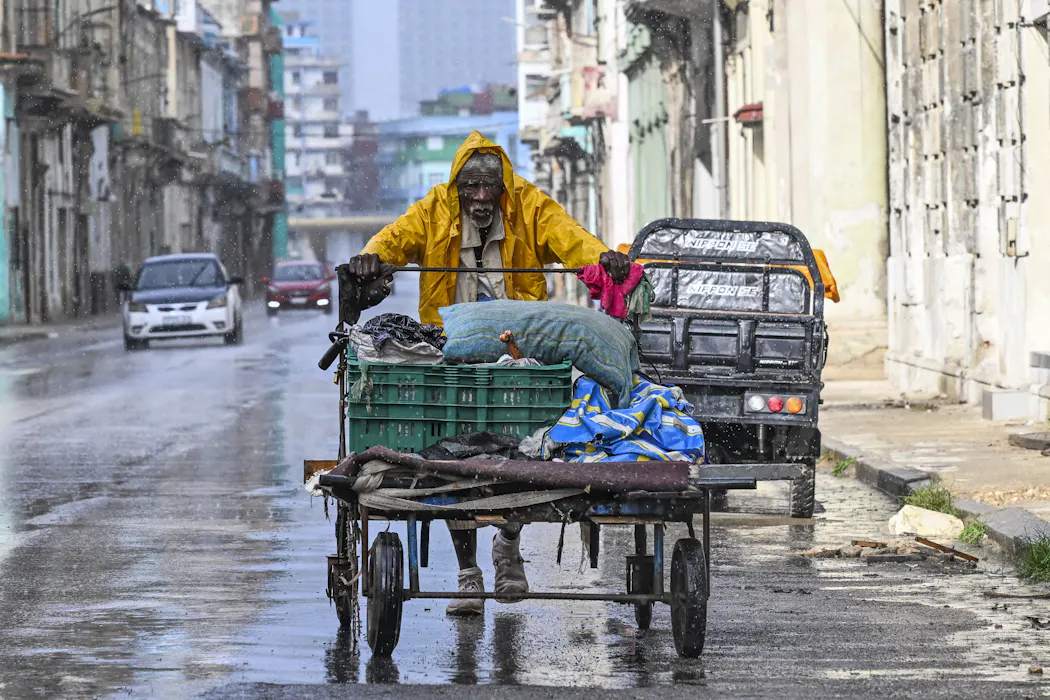
Cuba’s energy grid is in a state of chronic failure. While Iran is an energy superpower, the logistics of transporting crude oil across the Atlantic are fraught with risk. The "Tanker War" dynamics seen in the Strait of Hormuz could easily be replicated in the Caribbean. If the U.S. decides to strictly enforce maritime interdiction of Iranian tankers heading to Cuban ports, the economic cost for Iran (in terms of lost cargo and increased insurance premiums) may eventually exceed the diplomatic benefits of the alliance.
The Asymmetry of Needs
The primary limitation of this partnership is the mismatch between what each side provides. Iran needs advanced technology and hard currency; Cuba needs fuel and infrastructure investment. While Cuba’s medical exports are valuable, they do not solve Iran’s fundamental requirement for high-tech industrial parts or the ability to bypass the global semiconductor blockade. This creates a ceiling on how much "growth" the alliance can achieve.
The Strategic Pivot: The Iran-Cuba-Russia Triad
The most significant development in recent years is the integration of Russia into this bilateral dynamic. Moscow provides the heavy-duty security umbrella that neither Havana nor Tehran can project individually.
- Electronic Warfare (EW) Integration: There are documented instances of Russian intelligence facilities in Cuba being utilized to gather signals intelligence (SIGINT). Integration with Iranian drone technology and Russian electronic warfare platforms creates a multifaceted threat profile that is harder to neutralize than a single-nation effort.
- Multilateral Sanctions Laundering: The presence of three heavily sanctioned nations working in concert allows for "layering." A Russian ship may carry Iranian oil to a Cuban refinery, which then processes the fuel for local use, freeing up other resources for trade. This makes it nearly impossible for U.S. regulators to determine the origin of the value being exchanged.
Operational Implications for Regional Stability
The escalation of conflict between Iran and the U.S. acts as a catalyst for Cuban militarization. Havana recognizes that its value to Tehran increases during wartime. This leads to several tactical shifts:
- Cyber Operations: Cuba’s proximity allows for low-latency cyber interference. While Cuba’s domestic internet is restricted, its state-sponsored actors, potentially trained or funded by Iranian or Russian counterparts, pose a localized threat to U.S. infrastructure.
- Human Intelligence (HUMINT): The deep-rooted Cuban intelligence network in the Western Hemisphere serves as an invaluable asset for Iran, which lacks a native footprint in Latin America. This "Intelligence Outsourcing" allows Tehran to track U.S. movements and influence regional politics through Cuban proxies.
The Zero-Sum Game of Diplomatic Recognition
The inclusion of Cuba on the State Sponsors of Terrorism (SST) list is the primary lever used by Washington to disrupt this alliance. However, the data suggests this move has diminishing returns.
The first limitation of the SST designation is that it is already factored into Cuba's economic planning. Once a nation is fully isolated, additional sanctions provide no further behavioral incentive; they only reinforce the necessity of seeking alternative patrons like Iran. The second limitation is that it creates a "Rally Round the Flag" effect, where the Cuban leadership can blame systemic internal failures on external pressure, thereby maintaining political control despite economic collapse.
Strategic Forecast: The Caribbean Front
If the U.S.-Iran conflict moves into a direct kinetic phase, the Caribbean will transition from a diplomatic theater to an operational one. The U.S. must prepare for a scenario where Iran utilizes Cuban territory—not necessarily for missile silos, which would trigger a 1962-style crisis—but for "Gray Zone" assets:
- Submarine and Naval Resupply: Iran’s "Blue Water" navy ambitions could lead to regular port calls in Cienfuegos or Havana, establishing a persistent Iranian naval presence in the Gulf of Mexico.
- Asymmetric Launchpads: The use of Cuban soil for the deployment of long-range surveillance drones or the positioning of offensive cyber units.
The strategic play for the U.S. is not the further isolation of Cuba, which has already reached a point of saturation, but the targeted disruption of the logistical links between the two. Decoupling the Cuba-Iran axis requires a "Carrot and Stick" approach that addresses Cuba’s energy crisis independently of its political ideology. By providing a pathway for energy security that does not involve Iranian tankers, the U.S. can effectively remove the primary incentive for Havana's participation in Tehran’s "Axis of Resistance."
Failure to address the energy-for-intelligence trade will result in a permanent Iranian outpost in the Western Hemisphere, one that serves as a permanent drain on U.S. strategic focus and resources. The most effective tactical move is the implementation of a "Regional Energy Security Initiative" that offers Cuba technical assistance for its failing power plants in exchange for the verifiable reduction of Iranian military and intelligence personnel on the island.
Explore the technical feasibility of a localized Caribbean energy grid as a tool for diplomatic decoupling.