The romanticization of urban decay is a luxury good.
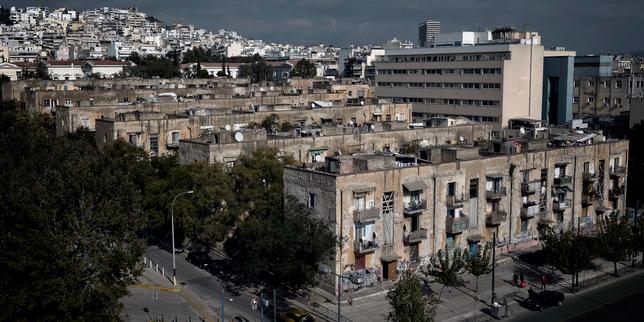
For years, the international press has swooned over Exarcheia. They paint it as a "self-managed" utopia, a bastion of resistance against the cold gears of state-led gentrification. They look at the "Strefi Hill" protests and the resistance to the new Metro station and see a David vs. Goliath battle for the soul of Athens. For a deeper dive into this area, we suggest: this related article.
They are wrong. They are falling for a performative stagnation that benefits nobody except the people who don't actually have to live with the consequences of a failing infrastructure.
The "lazy consensus" suggests that the Greek state is "invading" a community to polish it for tourists. The reality is far more uncomfortable. What we are witnessing isn't the defense of a neighborhood; it is the enforcement of a localized monopoly on chaos. When a community "self-manages" by blocking public transport and sabotaging green-space rehabilitation, it isn't fighting the "system." It is fighting the working class's right to upward mobility and basic safety. To get more information on this topic, in-depth reporting is available on The Guardian.
The Metro Station Fallacy
Let’s dismantle the most common argument: that a Metro station in Exarcheia Square will "destroy the character" of the neighborhood.
In every other European capital, a new transit hub is a win for the environment and the local economy. It reduces car dependency. It connects marginalized populations to the job market. But in the twisted logic of the "autonomous" movement, a Metro station is a Trojan horse for "control."
I have spent a decade watching urban planners navigate these zones. I’ve seen projects stalled by people who claim to speak for "the people" while actively denying those same people a twenty-minute commute. If you are against a Metro station in a dense urban core, you aren't an activist. You are a lobbyist for smog and social isolation.
The protesters claim the construction will kill the square’s trees and its history. This is a classic NIMBY (Not In My Backyard) tactic wrapped in a red-and-black flag. Modern engineering allows for the transplanting of flora and the integration of historical markers. The refusal to even negotiate these points proves that the goal isn't "better" development—it’s "no" development.
The Strefi Hill Standoff
The rehabilitation of Strefi Hill is the next battlefield. The narrative? A private company is "privatizing" a public park.
Here is the data the activists omit: Strefi Hill has been a neglected, eroding, and often dangerous space for years. Lighting is non-existent. Irrigation is a memory. When the municipality sought private donations to fund the restoration—a standard practice globally known as a Public-Private Partnership (PPP)—the cry of "occupation" went up.
Let’s be precise about what is happening. The city isn't selling the dirt. It is using private capital to fix what the public purse failed to maintain. By blocking the workers, the "self-managed" community is effectively saying: We would rather have a derelict, dangerous hill that is "ours" than a lush, safe park that belongs to everyone.
That isn't anarchy. That’s a gated community mentality without the gates.
The High Cost of "Authenticity"
There is a dark irony in the anti-gentrification movement in Athens. By resisting every attempt to improve the physical environment, the radicals are actually accelerating the very process they claim to hate.
When you create a "no-go" zone for state services, you don't stop the market. You just change the type of buyer. Institutional investors love a "distressed" neighborhood with "edgy" appeal. They buy the buildings for a pittance because the plumbing is shot and the streetlights are smashed. They wait. They know that eventually, the fever will break, or the police will move in, and their $200,000 investment will become a $1.2 million asset.
By keeping the neighborhood in a state of artificial squalor, the "resistance" is providing a massive discount to the real estate speculators they despise.
Imagine a scenario where the community actually engaged. Imagine if, instead of burning construction equipment, they demanded 30% rent-controlled social housing in exchange for the Metro station. Imagine if they demanded that the Strefi Hill contract include local hiring quotas for maintenance. That is how you fight gentrification. You don't fight it by staying poor and dirty; you fight it by capturing the value of the improvement for the residents.
The Tyranny of the Minority
We need to talk about who actually makes the decisions in these "autogéré" (self-managed) spaces. The media loves the idea of a horizontal assembly where everyone has a voice.
I’ve sat in those assemblies. They aren't horizontal. They are dominated by the people with the most time to kill and the loudest voices. Usually, these are students or "professional" activists who don't have a 9-to-5 or kids to pick up from school. The quiet majority—the Greek grandmother who has lived there since 1970, the immigrant shopkeeper trying to pay rent—they are nowhere to be found. They are intimidated. They are tired.
When a small group of militants decides to block a public project, they aren't exercising "direct democracy." They are exercising a veto over the lives of thousands of their neighbors. It is a form of micro-authoritarianism that escapes critique because it uses the language of liberation.
The Myth of the "Self-Managed" Economy
Exarcheia is often cited for its "social clinics" and "free shops." While these are noble in theory, they are functionally a drop in the ocean. You cannot run a modern urban economy on mutual aid alone. You need trash collection. You need a functioning electrical grid. You need a sewage system that doesn't pre-date the junta.
By rejecting the state’s role in infrastructure, the neighborhood creates a power vacuum. And power vacuums in cities are never filled by "kindness." They are filled by the black market. For years, the lack of police presence in Exarcheia—demanded by the activists—didn't lead to a peaceful commune. It led to a thriving drug trade run by organized crime groups that had nothing to do with "anarchy" and everything to do with exploitation.
The "insider" secret that nobody wants to admit is that the activists and the criminals often share the same interest: keeping the state out. One wants to protect a political fantasy; the other wants to protect a revenue stream. The resident is the victim of both.
Realism is the New Radicalism
It is time to stop treating Exarcheia like a museum of 1970s radicalism. It is a living, breathing neighborhood in a city that is desperately trying to modernize after a decade of crushing economic depression.
Athens needs the Metro. It needs green spaces that don't require a tetanus shot. It needs investment.
The truly radical act today isn't throwing a Molotov at a bulldozer. It is the hard, boring work of urban negotiation. It is demanding that the state do its job better, not demanding that it stop doing its job entirely.
If you want to save a neighborhood, you don't turn it into a fortress of decay. You make it so livable, so efficient, and so well-connected that the community has the leverage to dictate its own terms to the market.
Anything else isn't resistance. It's just aestheticized failure.
Stop defending the right of a neighborhood to rot. Demand the right for it to thrive.