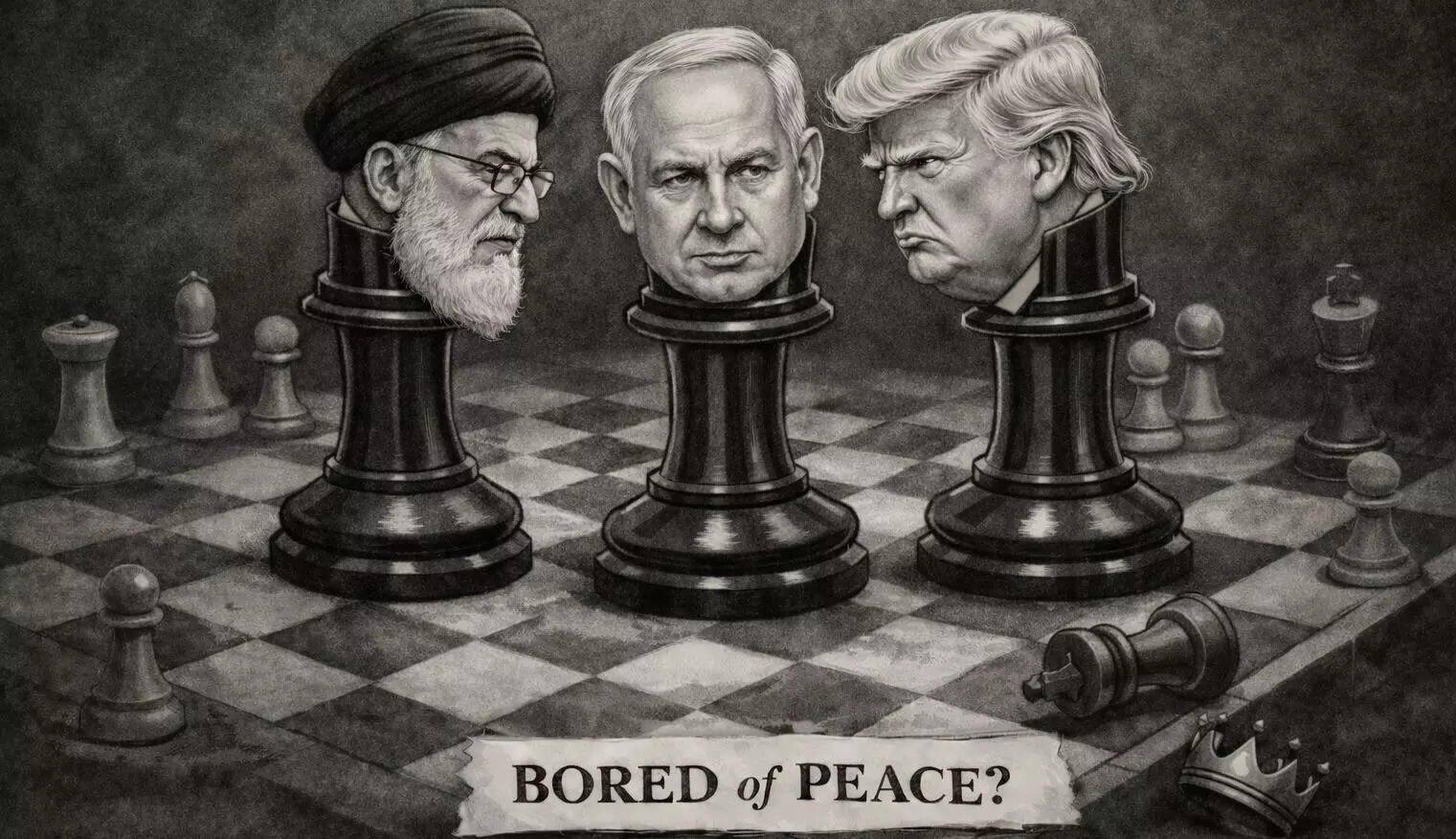
The headlines are screaming about "major combat operations" and a joint US-Israeli strike on Iran. The pundits are dusting off their 2003 playbooks, talking about regime change, surgical strikes, and the reassertion of American hegemony. They are all wrong. They are staring at the explosion and missing the structural collapse behind it.
When a superpower announces "major combat operations" in 2026, it isn't an opening gambit. It is a desperate, expensive admission that every other tool of influence has failed. We are watching the most expensive geopolitical "Hail Mary" in history, and the markets—along with the public—are being sold a narrative of strength that masks a reality of terminal overextension.
The Myth of the Surgical Strike
The lazy consensus suggests that high-precision munitions and stealth capabilities can "neuter" a mid-tier power like Iran without a broader conflagration. This is a fantasy born in a simulator.
I spent years watching defense contractors pitch "offset" strategies that promised bloodless victories through technology. In the real world, physics and geography don't care about your procurement budget. Iran is not a desert sandbox; it is a mountainous fortress with a footprint three times the size of France.
The "surgical" strike is a myth because modern warfare is an ecosystem, not a series of isolated targets. You don't just hit a nuclear facility or a missile silo. You trigger a cascading series of asymmetric responses that the US military is fundamentally ill-equipped to handle at scale. When you kick the hive, the bees don't fight you in the air; they go for your ankles. In this case, the "ankles" are the Bab el-Mandeb strait and the Strait of Hormuz.
If you think gas prices are high now, wait until a swarm of $20,000 drones shuts down 20% of the world’s oil supply. No amount of "major combat" can protect every tanker in a chokepoint. We are trading trillion-dollar carrier groups for the privilege of playing Whac-A-Mole with cheap, expendable tech.
Why Trump is Fighting the Last War
The administration's rhetoric mirrors the "Shock and Awe" era, but the board has changed. In 2003, the US operated in a unipolar vacuum. Today, every missile launched by a US F-35 is a data point for Chinese and Russian electronic warfare suites sitting just across the border.
"Major combat operations" imply a beginning, middle, and end. But in the Middle East, there is only the "middle." By engaging in a direct kinetic conflict with Tehran, the US is doing exactly what its primary global rivals want: pinning itself down in a resource-draining quagmire while the Indo-Pacific remains under-resourced.
- The Logistics Trap: For every hour of "combat," there are thousands of man-hours of logistics. We are burning through munitions that take years to replace.
- The Debt Floor: You cannot fund a regional war with a $34 trillion debt ceiling hanging over your head without triggering a currency crisis.
- The Intelligence Failure: The assumption is always that the Iranian populace will rise up. I’ve seen this movie before. Kinetic intervention almost always causes a "rally 'round the flag" effect, even among those who hate the regime.
Dismantling the Iranian "Threat" Narrative
Let's be brutally honest: Iran is a regional nuisance, not an existential threat to the United States. The escalation to "major combat" is a choice, not a necessity.
The competitor's article focuses on "containing" Iran. But containment happened years ago through regional alliances. This current pivot to hot war is about domestic optics and the preservation of a crumbling "policeman of the world" identity. If the goal was truly security, the strategy would be a ruthless, quiet strangulation of finance and proxy networks—not the loud, messy theater of aerial bombardment.
We are told this is about preventing a nuclear Iran. If that were the case, the time to act was a decade ago. Launching a campaign now only guarantees that whatever remains of the Iranian leadership will sprint toward a nuclear deterrent as their only hope for survival. We aren't stopping a bomb; we are building the justification for one.
The Kinetic Cost of Ego
I have sat in rooms where generals talked about "projecting power." It usually means spending $2 billion to destroy a $500,000 radar installation. This is the math of a declining empire.
Israel’s involvement complicates the "success" metrics. For Jerusalem, this is an existential struggle. For Washington, it is a peripheral distraction. This misalignment of stakes means the US will always be the one doing the heavy lifting while Israel dictates the escalation ladder. It is the ultimate strategic mismatch: the party with the least to lose is making the decisions for the party with the most at stake.
The Economic Aftershock Nobody is Modeling
The mainstream media is focused on the "win" or "loss" on the battlefield. They aren't looking at the insurance markets.
The moment "major combat operations" were declared, the maritime insurance industry effectively blacklisted the Persian Gulf. This isn't just about oil; it's about the entire global supply chain.
Imagine a scenario where the cost of shipping a container from Shanghai to Rotterdam triples overnight because of "war risk" premiums. That is the hidden tax of this war. The American consumer, already battered by years of inflation, is about to pay for this military "victory" every time they buy a gallon of milk or a pair of shoes.
- Energy Sovereignty: The US is a net exporter of oil, but the global market is integrated. You don't escape the price hike just because the oil is under Texas.
- The Petrodollar Pivot: Forced conflict in the heart of the energy world accelerates the move toward non-dollar settlements. We are shooting ourselves in the financial foot to prove we can still pull the trigger.
People Also Ask (And Why They're Wrong)
"Will this lead to World War III?"
Wrong question. We aren't heading toward a centralized global war; we are entering an era of "permanent fragmentation." This isn't the start of a world war; it's the end of the global order as we knew it.
"Can the US afford another war?"
Mathematically, no. Culturally, perhaps. But the "affordability" isn't measured in dollars; it's measured in the total loss of domestic focus. While we watch Tomahawk missiles on CNN, the infrastructure at home continues to rot and the tech gap with East Asia closes.
"What is the exit strategy?"
There isn't one. There never is. The "exit" is just the point where we get tired of paying the bill and leave a power vacuum for someone even worse to fill.
The Hard Truth
This isn't a "major combat operation." It's a funeral procession for the idea that the US can dictate terms to the rest of the world through sheer kinetic force.
We are using 20th-century tools to solve 21st-century ideological and asymmetric problems. The winner of this conflict won't be the one with the most carriers; it will be the one who didn't show up to the fight. By engaging, we have already lost the one thing that truly mattered: our strategic patience.
Stop looking at the maps of troop movements. Start looking at the bond yields and the shipping lanes. That’s where the real war is being lost.
Get used to the sound of those jets; they are the most expensive sirens in the world, signaling that the era of American "management" of the Middle East is finally, violently over.