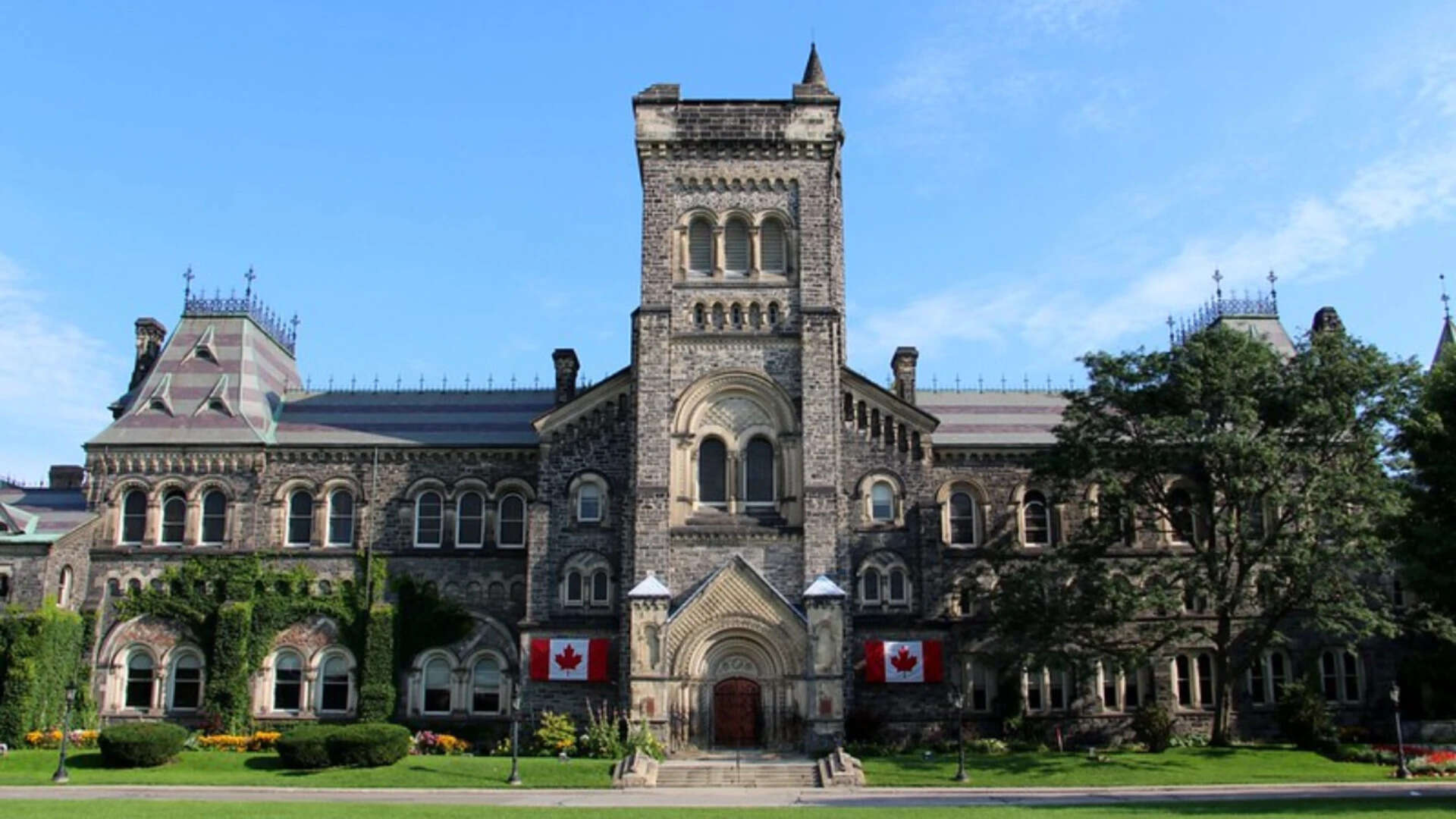
The outrage machine is currently redlining over the University of Toronto’s hiring practices. You’ve seen the headlines. "No white men allowed." "The death of meritocracy." "The end of Western academia." These stories are designed to make you angry, but they fail to make you smart. They treat hiring like a moral crusade when it is, in reality, a high-stakes capital allocation problem.
The "lazy consensus" among critics is that merit is a static, objective score—like a video game stat—that exists independently of the institution’s goals. They argue that by excluding a specific demographic, the university is intentionally choosing "lesser" talent. This isn't just a simplistic view; it's a fundamental misunderstanding of how elite organizations actually function.
Merit has never been neutral. It has always been a reflection of what an institution values at a specific moment in time. If you think the "old way" of hiring was a pure, unbiased search for the greatest minds, you haven't been paying attention to how tenure tracks have operated for the last century.
The Meritocracy Fallacy
Most people define merit as "the best person for the job." But nobody can agree on what "best" means. Is it the person with the most citations? The person who brings in the most grant funding? The person who can teach 500 undergraduates without a mental breakdown? Or the person who fills a critical gap in the department’s intellectual portfolio?
In academia, "merit" is often a polite word for "cultural fit." For decades, that fit favored a very specific, narrow archetype. When an institution like the University of Toronto pivots its hiring criteria toward gender identity or specific backgrounds, they aren't necessarily "lowering the bar." They are changing the shape of the bar.
Let’s be brutally honest about the "row" itself. The critics aren't upset about the loss of quality; they are upset about the loss of a monopoly. I’ve watched boards of directors and university senates spin their wheels for years. They talk about "best and brightest" while hiring their friends’ PhD students. The current "controversy" is just the old guard realizing the gatekeeping tools have changed hands.
The Market Value of Identity
Stop looking at this through a lens of social justice. Look at it through the lens of market positioning.
University of Toronto isn't a charity. It's a brand. In the global education market, a university’s value is tied to its perceived relevance to a global, diverse student body. If your entire faculty looks like a 1950s country club, you are losing market share in the 2020s.
By prioritizing specific identities, the university is attempting to solve a homogeneity risk. In finance, we know that a portfolio of identical assets is brittle. It’s prone to systemic failure because everyone has the same blind spots. In academia, a faculty with the same life experiences produces "echo chamber" research. That research is increasingly difficult to fund and even harder to sell to a modern audience.
The "contrarian" truth? These hiring mandates are often a desperate attempt to fix a stale product. If you want to survive as a top-tier global institution, you cannot afford to be a monoculture. The "outrage" is a lagging indicator of a shift that happened in the private sector years ago.
The Real Cost of Virtue Signaling (Both Sides)
Here is where I lose the partisans on both sides: Both the university and its critics are participating in a massive performance.
- The University’s Sin: They pretend this is about "equity" when it’s often about branding and risk management. By using rigid demographic quotas, they occasionally bypass truly exceptional talent in favor of checking a box. This is a real downside. You might miss the next Einstein because he didn't fit the 2026 diversity matrix. That is a statistical reality they refuse to acknowledge.
- The Critic’s Sin: They pretend this is a "war on excellence." It isn't. It's a war on their specific brand of excellence. They ignore the fact that the "meritocracy" they defend was built on legacy admissions, "good ol' boy" networks, and institutional inertia.
I’ve seen organizations burn millions of dollars on diversity consultants who do nothing but create more paperwork. But I’ve also seen those same organizations rot from the inside because they refused to hire anyone who didn't go to the "right" schools or have the "right" last name.
The Talent Arbitrage
If you are a white male academic feeling "excluded," here is the cold, hard truth: The market doesn't owe you a career at a specific institution. In any other industry, if a dominant player changes their hiring criteria, the "displaced" talent goes elsewhere. They start a competitor. They go to a different market. They adapt. The reason people are so angry about the Toronto situation is that they view a tenured position at a top-tier university as an entitlement. It isn't.
If the University of Toronto is truly "hiring based on identity over talent," then they will eventually produce inferior research. Their rankings will drop. Their funding will dry up. And a more "merit-focused" competitor will eat their lunch.
That’s how markets work.
But if—as is more likely—they are simply tapping into a pool of high-quality talent that was previously overlooked, they will continue to dominate. The "row" is just noise.
Why We Ask the Wrong Questions
Most people are asking: "Is this fair?"
The better question is: "Is this effective?"
Does hiring based on gender identity improve the quality of the Sociology department? Maybe. Does it improve the Mechanical Engineering department? That’s a much harder case to make. The mistake isn't the "diversity" itself; it's the blanket application of these policies across vastly different disciplines.
In the humanities, where perspective is the product, identity is a legitimate component of expertise. In the hard sciences, where the laws of thermodynamics don't care who you are, the utility of these hiring mandates is significantly lower.
The University of Toronto’s failure isn't that they want a diverse faculty. It’s that they are applying a one-size-fits-all administrative solution to a complex intellectual problem. They are treating a university like a government department rather than a collection of specialized laboratories and think tanks.
The Uncomfortable Reality of Quotas
Let's address the elephant in the room: Quotas are a blunt instrument.
Imagine a scenario where a department needs a world-class expert in quantum computing. There are three people on earth who can do the job. If the university’s policy prevents them from hiring the best one because of a demographic requirement, the university has failed its primary mission.
However, imagine a different scenario: There are 200 qualified applicants for a history professorship. All of them have stellar CVs. All of them are capable. At that point, choosing based on "diversity" isn't a sacrifice of quality—it's a tie-breaker.
The critics act like every hire is the "Quantum Computing" scenario. The university acts like every hire is the "History Professor" scenario. They are both lying to you.
Stop Fighting the Last War
If you’re still arguing about whether "white men" are being "discriminated against" in academia, you’ve already lost the plot. The real disruption isn't coming from Toronto’s HR department. It’s coming from the total decentralization of knowledge.
While the University of Toronto argues over who gets to sit in the ivory tower, the tower itself is becoming irrelevant. The most influential thinkers of the next decade won't be arguing in faculty lounges; they’ll be building on-chain, publishing on decentralized platforms, and ignoring the "identity vs. merit" debate entirely.
The "diversity row" is a legacy battle for a legacy institution. It’s a fight over who gets to steer a ship that is increasingly stuck in the harbor.
If you are an administrator: Stop hiding behind "equity" and start proving your hires are actually better.
If you are a critic: Stop crying about "merit" and start building institutions that define it better.
Anything else is just recreational outrage.
Pick a side if you want to feel good. Ignore the noise if you want to actually compete.
The University of Toronto isn't falling; it’s just rebranding for a new demographic of consumers. If you don't like the brand, stop buying the product. Otherwise, sit down and let the market decide who wins.
Your anger is not a strategy.