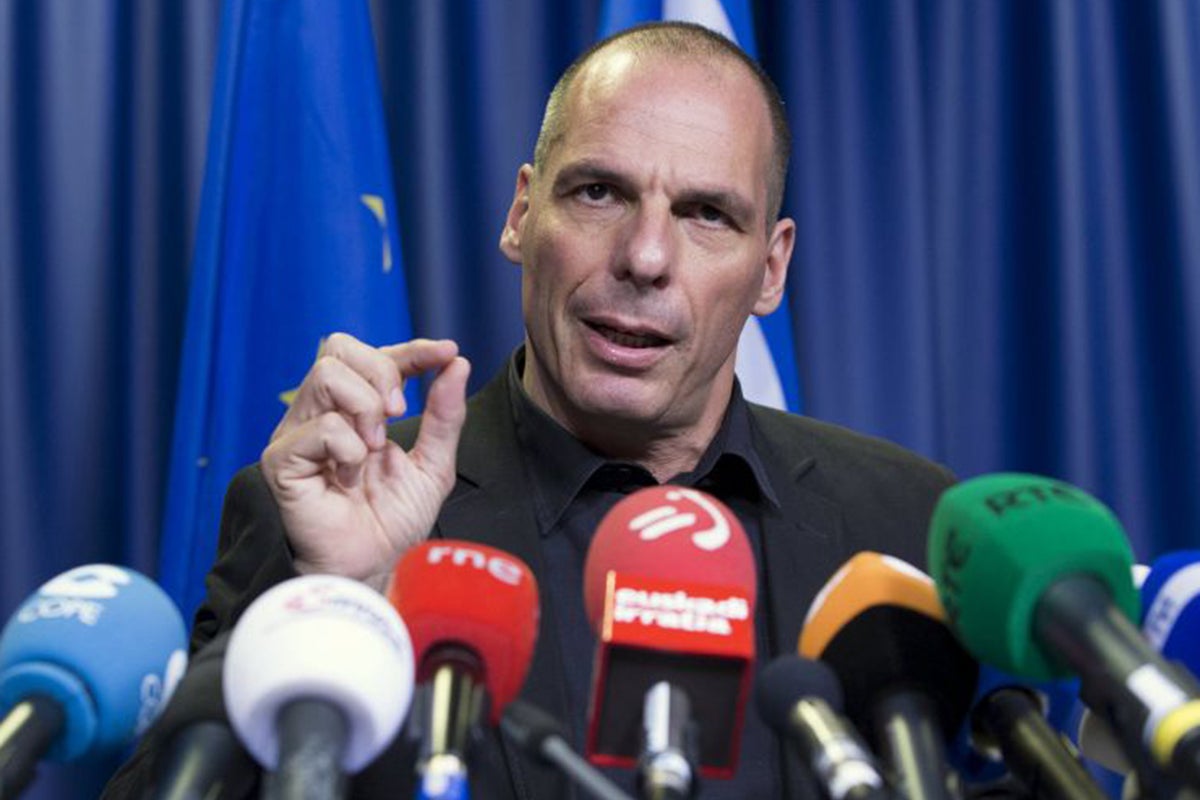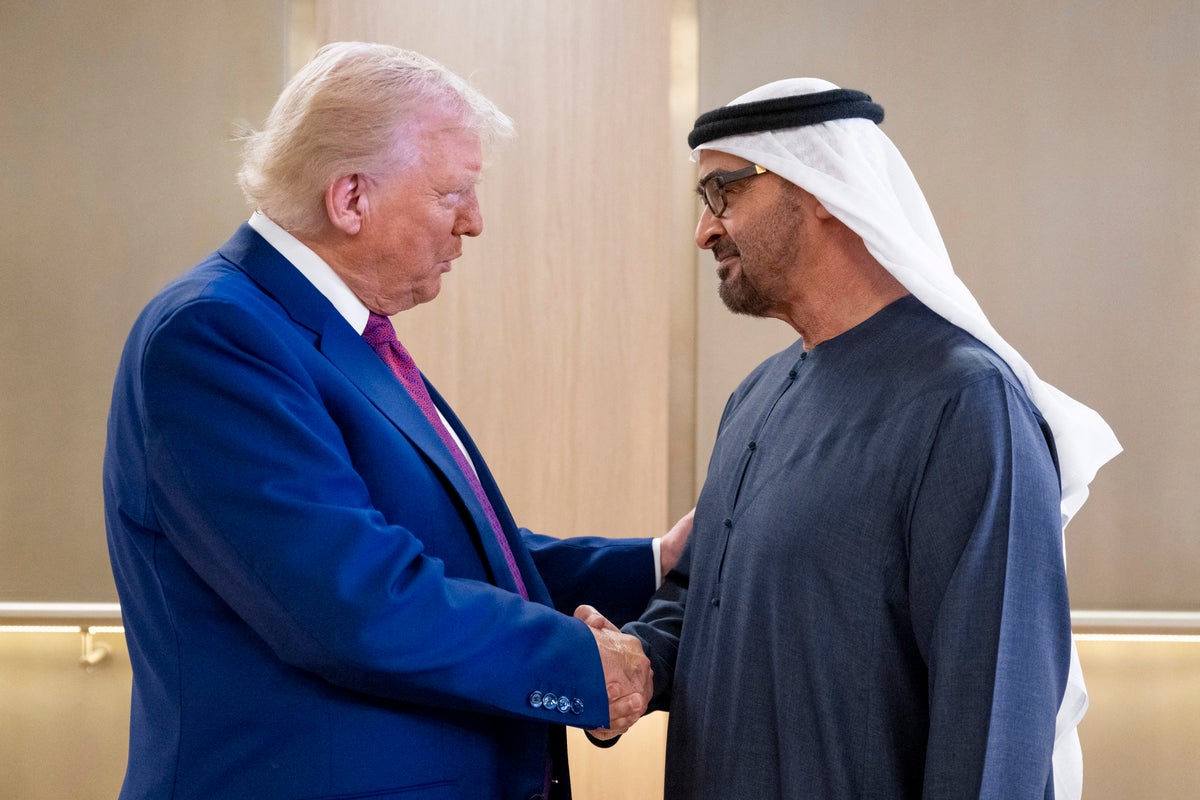
Direct presidential intervention in complex regional rivalries functions as a high-volatility liquidity injection into a market that lacks structural stability. When a single phone call from a U.S. executive triggers a cascade of diplomatic escalations or reconciliations, it signals a shift from institutionalized foreign policy to a model of Personalist Transactionalism. This transition reduces the predictability of long-term alliances while increasing the immediate leverage of regional actors who can navigate informal channels.
The recent resurgence of friction in the Middle East, precipitated by direct communication from the Trump administration, can be deconstructed through three primary analytical lenses: the erosion of institutional buffers, the signaling effect on non-state proxies, and the zero-sum nature of regional security architecture.
The Mechanism of Institutional Bypass
Traditional diplomacy operates through a multilayered filter involving the State Department, intelligence assessments, and career attaches. These layers serve as a "low-pass filter," smoothing out the noise of political rhetoric to ensure that policy remains consistent with long-term strategic interests.
When a head of state bypasses these filters via direct telephonic engagement, several structural failures occur:
- Information Asymmetry: Regional leaders often possess more granular ground-level data than a domestic executive. Without a briefing apparatus to check claims in real-time, the executive risks making concessions based on incomplete or manipulated narratives.
- Commitment Fragility: Agreements reached through personal rapport lack the "stickiness" of formal treaties or memorandums of understanding. This creates a high-beta environment where a change in leadership—or even a change in mood—can void an entire security framework.
- The Incentive for Radicalization: If a phone call can yield more results than a decade of bureaucratic negotiation, regional actors are incentivized to bypass traditional channels. This encourages grandstanding and brinkmanship designed to catch the executive’s attention.
The Tri-Polar Security Dilemma
Middle Eastern stability is governed by the interaction between three distinct power centers: the Sunni-Arab bloc, the Iranian-led "Axis of Resistance," and the Israeli security establishment. The introduction of personalist diplomacy disrupts the delicate equilibrium between these poles by re-weighting the perceived value of American security guarantees.
The Cost of Re-Alignment
The strategic logic of the Abraham Accords and subsequent normalization efforts was predicated on a shared threat perception regarding Iranian hegemony. However, when U.S. involvement becomes hyper-personalized, the cost of participation for Arab states increases. They must weigh the benefits of a direct line to Washington against the domestic and regional backlash of being seen as subordinates to a volatile Western actor.
The "Cost Function" of this alignment includes:
- Political Capital Outlay: The internal risk a regime takes by normalizing relations.
- Proxy Retaliation Probability: The likelihood of Iran-backed groups (Houthis, Hezbollah) targeting infrastructure in response to perceived U.S.-led encirclement.
- Strategic Opportunity Cost: The inability to hedge with emerging powers like China or Russia while tied to a highly specific, personalized U.S. agenda.
Signaling and Proxy Volatility
Non-state actors interpret executive-level communications as high-fidelity signals of intent. A phone call that appears to give a "green light" to one regional power simultaneously signals a "red light" or an existential threat to another. This creates a binary environment that discourages nuance.
In the Levant and the Gulf, this signaling often results in Kinetic Escalation. If a regional power perceives that the U.S. executive is providing unconditional cover, they may accelerate military objectives that were previously restrained by the State Department's "escalation management" protocols. Conversely, adversaries who feel marginalized by this direct diplomacy may initiate preemptive strikes to test the boundaries of the new, informal "red lines."
The logic of deterrence relies on clarity. When deterrence is tied to the personality of a single individual rather than the stated doctrine of a nation, it becomes a variable rather than a constant. For an adversary, the mission becomes one of psychological profiling rather than military assessment.
The Liquidity Trap of Strategic Ambiguity
For decades, the United States maintained a level of strategic ambiguity that allowed it to mediate between disparate groups. The "One Phone Call" model eliminates this ambiguity in favor of "Strategic Hard-Coding." By picking winners and losers in real-time, the U.S. loses its ability to act as a stabilizer during crises.
This shift creates a Security Vacuum in the following ways:
- Buffer State Erosion: Countries that previously served as mediators (such as Oman or Qatar) find their utility diminished when primary actors believe they can go straight to the top.
- Intelligence Decoupling: When policy is driven by personal conversations, the intelligence community often finds itself in a "reactive loop," trying to justify decisions after they have been made rather than informing them beforehand.
- Resource Misallocation: Military assets may be deployed based on the optics of a diplomatic win rather than the hard requirements of regional defense.
Quantifying the Friction
To measure the impact of this diplomatic shift, we must look at the Volatility Index of Regional Tensions (VIRT). This is not a formal financial metric but a composite of:
- Frequency of cross-border drone/missile interceptions.
- Volume of state-sponsored media vitriol between regional rivals.
- Fluctuations in the "war risk" premium for oil shipments through the Strait of Hormuz.
Data suggests that after periods of high-intensity, personalized diplomatic intervention, the VIRT tends to spike. This is because the underlying structural grievances (land disputes, sectarian divides, resource scarcity) remain unaddressed, while the temporary political "fix" provides a false sense of resolution that eventually decays.
The Fragility of the "Strongman" Synergy
The premise that one leader can speak to another and "solve" a thousand-year-old conflict is a fundamental category error. It mistakes Compliance for Resolution.
A regional leader may comply with a U.S. request during a phone call because the immediate transactional benefit (arms sales, sanctions relief) outweighs the cost. However, the structural drivers of the conflict—such as the Iranian-Saudi rivalry or the Israeli-Palestinian impasse—are not transactional; they are existential. Personalist diplomacy treats existential problems as if they are board-room negotiations.
The failure points of this approach are predictable:
- The Succession Risk: When the specific leader on either end of the phone call leaves office, the entire framework collapses because it was built on a relationship, not an institution.
- The Feedback Loop of Flattery: Leaders who understand the executive’s psychological profile can use performative compliance to extract tangible assets, only to revert to their original strategic trajectory once the assets are secured.
Operational Conclusion for Global Strategy
The re-ignition of Middle Eastern feuds following direct presidential intervention is not an anomaly; it is the logical outcome of replacing institutional stability with high-variance personalism. For stakeholders in global energy markets and international security, this necessitates a shift in risk assessment.
The strategic play is to move away from "Lead State" predictions and toward "Systemic Stress" modeling. Relying on the stability of a personalized deal is a high-risk gamble. Instead, organizations must build resilience against the inevitable snap-back that occurs when the "One Phone Call" reality meets the entrenched geopolitical gravity of the region.
Hedge against the volatility by diversifying supply chains away from single-point-of-failure corridors and increase monitoring of secondary proxy actors who operate in the shadows of these high-profile executive interactions. The real movement in the Middle East happens not during the call, but in the silence that follows, as regional players recalibrate their survival strategies for a post-institutional world.
Analyze the gap between executive rhetoric and the actual movement of carrier strike groups; the delta between those two points is the most accurate measure of true U.S. intent. Prepare for a cycle of "Tactical Normalization" followed by "Strategic Fragmentation" as the limits of personal influence are tested by the unyielding math of regional power dynamics.