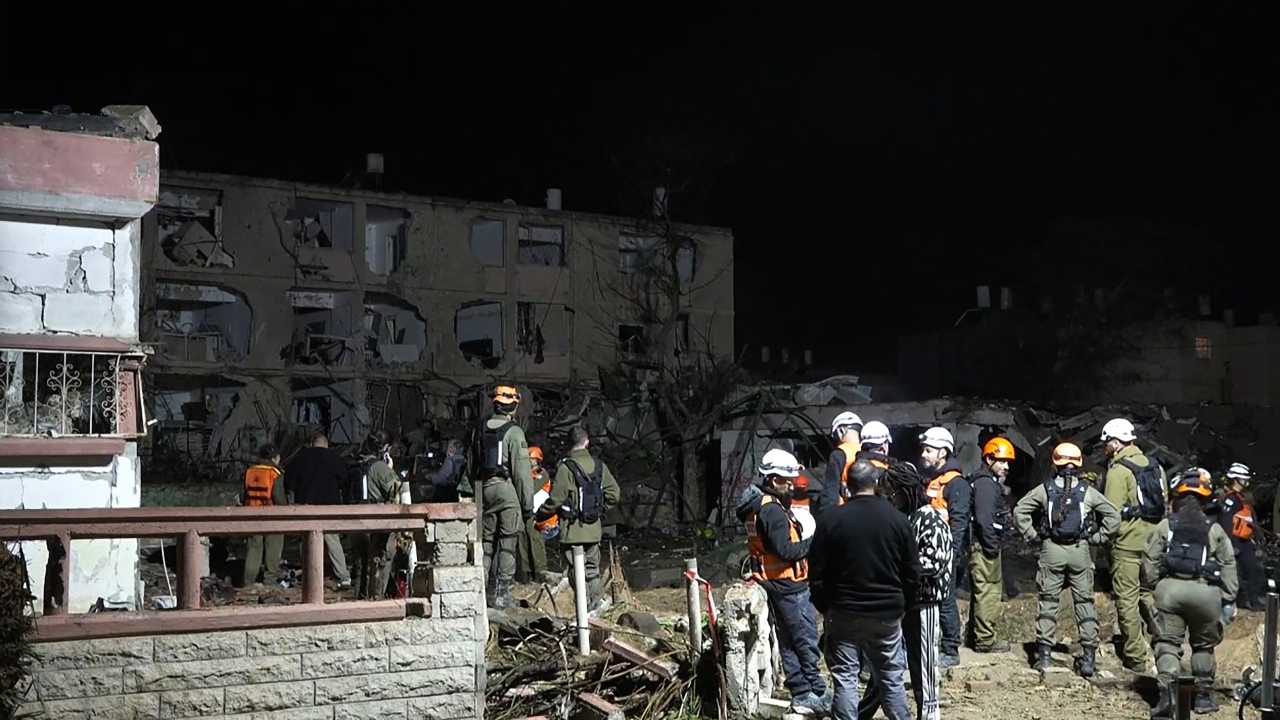
The current friction between Israel and Iran, coupled with shifting Chinese energy procurement, represents a fundamental restructuring of the global risk premium rather than a temporary spike in regional volatility. While traditional media focuses on the immediate optics of siren alerts and localized strikes, the real strategic shift lies in the divergence of energy interdependence and the hardening of "Sanction-Resistant" supply chains. The stability of the global energy market now depends on whether the logistical costs of the "shadow fleet" remain lower than the political costs of Western enforcement.
The Triad of Deterrence: Israel, Iran, and the Proxy Calculus
Military engagement in the Levant is governed by a three-variable equation: the depth of penetration, the attribution of the actor, and the economic fallout of the response. Recent sirens across central Israel indicate a shift from sporadic border skirmishes to a systematic testing of integrated air defense saturation levels. For a different look, see: this related article.
- Saturation Thresholds: Iron Dome, David’s Sling, and Arrow systems operate on a finite interceptor-to-threat ratio. Kinetic escalations are designed to deplete the inventory of $interceptors$ by forcing the deployment of high-cost munitions against low-cost, mass-produced drones.
- The Proximate Actor Model: Iran utilizes a decentralized command structure where local militias provide "plausible deniability." This forces Israel into a strategic dilemma: strike the immediate threat (the limb) or the source of funding and command (the head).
- Electronic Warfare (EW) Displacement: The persistent activation of sirens in areas without kinetic impact suggests a heightening of GPS spoofing and EW interference. This creates a secondary economic friction, disrupting civilian aviation, precision logistics, and automated financial time-stamping.
The logic of the current escalation is not total war, but "Escalation Dominance." Each side seeks to move the needle to a point where the opponent’s cost of responding exceeds the benefit of the original provocation.
The Shadow Market: China’s Role as a Liquidity Provider
As Western sanctions aim to constrict Tehran’s fiscal capacity, Chinese independent refiners—often referred to as "teapots"—have evolved into a critical sink for Iranian crude. This is not merely a search for cheap feedstock; it is a structural hedge against Western maritime dominance. Related reporting on the subject has been published by Associated Press.
The Mechanics of the "Teapot" Arbitrage
China’s independent refiners operate outside the primary state-owned enterprise (SOE) framework. This provides a layer of insulation from international secondary sanctions. The trade is defined by three specific operational characteristics:
- Renminbi Denomination: By settling trades in RMB, both parties bypass the SWIFT system and the USD-denominated banking architecture. This renders the financial trail invisible to traditional Western regulatory oversight.
- Ship-to-Ship (STS) Transshipments: Iranian oil is frequently rebranded in international waters, often off the coast of Malaysia or Singapore, labeled as "Other Far East" or "Middle Eastern Blend."
- The Discount Variable: Iranian crude typically trades at a significant discount to Brent. This discount functions as a "Sanction Risk Premium." For Chinese refiners, this margin covers the increased insurance costs and the logistical complexity of using aging, non-Western insured tankers.
This relationship creates a floor for the Iranian economy. As long as China maintains a high demand for high-sulfur, heavy crude and possesses a domestic refining capacity that ignores Western certification, the "Maximum Pressure" campaign faces a diminishing rate of return.
Energy Infrastructure as a Kinetic Target
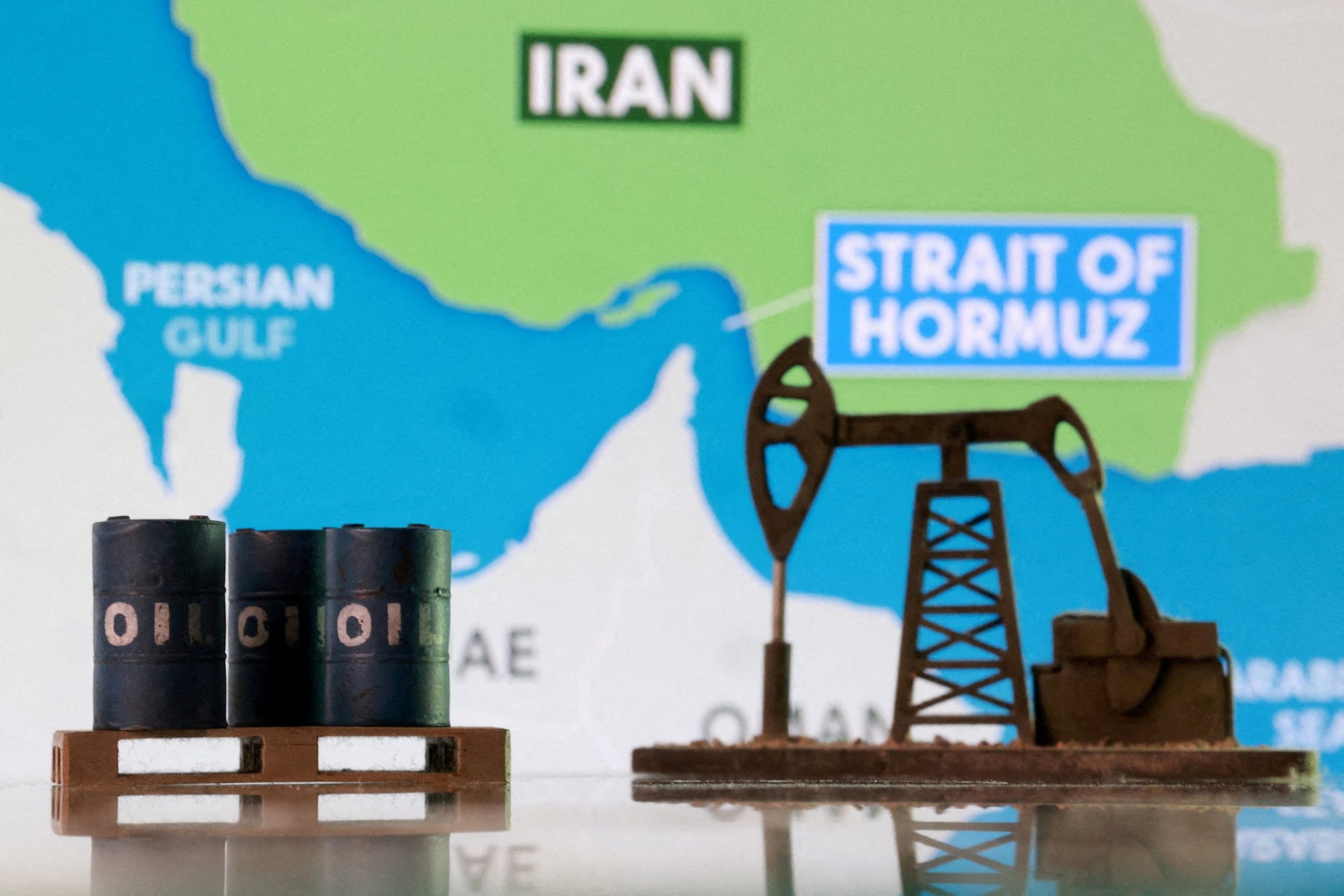
The transition from targeting military personnel to targeting energy infrastructure represents the highest tier of the escalation ladder. The vulnerability of the Strait of Hormuz remains the primary bottleneck of global energy security, but the focus has shifted to "Cyber-Kinetic" vulnerabilities.
The Fragility of the Upstream Chain
The extraction and transport of oil are heavily reliant on Industrial Control Systems (ICS) and SCADA networks. A localized kinetic strike on a refinery is visible and triggers immediate international condemnation. A sophisticated cyber-attack on the pressure sensors of a major pipeline can cause catastrophic failure with significantly higher "Attribution Lag."
Strategic Petroleum Reserve (SPR) Math
The United States and its allies utilize the SPR as a buffer against supply shocks. However, the efficacy of this tool is limited by the physical throughput of the discharge system. If the Strait of Hormuz—through which 20% of the world’s daily oil consumption passes—is compromised, the SPR can only offset a fraction of the lost volume, leading to a non-linear spike in global prices.
Logistical Divergence and the New Maritime Reality
The Red Sea and the Gulf of Aden are no longer neutral transit zones; they are active contested spaces. This has forced a bifurcation of global shipping.
- The Tier 1 Route: Western-aligned vessels, or those carrying "high-value" cargo, are increasingly rerouting around the Cape of Good Hope. This adds 10 to 14 days to transit times and increases fuel consumption by approximately 40%.
- The Tier 2 Route: Vessels with perceived "protection" from Iranian proxies (often Chinese or Russian-affiliated ships) continue to transit the Suez Canal. This creates a competitive advantage for non-Western trade blocs, as their "Security Surcharge" is lower than the rerouting costs faced by Western competitors.
This divergence is accelerating the development of the International North-South Transport Corridor (INSTC), a multi-modal route linking India to Russia via Iran. The INSTC serves as a strategic bypass of both the Suez Canal and the Western-controlled maritime choke points.
The Asymmetric Economic Impact on Israel’s Tech Sector
Israel’s economy is uniquely sensitive to prolonged reservist mobilization. Unlike traditional manufacturing economies, Israel’s "Silicon Wadi" depends on highly specialized human capital.
- Talent Drain and Brain Circulation: Continuous call-ups for the IDF disrupt the R&D cycles of startups. In the venture capital world, "Time to Market" is the most critical metric. Delays in product development cycles can lead to a loss of market share to competitors in more stable jurisdictions.
- Foreign Direct Investment (FDI) Risk Assessment: Institutional investors prioritize "Certainty." While Israel remains a powerhouse of innovation, the increasing frequency of sirens and the expansion of the "Front" into the northern and central corridors force a re-evaluation of the risk-adjusted return on investment.
Strategic Play: Navigating the Multi-Polar Energy Grid
Market participants must move beyond the binary "Peace or War" framework and adopt a "Continuous Friction" model. This model assumes that low-level kinetic activity will be the baseline for the foreseeable future.
The strategic play for energy stakeholders is to transition away from "Just-in-Time" procurement toward "Strategic Inventory Redundancy." This involves:
- Investing in domestic refining capacity capable of processing heavy, sour crudes to capitalize on sanctioned-market discounts.
- Developing private, blockchain-based ledger systems for maritime insurance to bypass the reliance on Western P&I clubs.
- Hardening digital infrastructure at the "Edge" level—specifically at pump stations and port terminals—to mitigate the impact of state-sponsored cyber-interdiction.
The decoupling of the global energy market into "Transparent" and "Opaque" zones is now a permanent feature of the landscape. Success will be determined by the ability to operate across both without triggering the regulatory tripwires of either. Eliminate the assumption that the Strait of Hormuz will remain open; begin the structural transition toward land-based Eurasian pipeline integration immediately.