Lebanon’s current trajectory is not a product of accidental escalation but the mathematical result of Hezbollah’s "Unity of Fields" doctrine collapsing under the weight of asymmetrical attrition. When a non-state actor with state-level capabilities subordinates national sovereignty to a regional proxy architecture, the domestic cost function eventually exceeds the kinetic utility of the militia. Lebanon is currently experiencing the terminal phase of this misalignment, where the structural integrity of the state is being liquidated to fund a conflict that offers zero domestic ROI.
The Triad of Lebanese Destabilization
The current crisis operates across three distinct but interlocking vectors: the erosion of the deterrent "Balance of Terror," the total cannibalization of Lebanese state infrastructure, and the terminal decoupling of Hezbollah’s military objectives from Lebanon’s national interest.
1. The Deterrence Decay
For two decades, the peace between Israel and Hezbollah rested on a Credible Threat of Mutual Destruction. This equilibrium required both parties to believe the cost of full-scale war outweighed any marginal gain from skirmishes. Hezbollah’s decision to initiate a "support front" on October 8, 2023, fundamentally altered this calculus. By engaging in low-intensity but persistent kinetic activity, Hezbollah transitioned from a dormant deterrent to an active, manageable threat. This shifted the Israeli strategic objective from "containment" to "neutralization," effectively inviting the very devastation Hezbollah’s existence was meant to prevent.
2. Infrastructure Cannibalization
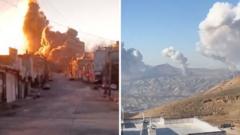
The Lebanese state does not provide security; it hosts a parasite that provides it. Because Hezbollah utilizes civilian topography—specifically in the Dahieh, the Bekaa Valley, and Southern Lebanon—for missile storage and command centers, the distinction between military and civilian infrastructure has been erased. This creates a "dual-use trap" where the destruction of a Hezbollah cell inherently requires the destruction of the surrounding Lebanese economic grid.
3. The Sovereignty Deficit
Lebanon’s formal government operates in a state of "functional paralysis." Decisions regarding war and peace are made in the Shura Council of Hezbollah, often in coordination with the IRGC (Islamic Revolutionary Guard Corps) in Tehran, rather than in the Lebanese Parliament. This externalization of command-and-control means Lebanon incurs 100% of the risk while exercising 0% of the agency.
The Mechanics of Asymmetrical Attrition
The conflict is currently defined by a "Technical Disparity Gap" that Hezbollah cannot bridge through traditional guerrilla tactics. In previous iterations of this conflict, such as 2006, Hezbollah relied on the "Victory by Survival" metric. If they still existed when the ceasefire was signed, they won. In 2026, this metric is obsolete due to the evolution of three specific military technologies:
- Intelligence Persistence: The use of high-altitude long-endurance (HALE) UAVs and AI-driven signals intelligence has rendered the "human shield" or "tunnel-based" concealment strategy less effective. The speed at which Hezbollah's middle-management and tactical commanders are being identified and eliminated suggests a systemic breach in their internal security protocols.
- Precision Stand-off Capability: Israel’s ability to conduct kinetic strikes with sub-meter accuracy allows for the decapitation of Hezbollah leadership without requiring the large-scale ground invasions that previously neutralized Israeli technological advantages.
- Economic Exhaustion: Unlike 2006, Lebanon enters this conflict with a collapsed banking sector and hyperinflation. There is no sovereign capital to fund reconstruction.
The Displacement Variable and Demographic Shifts
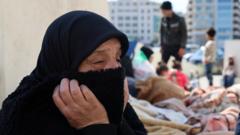
The internal migration of over one million Lebanese citizens is not merely a humanitarian crisis; it is a demographic time bomb. The movement of predominantly Shia populations from the south into Christian, Druze, and Sunni heartlands in the north and Beirut is creating friction points that mirror the lead-up to the 1975 Civil War.
The logistical burden of these Internally Displaced Persons (IDPs) falls on a state that cannot provide basic electricity or clean water. When the host communities—already stressed by the presence of 1.5 million Syrian refugees—reach their carrying capacity, the conflict ceases to be just "Israel vs. Hezbollah" and becomes "Lebanese vs. Lebanese."
Hezbollah’s "Social Contract" with its base is predicated on the promise of security and reconstruction (the Jihad al-Bina model). If the group cannot provide the funds to rebuild—funds that were previously provided by Iran but are now throttled by sanctions and internal Iranian economic pressure—the ideological loyalty of their constituent base will face its first genuine existential stress test.
The Iranian Constraint
Hezbollah is frequently described as a proxy, but it is more accurately defined as Iran’s "Insurance Policy" against a direct strike on its nuclear facilities. By deploying Hezbollah in a secondary theater like the Galilee "support front," Iran is essentially spending its insurance premium to buy time.
However, there is a point of diminishing returns. If Hezbollah’s elite Radwan Force is decimated and its long-range precision missile inventory is depleted in a war over the border, Iran loses its primary deterrent against Israel. This creates a strategic paradox: To save Hezbollah, Iran may have to limit its involvement; but by limiting its involvement, it ensures Hezbollah’s gradual degradation.
Structural Failures in the Lebanese Armed Forces (LAF)
The LAF remains the most respected institution in Lebanon, yet it is kinetically irrelevant in the current conflict. This irrelevance is a calculated outcome of the Lebanese political compromise. The LAF is funded largely by international donors, specifically the United States, under the strict condition that it does not coordinate with Hezbollah. Conversely, it cannot confront Hezbollah without triggering a sectarian schism within its own ranks, as a significant percentage of the enlisted personnel are Shia.
This leaves a "Security Vacuum" where the formal military watches from the sidelines while a non-state actor dictates the nation's survival. The failure to integrate a National Defense Strategy—one that subordinates Hezbollah’s weapons to the state—is the primary reason Lebanon remains a theater rather than a country.
The Economic Death Spiral
Quantifying the damage to Lebanon requires looking beyond the immediate destruction of buildings. The "Opportunity Cost" of this war includes:
- The Tourism Collapse: Lebanon’s economy had pivoted toward a fragile service and tourism model to compensate for the loss of its manufacturing and banking sectors. The war has effectively zeroed out this revenue stream for the foreseeable future.
- Capital Flight: The remaining "old money" and entrepreneurial class in Lebanon are executing permanent exits. This is not temporary displacement; it is a permanent "Brain Drain" that strips the country of the human capital required for eventual recovery.
- Agricultural Sterilization: The use of white phosphorus and the physical destruction of orchards in Southern Lebanon have destroyed the topsoil and irrigation systems for a generation, hitting the agricultural output that the south relies on for subsistence.
Strategic Requirement for De-escalation
For Lebanon to survive as a sovereign entity, the conflict must be decoupled from the broader regional "Resistance Axis." This requires a shift from "Strategic Patience" to "Active Neutrality."
The implementation of UN Security Council Resolution 1701 is the only viable technical framework remaining. This requires:
- The withdrawal of all Hezbollah personnel and assets north of the Litani River.
- The deployment of a robust, empowered LAF force to the border, supported by UNIFIL with a revised mandate that includes actual enforcement capabilities.
- The immediate election of a Lebanese President—a post vacant for years—to provide a legal interlocutor for international ceasefire negotiations.
The primary obstacle to this is Hezbollah’s refusal to concede its "Veto Power" over Lebanese foreign policy. As long as the group views Lebanese territory as a frontline for a regional ideological project, the state will continue to be consumed. The endgame is no longer about "winning" a war against Israel; it is about whether there will be a Lebanon left to govern once the missiles stop falling.
The strategic play for the Lebanese state, and its international backers, is to leverage the current military degradation of Hezbollah to force a "New National Contract." This contract must prioritize the monopoly of violence within the hands of the LAF. Failure to do so ensures that Lebanon remains a "Sovereign Shell"—a territory with a flag and a seat at the UN, but with no control over its own heartbeat. The window for this transition is closing as the kinetic intensity of the conflict scales toward a point of no return.