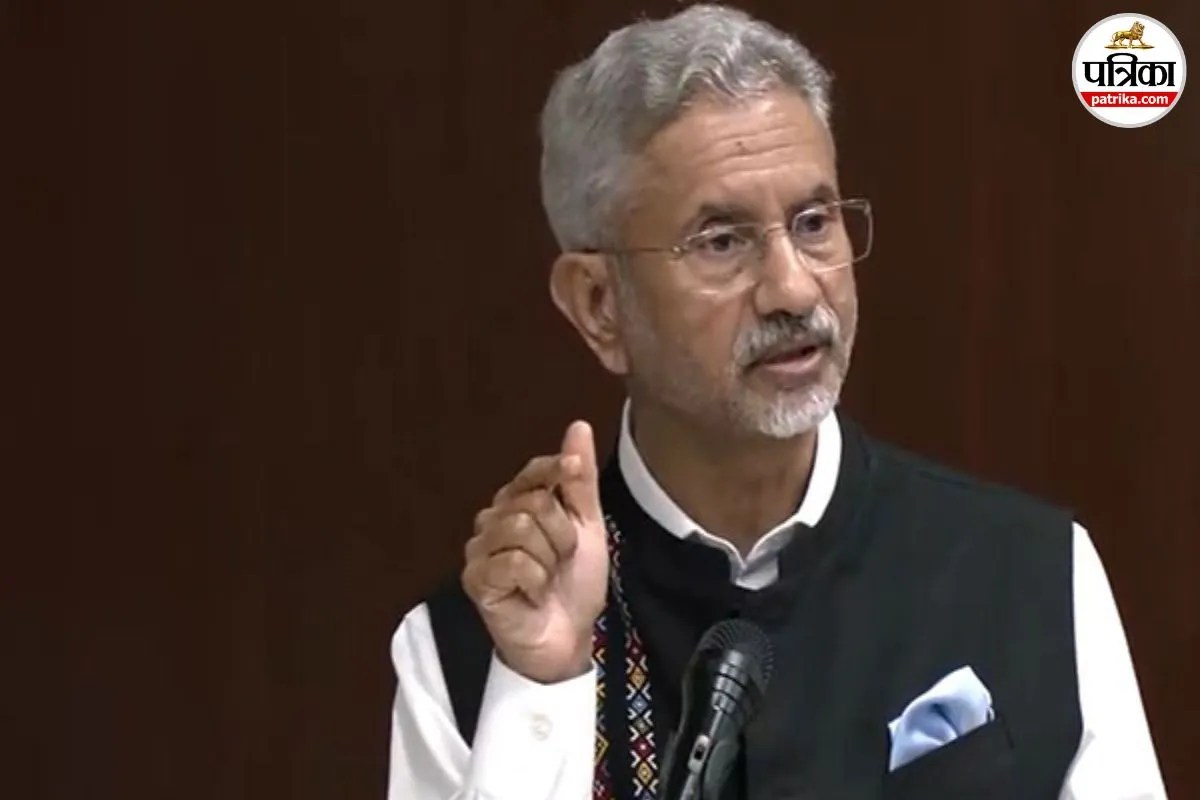
The diplomatic engagement between Indian External Affairs Minister S. Jaishankar and U.S. Secretary of State Marco Rubio transcends routine bilateralism, signaling a recalibration of the Indo-Pacific and West Asian security architectures. This interaction occurs within a volatile intersection of escalating regional kinetic conflicts and shifting American isolationist tendencies. To understand the strategic depth of this dialogue, one must dissect the three structural pillars governing the India-U.S. partnership: maritime security synchronization, counter-terrorism intelligence parity, and the economic insulation of energy corridors.
The Triad of Indo-Pacific and West Asian Interdependence
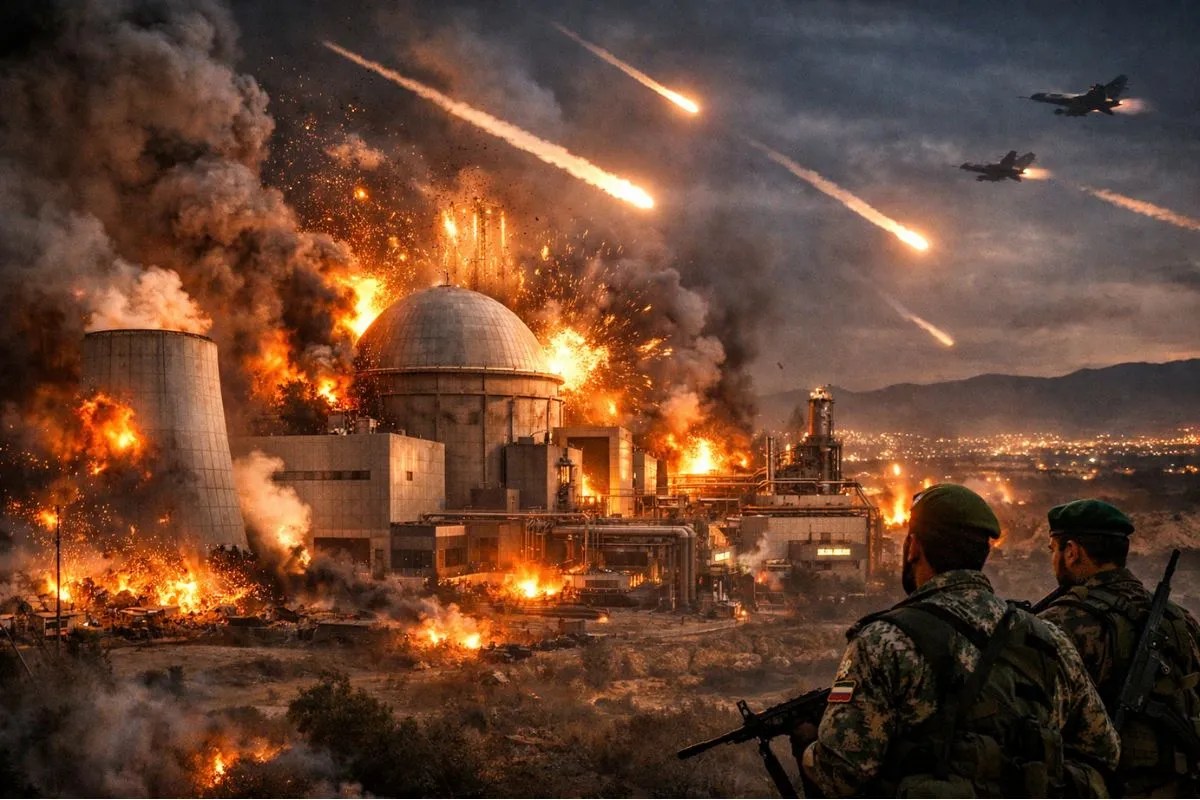
The stability of West Asia is no longer a localized concern; it is a primary variable in the Indo-Pacific security equation. The "connectivity-security" feedback loop dictates that any disruption in the Persian Gulf or the Red Sea creates an immediate inflationary pressure on Indian domestic markets and a logistical bottleneck for U.S. naval assets. Expanding on this idea, you can also read: Why the Green Party Victory in Manchester is a Disaster for Keir Starmer.
1. The Maritime Chokepoint Variable
India and the United States are currently navigating a shared vulnerability at the Bab-el-Mandeb and the Strait of Hormuz. For India, these are the primary arteries for energy imports and the proposed India-Middle East-Europe Economic Corridor (IMEC). For the U.S., these are critical nodes for projecting power and ensuring the free flow of global commerce. The Jaishankar-Rubio dialogue focuses on operationalizing the "Major Defense Partner" status through real-time maritime domain awareness sharing. This is not merely a diplomatic gesture but a technical requirement to counter non-state actors equipped with asymmetric drone technologies.
2. Strategic Autonomy vs. Integrated Deterrence
A fundamental tension exists between India’s pursuit of strategic autonomy and the U.S. push for integrated deterrence. Rubio, known for a hawkish stance on adversarial regimes, views West Asian stability through the lens of containing Iranian influence. India, conversely, maintains a transactional and historical relationship with Tehran, necessitated by the Chabahar Port project—a critical gateway to Central Asia that bypasses Pakistan. The dialogue functions as a mechanism to harmonize these diverging interests, ensuring that India’s regional infrastructure projects do not trigger U.S. secondary sanctions while acknowledging American concerns regarding regional escalation. Experts at Associated Press have shared their thoughts on this situation.
The Cost Function of Regional Instability
The escalation of tension in West Asia imposes a quantifiable "instability tax" on both nations. This cost function is defined by three primary metrics:
- Energy Premium Volatility: Every $10 increase in the price of a Brent crude barrel adds approximately $12 billion to India’s current account deficit. For the U.S., while energy independent, global price spikes drive domestic inflation and political volatility.
- Logistical Redirection Costs: The diversion of shipping around the Cape of Good Hope increases transit time by 10 to 14 days, raising freight rates by 40% to 60%. This disrupts the "just-in-time" supply chains critical for the high-tech and pharmaceutical sectors.
- Security Overhead: The requirement for increased naval presence (Operation Prosperity Guardian and India’s independent deployments) diverts resources from the South China Sea, effectively thinning out the deterrent posture against other systemic rivals.
Technocriticism and Intelligence Parity
The transition from traditional diplomacy to a data-centric security partnership is evident in the emphasis on iCET (initiative on Critical and Emerging Technology). Rubio’s background suggests an alignment with India on securing the semiconductor supply chain and reducing reliance on adversarial technology stacks. In the context of West Asian tensions, this extends to cyber-resilience. Both nations face a surge in state-sponsored cyber-attacks targeting critical infrastructure, including power grids and financial switches.
The dialogue seeks to establish a framework for:
- Signals Intelligence (SIGINT) Sharing: Deepening the exchange on regional troop movements and missile telemetry.
- Drone Interdiction Protocols: Co-developing low-cost directed energy weapons to counter the proliferation of low-cost loitering munitions.
- Space-Based Surveillance: Utilizing SAR (Synthetic Aperture Radar) constellations to monitor non-state actor movements in desert and maritime environments where traditional optical sensors fail.
The Iranian Pivot and the Abraham Accords Framework
The most complex layer of the Jaishankar-Rubio interaction is the future of the Abraham Accords in a post-conflict environment. The U.S. strategy remains centered on the normalization of ties between Israel and the Arab world to create a unified front. India is a de facto partner in this through the I2U2 Group (India, Israel, UAE, USA).
However, the logic of this alignment faces a stress test when kinetic conflict erupts. The "minilateral" approach—small, functional groups focused on specific outcomes like food security or water tech—provides a buffer. If the broader geopolitical climate is too toxic for grand treaties, these functional overlaps keep the hardware of cooperation running. India’s role is that of a "stabilizing bridge," maintaining communication channels with actors that the U.S. cannot or will not engage directly.
Risk Assessment of the Current Trajectory
The primary risk to this bilateral synchronization is the "asymmetry of priorities." The U.S. may prioritize immediate tactical containment of regional proxies, while India remains focused on long-term structural stability and economic connectivity. This leads to a bottleneck in decision-making when rapid escalation occurs.
A secondary risk is the domestic political theater in both nations. Rubio represents a specific brand of American realism that is often transactional. If the U.S. perceives India’s "multi-alignment" as a liability during a crisis, the friction could stall progress on high-end defense transfers, such as the GE F414 jet engine deal or MQ-9B Predator drone integration.
Strategic Deployment of Resources
The immediate strategic play for India involves leveraging its position as a "security provider" in the Indian Ocean to gain concessions in the technology and space sectors. By demonstrating that it can secure the eastern flank of the West Asian theater, India reduces the operational burden on the U.S. Navy.
The U.S., in turn, must recognize that India’s refusal to join formal military alliances is not a sign of weakness but a strategic choice that allows for a broader range of diplomatic outcomes. The Jaishankar-Rubio dialogue should be viewed as a technical synchronization of two distinct engines running on the same track toward regional equilibrium.
The path forward requires the establishment of a permanent "West Asia-Indo-Pacific" coordination cell that operates beyond the ministerial level, ensuring that tactical shifts in the Levant do not derail the strategic objectives of the I2U2 and the Quad. This institutionalized approach will replace reactive diplomacy with a predictive security framework capable of absorbing regional shocks.