The global energy market functions on a hierarchy of needs that rarely aligns with the moral posturing of televised diplomacy. When Treasury Secretary Scott Bessent signaled that the United States essentially grants "permission" for India to continue its massive intake of Russian crude, he wasn't offering a new concession. He was acknowledging a math problem that the West cannot afford to solve.
The mechanics are simple. If India stops buying Russian oil, that volume doesn't just vanish; it creates a supply vacuum that would send global Brent prices screaming past $120 a barrel. For a Washington administration constantly looking at domestic pump prices as a barometer for political survival, India’s hunger for discounted Urals is not a defiance of sanctions. It is a vital pressure valve for the global economy.
By framing this as "permission," the Treasury is attempting to maintain the optics of control over a situation where they have very little. India has moved from importing roughly 1% of its oil from Russia pre-2022 to nearly 40% today. This shift represents one of the most rapid reorganizations of energy logistics in modern history, and it happened because New Delhi realized that "strategic autonomy" is more than a slogan—it is a survival mechanism for a nation of 1.4 billion people.
The Price Cap Illusion and the Shadow Fleet
The G7 price cap of $60 per barrel was designed as a sophisticated strangulation tactic. The idea was to keep Russian oil flowing to prevent a price shock while simultaneously draining the Kremlin’s profit margins. It worked, but only on paper and only for a short window.
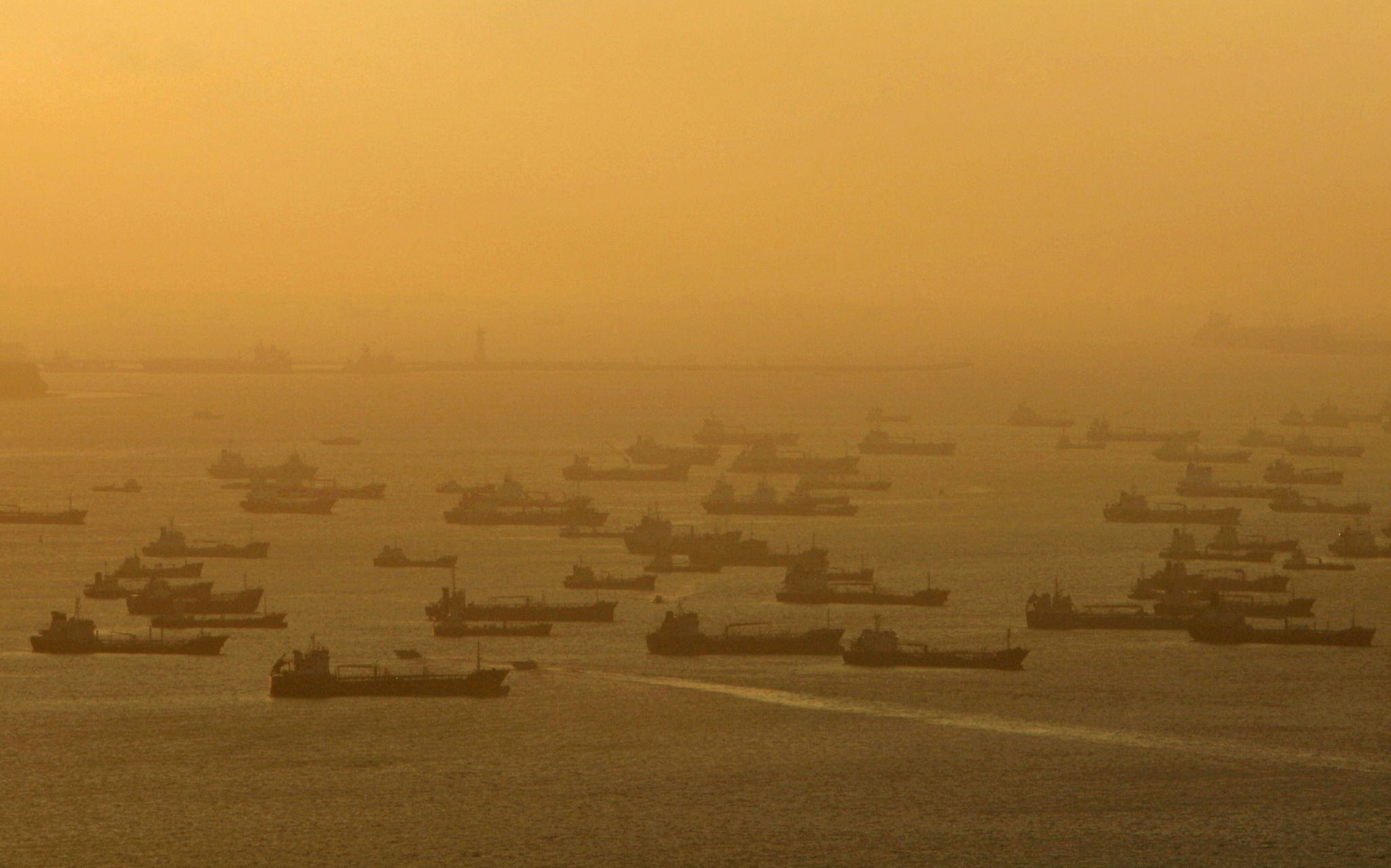
The reality on the water is far messier. To bypass Western insurance and shipping services, a "shadow fleet" of aging tankers has emerged, operating outside the reach of US jurisdiction. These vessels often engage in ship-to-ship transfers in the middle of the ocean, blending crudes or falsifying documentation to mask the origin of the cargo. When Secretary Bessent speaks of permission, he is acknowledging that the US has chosen not to aggressively hunt down every one of these mid-ocean handshakes.
Doing so would risk an immediate confrontation with India, a key partner in the Indo-Pacific strategy against China. The US finds itself in a classic geopolitical squeeze play. It needs India as a democratic counterweight in Asia, which means it cannot afford to penalize New Delhi for doing exactly what is necessary to fuel its own industrialization.
Why India Holds the Stronger Hand
India’s refining capacity is the secret weapon in this equation. Modern refineries in Jamnagar and Vadinar are some of the most complex on earth. They can take "sour" Russian crude—which is high in sulfur and difficult to process—and turn it into high-quality diesel and jet fuel.
Much of that refined product eventually finds its way back to European and American markets. This creates a strange, circular irony. Europe bans Russian crude but imports record amounts of Indian diesel made from that very same crude. Everyone involved understands this. The "permission" mentioned by the Treasury is a tacit agreement to ignore the molecular origin of the fuel as long as the paperwork looks clean.
The Currency War Beneath the Surface
The real threat to Western dominance isn't the oil itself, but how it is paid for. For decades, the "petrodollar" has been the bedrock of US financial hegemony. If you wanted oil, you needed dollars.
Russia and India have experimented with settling trades in rupees, rubles, and even UAE dirhams. While these efforts have faced significant friction—mostly because Russia has little use for a mountain of Indian rupees it cannot easily spend elsewhere—the intent is clear. Every transaction that bypasses the SWIFT system and the US dollar chips away at the efficacy of future sanctions.
Bessent’s rhetoric is designed to bring these transactions back into the light where they can be monitored. By saying the US permits the trade, the Treasury is signaling that as long as India uses "transparent" financial channels and stays within the spirit of the price cap, the US will not deploy secondary sanctions. It is an attempt to keep the dollar at the center of a trade that was rapidly moving into the dark.
The Domestic Imperative for New Delhi
To understand why India won't budge, look at the internal economics. Energy poverty is a tangible threat to the Indian government’s stability. Unlike the US, which is a net exporter of energy, India imports over 80% of its oil requirements.
When the conflict in Ukraine began, the sudden spike in energy costs threatened to derail India’s post-pandemic recovery. By securing Russian oil at discounts ranging from $10 to $30 below global benchmarks, India saved an estimated $7 billion in a single year. That is money that stays in the domestic economy, keeping inflation in check and funding infrastructure.
No Indian Prime Minister could survive a decision to ignore those discounts in favor of "Western solidarity," especially when that same West continues to buy LNG and other commodities when it suits their own national interests.
The Crude Reality of 2026
We are now seeing the long-term effects of this policy. The global oil market has bifurcated. There is the "Western" market, governed by transparency, ESG standards, and G7 regulations. Then there is the "Grey" market, where India, China, and various intermediaries trade in a high-stakes game of necessity.
The US Treasury's latest stance is a pivot toward pragmatism. They have realized that the goal of "collapsing the Russian economy" is secondary to the goal of "preventing a global depression." By granting India this leeway, the US is effectively outsourcing its energy stability to New Delhi.
The Risk of Environmental Fallout
There is a hidden cost to this permission that rarely makes the Treasury briefings. The shadow fleet used to transport this oil is composed of vessels that are often past their prime, with questionable maintenance records and even more dubious insurance coverage.
By forcing this trade into the shadows, the sanctions regime has inadvertently created a massive environmental risk in the Indian Ocean and the Malacca Strait. A single major spill from an uninsured shadow tanker would be a catastrophe that neither Russia nor the various shell companies involved would be able to pay for. This is the "collateral damage" of the current sanctions landscape—a risk the US is willing to accept to keep the oil moving and the prices stable.
A New Era of Transactional Diplomacy
The era of the US dictating terms to "neutral" powers is fading. The relationship between Washington and New Delhi is no longer one of patron and client, but a cold, transactional partnership.
India’s refusal to condemn Russia at the UN, coupled with its aggressive pursuit of Russian energy, has proven that middle powers can now navigate the cracks between the Great Powers. Secretary Bessent’s comments aren't a sign of American strength; they are a public admission of a new multipolar reality. The US is not leading the energy market in this instance; it is reacting to it.
For investors and analysts, the takeaway is clear. The "sanctions" on Russian oil are now a managed theater. The oil will continue to flow, the discounts will eventually narrow as the shadow fleet becomes more efficient, and India will continue to serve as the world’s most important refinery.
The US has stopped trying to block the tide and started trying to claim they are the ones who ordered it to come in. This isn't about permission. It’s about a superpower finding a way to save face while the world's energy maps are redrawn without its consent.
If you are waiting for a return to the pre-2022 energy order, you are looking at a ghost. The infrastructure for this "alternative" market is already built, the banking channels are being hardened, and the refineries are tuned for Russian crude. The permission is permanent because the alternative is a global economic collapse that no one, least of all the US Treasury, is prepared to handle.
Watch the shipping lanes of the Indian Ocean; they tell a truer story than any press release from Washington.