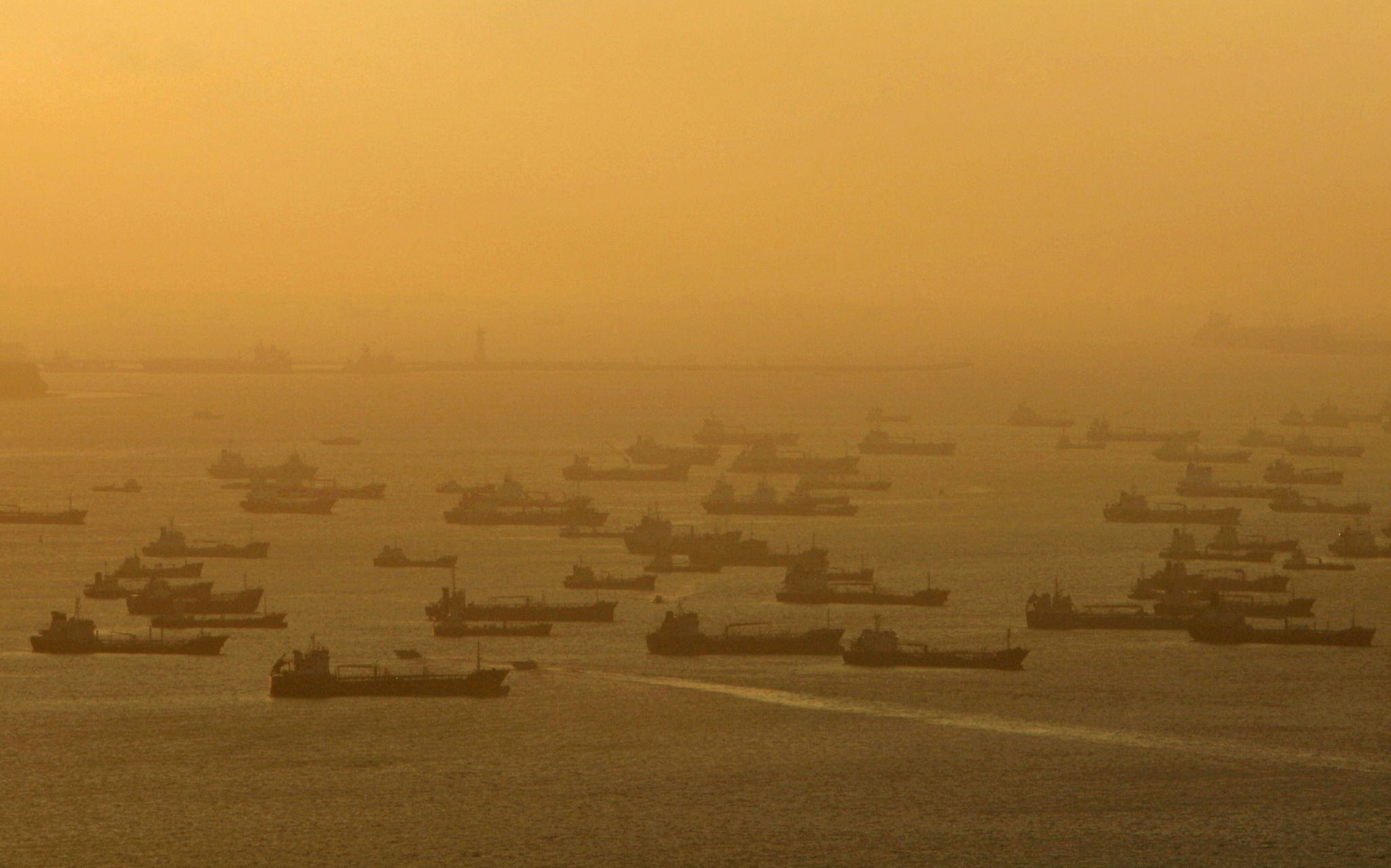
Donald Trump just threw a massive financial wrench into the gears of a potential Middle East oil crisis. By announcing a $20 billion reinsurance program for oil tankers, the administration isn't just playing with big numbers. It’s trying to stop a global economic heart attack before it starts. If you’ve followed the rising friction in the Persian Gulf, you know the script. One stray drone or a "mysterious" limpet mine attaches to a hull, and suddenly, the cost of moving a barrel of crude jumps through the roof.
Lloyd’s of London and other private insurers aren't charities. When the risk of a ship blowing up goes from "negligible" to "highly probable," they hike premiums or pull out entirely. That’s where the U.S. government stepped in. This $20 billion backstop acts as a safety net. It tells shipping companies they can keep sailing through the Strait of Hormuz without facing bankruptcy-level insurance costs. It’s a bold move, but it’s also a calculated gamble on whether the U.S. can actually keep the peace or if it’ll end up footing the bill for a localized war.
Why the Private Market Failed the Shipping Industry
Insurance is the invisible grease that keeps global trade moving. Most people don't think about it until it disappears. In the waters near Iran, the private market essentially hit the panic button. When war risks are high, commercial insurers apply "Additional Premium" charges. These aren't small fees. We’re talking about hundreds of thousands of dollars per voyage.
For a tanker operator, those costs make the trip unprofitable. If the ships stop moving, oil supplies drop. If supplies drop, you pay five dollars a gallon at the pump. Trump’s plan bypasses the hesitation of the private sector. By providing a government-backed guarantee, the U.S. is effectively saying it will cover the losses that the private market is too scared to touch. It’s a classic "lender of last resort" maneuver, but applied to maritime logistics.
The Massive Scale of the 20 Billion Dollar Bet
Let’s look at the math. $20 billion is a staggering amount of capital to tie up in maritime risk. To put that in perspective, the total hull and machinery insurance market for the entire world doesn't usually see single-event losses anywhere near that magnitude. This isn't just covering a few scratches. It’s designed to cover the total loss of multiple Ultra Large Crude Carriers (ULCCs) and their cargo.
A single modern tanker can carry two million barrels of oil. At 2026 prices, that cargo alone is worth a fortune. Add the cost of the ship itself—upwards of $100 million—and the environmental cleanup costs if there's a spill. The $20 billion figure shows the U.S. is preparing for a sustained period of "gray zone" warfare where multiple vessels might be targeted over several months. It's a heavy-handed signal to Iran that the U.S. will keep the oil flowing regardless of the physical risks to the fleet.
The Strategic Signal to Tehran
This isn't just about economics. It’s a psychological operation. Iran’s primary leverage in the region is its ability to threaten the Strait of Hormuz. Roughly 20% of the world’s liquid petroleum passes through that narrow choke point. If Tehran can make the cost of shipping too high, they win without even firing a shot.
By neutralizing the insurance problem, the U.S. removes that leverage. It tells the Iranian leadership that their "tanker war" tactics won't work. The ships will keep coming because the financial risk has been socialized by the American taxpayer. It’s a way to "calm the waters" by showing that the U.S. has deeper pockets than Iran has provocations.
The Problems Nobody Wants to Talk About
Is this a perfect plan? Honestly, no. It’s full of holes that could get messy fast. First, there’s the issue of "moral hazard." If ship owners know the U.S. government is picking up the tab for a disaster, do they take more risks? Do they skimp on security or sail into more dangerous zones than they otherwise would?
Then there’s the international legal mess. Providing insurance is usually a commercial activity. When a government does it, it can look like an illegal subsidy under World Trade Organization rules. More importantly, it ties the U.S. government’s checkbook directly to the actions of foreign-flagged vessels. If a tanker flying a Marshall Islands flag gets hit, and the U.S. pays out $300 million, the political optics back home will be brutal.
What This Means for Global Oil Prices
The immediate impact was a slight cooling of Brent Crude futures. Markets hate uncertainty. By stepping in as the reinsurer of last resort, the U.S. provided a "floor" of certainty. Traders now know that the physical flow of oil is protected by a financial firewall.
However, this is a temporary fix. You can’t insure your way out of a shooting war forever. If the provocations continue, the $20 billion will vanish faster than people think. The cost of environmental remediation alone for a major spill in the Gulf could eat half that fund in a week. This is a bridge, not a destination. It buys time for diplomacy—or for a more permanent military solution.
How to Protect Your Own Interests in This Volatility
If you’re an investor or just someone worried about the cost of living, you shouldn't take this announcement as a sign that the danger is over. It’s a sign that the danger is so high the government had to step in.
- Watch the "War Risk" premiums: Even with the U.S. program, keep an eye on what private insurers are doing. If they continue to hike rates for non-U.S. backed voyages, the "calm" is an illusion.
- Monitor the Strait of Hormuz transit numbers: Data from services like MarineTraffic will tell you if the tankers are actually moving. The program only works if the captains feel safe enough to sail.
- Diversify away from energy-heavy stocks: While the insurance program helps, the underlying tension remains. Any escalation will still cause a spike that a reinsurance program can't fix.
The U.S. government is now essentially the world's largest maritime insurance company. It's a weird spot to be in, but in a world where energy security is national security, the administration decided the risk of doing nothing was even more expensive.
Keep your eyes on the actual shipping lanes over the next thirty days. If the volume of tankers increases, the gamble worked. If they stay anchored in safe harbors, $20 billion won't be enough to save the global economy from the next price shock. Check the daily shipping manifests and the crude oil delivery schedules at major ports like Fujairah. That's where the real story is written.