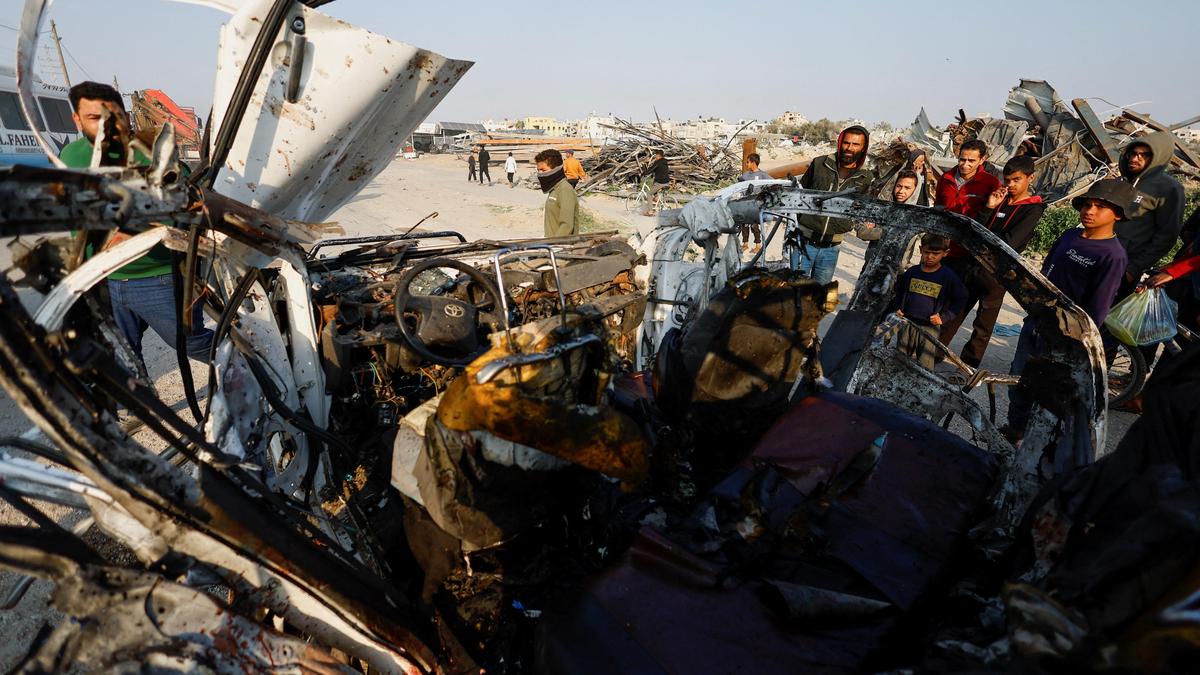
You’ve probably heard the term "ceasefire" thrown around a lot lately regarding Gaza. It sounds like a relief. It sounds like the end of the fear. But for a family in the Nuseirat refugee camp this past Sunday, that word meant absolutely nothing. While the world discusses diplomatic frameworks and regional stability, a missile tore through a home in central Gaza, killing a couple and their 10-year-old son. The mother was pregnant with twins.
They weren't alone. In a separate incident on the same day, an Israeli strike hit a police vehicle in Zawaida, killing eight officers. By the time the sun went down, 12 people were dead, including two children and that pregnant woman. If this is what a "ceasefire" looks like, it's a terrifyingly thin version of peace.
The illusion of a quiet sky
It’s easy to get lost in the massive numbers. Since October 2023, the death toll has climbed to over 72,200 Palestinians. But the real story is in the breakdown of what's happened since the "halt" in major fighting began last October. Since that deal was signed, more than 650 Palestinians have been killed.
You'd think a ceasefire means the strikes stop. It doesn't. The Israeli military often says they're responding to violations or targeting wanted militants. But when you look at the data from the Gaza Health Ministry, about half of the people killed during this "peace" period have been women and children.
What happened in Nuseirat and Zawaida
The Sunday strikes weren't just random statistics; they were targeted hits with high "collateral" costs.
- The Home Strike: In Nuseirat, the missile hit at 7:00 AM. Most people were sleeping after their pre-dawn Suhur meal. A neighbor, Mahmoud al-Muhtaseb, described the strike as coming without any warning. It killed a couple in their 30s and their young son. A 15-year-old neighbor also died.
- The Police Vehicle: Later that afternoon, an Israeli drone or aircraft hit a marked police car on Salah al-Din road. Eight officers died, including a senior official, Col. Iyad Ab Yousef.
Israel has long targeted the Hamas-run police force, arguing they're part of the militant infrastructure. However, these are the same officers who reappeared on the streets after the ceasefire to manage aid distribution and keep some semblance of order in a land with no working government.
Why the violence is actually ramping up
If you're wondering why this is happening now, look at the bigger map. There’s a massive regional shift. Israel and the U.S. have recently engaged in strikes against Iran, and there’s a growing fear that Gaza is becoming a secondary theater where "routine" strikes go unnoticed by a distracted global press.
Basically, the "Yellow Line"—the boundary where Israeli forces are deployed—remains a kill zone. If someone gets too close, or if the military decides a house contains "militant interests," they fire. The UN Human Rights Office (OHCHR) has expressed serious alarm over this pattern. They see it as a trend of "unlawful killings with impunity." When an entire family is wiped out in their sleep, it's hard to argue that the "surgical precision" we're always told about is actually working.
The human cost of the "Yellow Line"
The military-held zones are supposed to be clear-cut, but on the ground, they're anything but.
- Displacement: 90% of Gaza's population is still displaced.
- Medical Crises: Over 20,000 people need medical evacuation. Only a tiny fraction have been allowed out since the border crossings were "opened."
- Hunger: Strikes on police vehicles, like the one in Zawaida, often disrupt the very people tasked with escorting food trucks.
The West Bank is also bleeding
You can't look at Gaza in a vacuum. On the same day as the Nuseirat strike, a family was killed in the West Bank town of Tammoun. Israeli forces opened fire on a car, killing a father, a mother, and their two young sons (ages 5 and 6). The 6-year-old had visual and hearing impairments.
Two older sons survived the attack. They told reporters that soldiers physically assaulted them after killing their parents and siblings. This isn't just about "fighting Hamas" anymore. It's a systemic level of violence that spans the entire territory. Since the start of 2026, settler violence in the West Bank has also accelerated, with six Palestinians killed by settlers in just three months.
What this means for the future
Honestly, the term "ceasefire" is being used as a political shield. It allows international players to pretend the situation is under control while the daily death toll continues to rise. If you're following this, don't just look for the big "war" headlines. Watch the "minor" strikes. They're the ones killing the families.
If you want to actually stay informed or help, you should look beyond the surface-level news:
- Follow local journalists: Organizations like the Palestinian News Agency (WAFA) and reporters on the ground often provide the names and ages of victims long before international outlets.
- Monitor UNRWA and OHCHR reports: These agencies track the "silent" deaths—the ones that happen between the big battles.
- Pressure for real medical corridors: The fact that 18,000 critical patients are trapped is a ticking time bomb larger than any single airstrike.
The situation is messy and heartbreaking. But the one thing it definitely isn't? Over.


