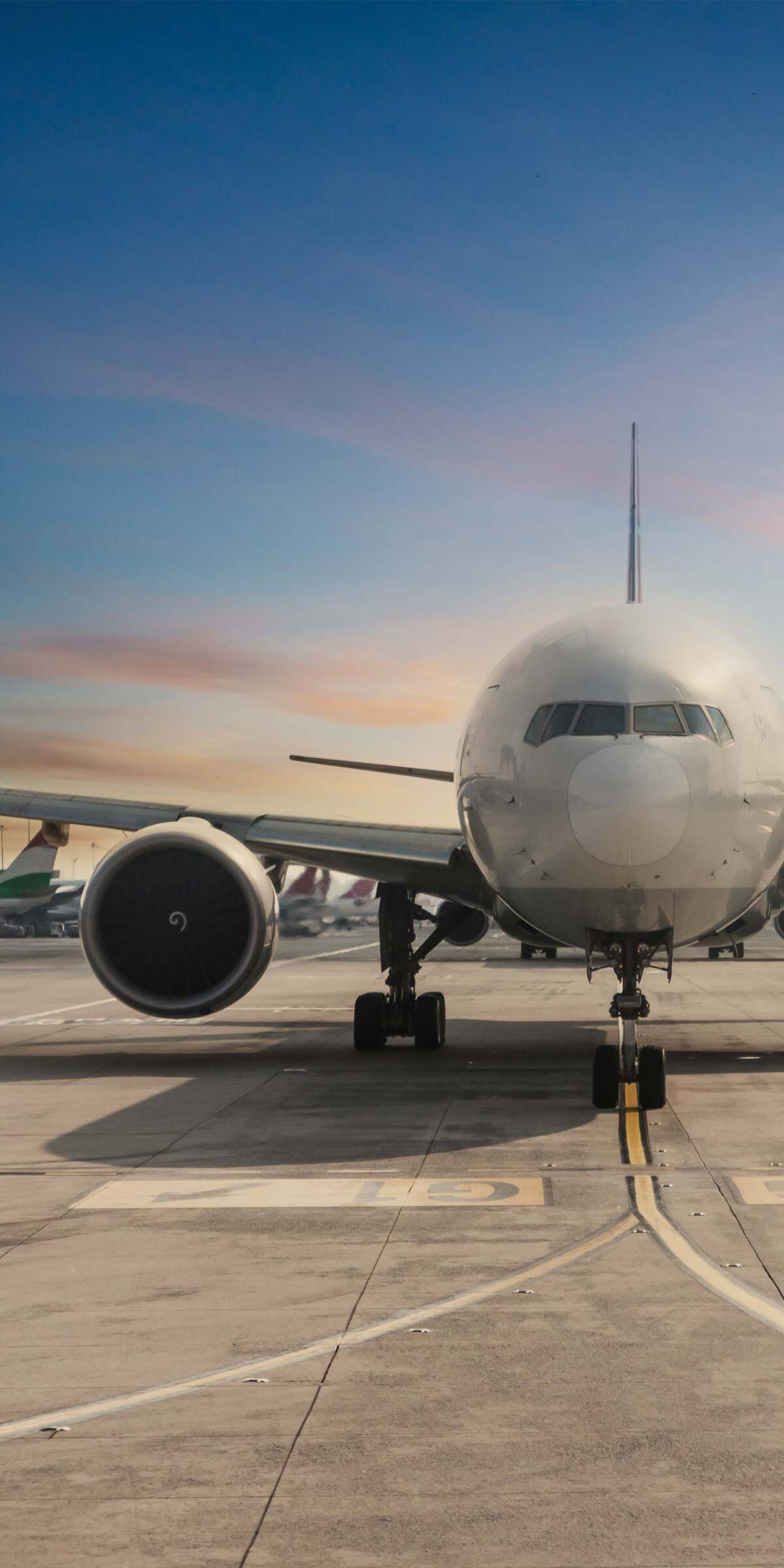
The terminal at Dubai International usually sounds like the world breathing. It is a rhythmic, mechanical hum of thousands of feet shuffling across polished linoleum, the distant chime of boarding announcements in four languages, and the hiss of espresso machines. It is the world’s crossroads. Here, a businessman from London brushes shoulders with a student from Manila. But for those holding a green passport from Iran, the air in the terminal suddenly grew heavy. The hum stopped.
Emirates, the carrier that essentially built the modern image of the United Arab Emirates, has issued a directive that vibrates far beyond the airline’s check-in counters. Iranian nationals are no longer permitted to enter or even transit through the UAE.
It is a sentence written in the dry ink of a corporate memo. Yet, for a family standing at an airport in Tehran, looking at tickets that cost three months’ salary, it is a wall.
The Invisible Border
Consider a hypothetical traveler named Reza. He is an engineer, thirty-four years old, with a sister in Toronto he hasn't seen in six years. His flight path was supposed to be simple: Tehran to Dubai, a three-hour layover near a duty-free shop selling gold watches, and then the long haul over the Atlantic. He isn't interested in regional geopolitics. He doesn't care about the diplomatic friction points between the Gulf states and the Islamic Republic. He just wants to see if his niece really has his mother’s eyes.
When a major airline like Emirates halts transit, it doesn't just cancel a flight. It severs a vein.
The UAE has long served as the primary lung for Iran’s connection to the West. Because of decades of sanctions and the crumbling infrastructure of domestic Iranian carriers, Dubai became the de facto hub for the Iranian middle class. To lose Dubai is to lose the world.
The logistics are staggering. Emirates is one of the few global giants with the fleet capacity to move the sheer volume of people flowing out of Iran. When that capacity disappears overnight, the remaining routes—usually through Istanbul or Doha—become choked. Prices spike. A journey that was already difficult becomes an odyssey.
Why the Silence Matters
Governments rarely explain these shifts with the transparency travelers crave. The official word is often wrapped in the gray plastic of "security concerns" or "operational adjustments." But the timing is never accidental. We live in a period where the map of the Middle East is being redrawn, sometimes with pens and sometimes with troop movements.
The UAE has spent twenty years branding itself as a neutral, hyper-modern utopia where everyone is welcome as long as they have a credit card and a dream. Turning away an entire nationality based on their place of birth cracks that veneer. It suggests that the pressures of regional stability have finally outweighed the logic of the open market.
It feels personal. Because it is.
For the traveler, the airport is a place of liminality—a "non-place" where you are neither here nor there. You are a soul in transit. But this new policy reminds us that we are always, first and foremost, the sum of our documents. You can be a doctor, a poet, or a grandfather, but at the boarding gate, you are a set of biometrics and a nationality.
The Cost of a Closed Door
The economic impact on Emirates will be measurable in the quarterly reports. They will lose millions in ticket sales. They will see empty seats on the Tehran-Dubai leg that used to be packed with families and traders. But the human cost is unmeasurable.
Imagine the logistics of a life interrupted.
- The student whose visa for a UK university expires in forty-eight hours.
- The grandmother traveling for a life-saving surgery in Germany.
- The business owner whose entire supply chain relies on the warehouses in Jebel Ali.
These people are now scrolling through flight apps in the middle of the night, watching the prices for Turkish Airlines climb by the second. They are calling travel agents who have no answers. They are realizing that the "global village" we were promised has gates. And those gates can be locked without warning.
We often talk about "travel" as a luxury or a hobby. We forget that for a significant portion of the world, travel is a survival strategy. It is the way people escape stagnation, find work, and maintain the fragile threads of a diaspora. When a hub like Dubai closes to a specific group, it effectively shrinks their world by half.
The Weight of the Passport
There is a specific kind of anxiety known only to those with "weak" passports. It is a low-frequency vibration in the chest every time you approach a customs officer. You hand over the book, and you wait. You watch the officer’s face for a flicker of suspicion. You wonder if a headline you read that morning will be the reason you are sent to a small room with no windows.
For Iranians, that anxiety has been a constant companion for forty years. But the Dubai route was the one reliable constant. It was the bridge that worked when others failed.
The bridge is gone.
This isn't just about an airline policy. It is a reminder of how quickly the world can reset. We assume that progress moves in one direction—toward more connection, more ease, more openness. But history shows us that the tide goes out just as often as it comes in.
The departure screens at Dubai International will continue to flicker. The London flights will leave. The New York flights will leave. The Sydney flights will leave. But the gate that used to pulse with the voices of Tehran will remain dark.
The silence in that corner of the terminal is the loudest thing in the building. It is the sound of a door clicking shut, leaving thousands on the other side, looking through the glass at a sky they can no longer reach.