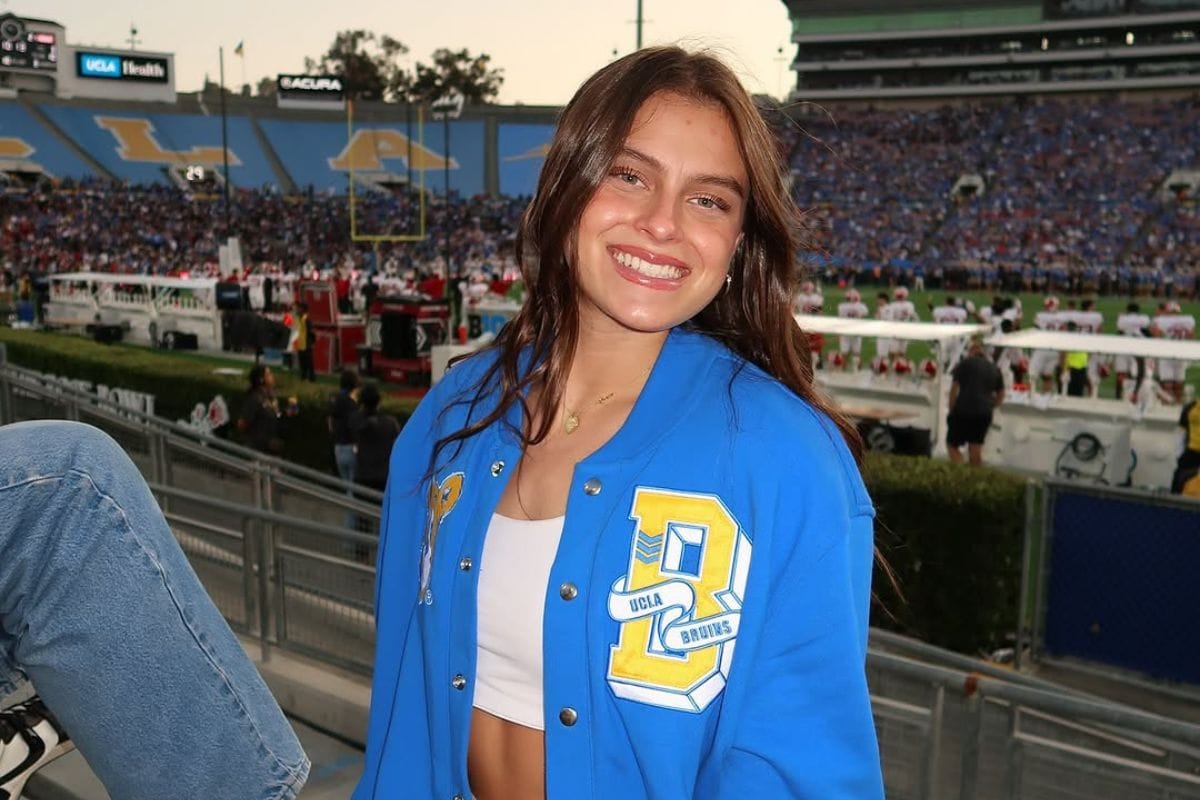
The sports media machine loves a clean narrative. It craves the "ascension" story—the idea that a player suddenly found a magical shooting stroke or "unlocked" their potential through sheer willpower and extra gym hours. When people talk about Gabriela Jaquez’s role at UCLA, they lean heavily on these tropes. They see a spark plug off the bench who started hitting shots and call it a breakout.
They are wrong.
Calling Jaquez a "breakout shooting star" isn't just lazy; it fundamentally misunderstands how elite basketball functions. If you think her value is tied to a fluctuating three-point percentage or a hot hand in the fourth quarter, you aren't watching the game. You're watching a box score.
The Volume Trap and the Efficiency Lie
The most common misconception in women’s college basketball analysis is the conflation of "more points" with "better play." Analysts look at Jaquez’s scoring jumps and assume she has evolved into a different archetype of player.
She hasn't.
Jaquez is a high-motor, physical presence whose primary weapon isn't her jumper—it’s her relentless pursuit of the ball. In the modern game, we are obsessed with "spacing" and "gravity." We want every wing to be a 40% threat from deep. But the obsession with turning every player into a perimeter specialist ruins the unique utility of players like Jaquez.
When she is most effective, it isn't because she’s standing behind the arc waiting for a kick-out. It’s because she is creating chaos. She is the grit in the gears of the opposing defense. To label her a "shooting star" is to try and fit a square peg into a very boring, circular hole.
Genetics is Not a Strategy
Critics and fans alike love to bring up the "Jaquez DNA." They point to her brother, Jaime Jaquez Jr., and his success with the Miami Heat as proof of some innate basketball "clutch gene."
This is the height of intellectual laziness.
A surname doesn't grab offensive rebounds. A family tree doesn't navigate a screen-roll. While the "Jaquez Brand" of basketball is characterized by toughness, attributing Gabriela’s success to her brother’s shadow ignores the technical reality of her footwork and her specific leverage in the post. She isn't "Jaime with a ponytail," and treating her as a derivative of his success does a disservice to her specific role in Cori Close’s system.
I’ve seen scouts make this mistake a thousand times. They see a familiar last name and project a familiar ceiling. Gabriela’s game is actually more abrasive than Jaime’s was at the same stage. She is less of a polished mid-range technician and more of a disruptor.
The Bench Identity Crisis
There is a pervasive idea that a player "arrives" only when they move into the starting five and stay there. The "breakout" narrative usually implies that a player has outgrown their role as a reserve.
This is a fundamental misunderstanding of roster construction.
In the high-stakes environment of No. 2 ranked UCLA, the bench isn't a waiting room for the starters. It’s a tactical tool. Jaquez’s "breakout" isn't about her earning more minutes; it’s about her maximizing the specific window where the opposing team’s intensity dips.
If you move her to a permanent starting role where she has to manage her fouls and energy for 38 minutes, you lose the very thing that makes her elite: her ability to play at 100% redline for 20 minutes.
We need to stop asking "When will she start?" and start asking "How does her presence change the defensive geometry of the second unit?"
The "Shooter" Label is a Curse
Once the media labels you a "shooting star," your value becomes tied to the most volatile stat in basketball. If Jaquez goes 1-for-7 from deep in a tournament game, the "breakout" narrative collapses under its own weight.
But Jaquez is a "glue player" on steroids. Her value is insulated from shooting slumps because she affects the game through:
- Weak-side rebounding: Finding the gaps in the zone that taller, slower centers miss.
- Defensive versatility: The ability to switch 1 through 4 without giving up a blow-by.
- Transition pressure: Running the floor to force the defense to cross-match early.
If UCLA wants to win a national championship, they don't need Jaquez to be a "shooting star." They need her to be a nightmare. They need the player who ruins the opponent’s scouting report because she refuses to stay in the corner and wait for a pass.
Stop Looking for the Next Superstar
The "People Also Ask" sections of the internet are filled with questions about who the next face of UCLA basketball will be. This search for a singular hero is what leads to these bloated "breakout" stories.
Basketball at the elite level is becoming increasingly decentralized. The era of one player carrying a team to a title is fading. The championship will be won by the team with the best "connector"—the player who fills the gaps between the superstars.
Jaquez is that connector.
She isn't the "next" anyone. She is the current solution to a specific set of problems. She is the response to teams that play too small or teams that lack interior toughness.
The Truth About the "Clutch" Narrative
We love to talk about "clutch" performance as if it’s a character trait. We see Jaquez hit a big shot and say she was "born for the moment."
No. She was positioned for the moment.
Her late-game heroics are a byproduct of her conditioning and her spatial awareness. She is often open in clutch moments because the defense is so preoccupied with UCLA’s primary scoring threats that they lose track of the player who has been bruising them for three quarters. It’s not magic; it’s math.
The Real Danger of the Current Hype
The risk of the "breakout" hype is that it creates an expectation of linear growth. People expect her to go from 10 points per game to 15, then 20. But in a balanced offense like the Bruins', that kind of growth is actually a sign of a failing system.
If Jaquez is forced to take 18 shots a game, UCLA is in trouble. Her brilliance lies in her efficiency—the ability to impact the game with a low usage rate.
Stop trying to turn her into a volume scorer. Stop trying to make her the center of every highlight reel.
Appreciate the fact that she is a high-level specialist who understands her role better than the people writing about her. The "breakout" happened a long time ago; you were just too busy looking for a star to see the player right in front of you.
Go back and watch the tape. Ignore the points. Look at the deflections. Look at the box-outs. Look at the way she forces the opposing coach to burn a timeout just to figure out who is supposed to be guarding her. That’s the real story.
The media wants a shooting star. UCLA needs a wrecking ball.
Fortunately for the Bruins, Jaquez knows exactly which one she is.
Stop looking at the basket and start looking at the floor.