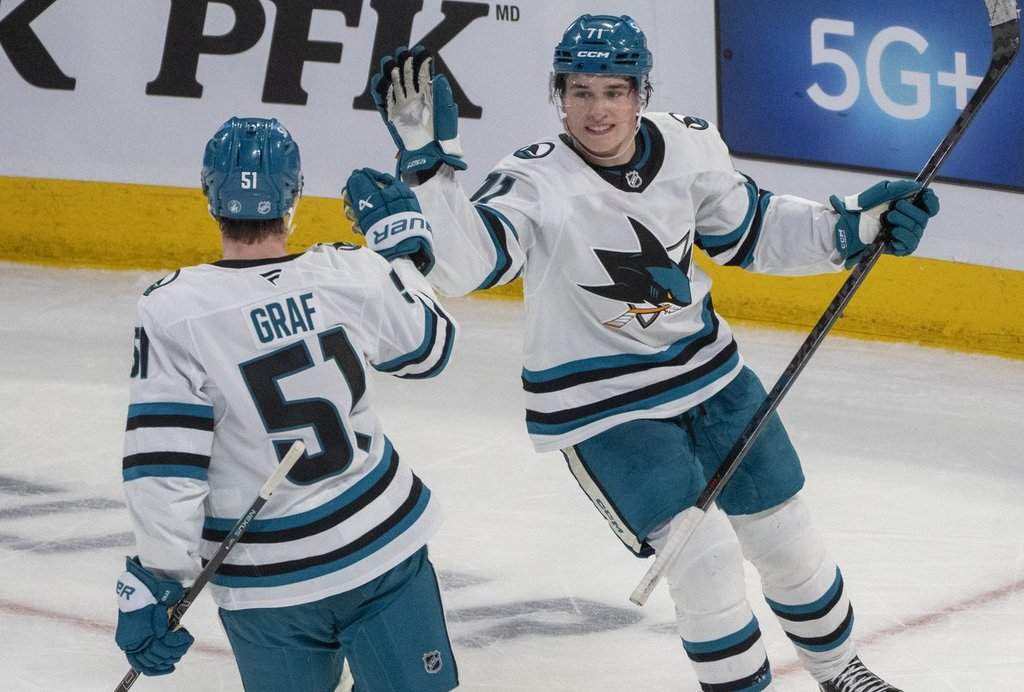
The Montreal Canadiens are currently providing a masterclass in how to lose the same game twice in thirty days. When the San Jose Sharks rolled into the Bell Centre and walked away with another victory, it wasn't just a blip on the radar or a tough night at the office. It was a formal confirmation that the structural integrity of this rebuild is under extreme duress. Watching a rebuilding roster struggle against elite competition is expected, but losing repeatedly to a San Jose team that has spent most of the season in the NHL’s basement suggests a deeper, more systemic rot than most fans care to admit.
This wasn't about a bad bounce. It was about a total failure of the defensive system and a complete lack of secondary scoring that has left the top line stranded on an island. The Sharks didn't just win; they dictated the pace of play against a team that is supposed to be further along in its developmental cycle.
The Myth of the Competitive Rebuild
Management has spent months selling the "competitive rebuild" narrative to a hungry Montreal market. The idea is simple: lose enough to get high draft picks but stay competitive enough to keep the culture from souring. The reality is far grittier. When you lose twice in a single month to a team with the defensive metrics of the Sharks, the "competitive" part of that phrase starts to feel like a marketing gimmick.
Montreal’s defensive zone coverage has become a sieve. The reliance on young defensemen to play heavy minutes is a known risk, but the lack of veteran insulation is now actively hurting the development of the core. Kaiden Guhle and Arber Xhekaj are being asked to do too much, too soon, with too little help from the forward group. When the Sharks enter the zone, the Canadiens' defenders often look like they are playing a game of pond hockey, chasing the puck rather than clogging lanes. This isn't just a talent gap. It is a failure of execution and coaching adjustments.
Why the Sharks Own the Canadiens
San Jose is not a good hockey team. By almost every objective metric, they are a bottom-tier squad. Yet, against Montreal, they look like a playoff contender. The reason is tactical. San Jose plays a heavy, north-south game that exploits Montreal’s inability to clear the front of the net. In both losses this month, the Sharks won the battle of high-danger scoring chances by a significant margin.
The Canadiens are small. They are fast, sure, but they are easily pushed off the puck in the dirty areas of the ice. San Jose identified this weakness early. They cycled the puck low, wore down the Montreal defenders, and waited for the inevitable blown assignment. It happened in the first game of the month, and it happened again this week. The fact that the coaching staff had two weeks to prepare for a rematch and saw the exact same result is a massive red flag.
The Nick Suzuki Dependency Problem
If the top line doesn't score, the Montreal Canadiens don't win. It is an unsustainable math problem that has haunted the team for two seasons. Nick Suzuki and Cole Caufield are elite talents, but they cannot carry the weight of an entire franchise on their shoulders every night.
The Missing Middle Six
Where is the support? The secondary scoring has evaporated. Players who were expected to provide veteran stability and chipped-in offense have gone silent. This leaves opposing coaches with an easy job. Shut down the Suzuki line, and you shut down the Canadiens. San Jose didn't need a complex defensive scheme to win. They simply shadowed the top line and let the rest of the Montreal roster beat themselves.
- Shot Quality: Montreal continues to settle for perimeter shots.
- Power Play: The man advantage has become a momentum killer rather than a weapon.
- Net Front Presence: There is almost zero physical pushback in the offensive crease.
The lack of internal competition for roster spots has led to a sense of complacency. In a healthy organization, players who underperform are cycled out for hungry prospects from the AHL. In Montreal, the "plan" seems to involve keeping the status quo regardless of the scoreboard, under the guise of patience.
The Goaltending Mirage
For a while, Sam Montembeault was the Great Masked Hope. He stole games he had no business winning, masking the defensive deficiencies of the team in front of him. That mask has slipped. No goaltender, regardless of talent, can survive the sheer volume of high-danger chances Montreal concedes on a nightly basis.
By forcing their goaltenders to face 35-40 shots every night, the Canadiens are burning out their most valuable assets. The defensive shell is so porous that the goalies are essentially playing a 60-minute shooting gallery. This doesn't just lose games; it ruins the confidence of young netminders who are being hung out to dry. The Sharks didn't have to work for their goals; they were gifted them by a defense that refuses to stay goal-side of their man.
A Crisis of Identity
What are the Montreal Canadiens? Are they a fast, transition-based team? A gritty, hard-to-play-against group? Right now, they are neither. They are a collection of individual talents that haven't coalesced into a cohesive unit. The "Call of the Wilde" might be a catchy phrase for a highlight reel, but the reality on the ice is a team searching for an identity while the basement of the standings rises up to meet them.
The fan base is famously patient—up to a point. That point is usually reached when the team loses twice in a month to a direct rival for the first overall pick. If the goal is to tank for a high draft pick, then management should be honest about it. If the goal is to win, then the current roster construction and tactical approach are failing.
The defense is too soft. The forwards are too one-dimensional. The coaching staff is too stagnant.
The Road to Nowhere
The danger of a long rebuild is the "culture of losing." Once a locker room accepts that losing to teams like San Jose is just "part of the process," the winning instinct dies. You can see it in the body language after the second goal goes in. There is no pushback. No one drops the gloves to wake up the bench. No one takes a hard penalty to change the energy. They just play out the remaining minutes, waiting for the whistle to end the misery.
If Montreal wants to avoid becoming the next Buffalo Sabres or Edmonton Oilers—teams that spent a decade in the wilderness despite having elite talent—they need to address the middle of their roster immediately. The "wait and see" approach is currently yielding zero results against the worst teams in the league.
You cannot fix a leaky roof by buying a better sofa. Montreal keeps trying to find "gems" in the draft while the foundation of their current defensive system is crumbling. The losses to San Jose are the canary in the coal mine. They are proof that the current trajectory isn't just slow; it’s backwards.
Trade the expiring contracts. Bench the underperforming veterans. Challenge the young core to actually defend their home ice. Anything else is just rearranging deck chairs on the Titanic while the Sharks swim circles around the wreckage.
Stop talking about the process and start demanding professional execution on the ice.