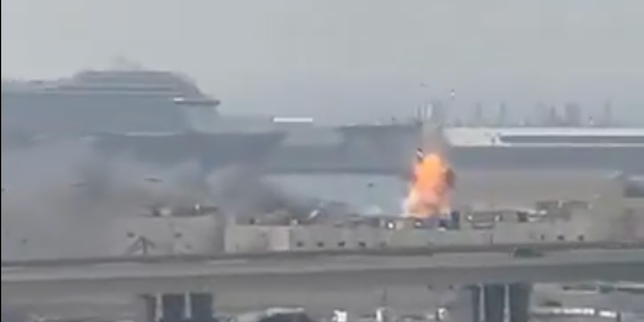
The French naval base in Abu Dhabi, known as Camp de la Paix, just faced a wake-up call that should worry every maritime strategist in the Middle East. After reports of drone activity targeting the area, the routine "business as usual" atmosphere for French vessels in the Persian Gulf shifted instantly. This isn't just about a few intercepted gadgets. It's about how a permanent European military presence in the United Arab Emirates (UAE) handles the reality of asymmetric warfare in 2026.
If you thought the "Safety of the Seas" was a given because of high-tech frigates and international treaties, think again. The disruption to ship arrivals and base operations in Abu Dhabi proves that even the most sophisticated Western military outposts have soft spots. When drones enter the airspace of a sovereign partner like the UAE, the diplomatic and tactical fallout spreads much faster than the debris.
Why the Abu Dhabi Base Matters More Than You Think
France didn't just pick Abu Dhabi for the weather. Since 2009, this base has served as the crown jewel of French influence in the Indo-Pacific and the Middle East. It's a logistical heartbeat. When drones disrupt this hub, they aren't just bothering the French Navy. They're poking a hole in the security architecture of the entire Strait of Hormuz.
The base usually hosts everything from nuclear attack submarines to the most advanced FREMM frigates. It's a pit stop for refueling, repairs, and intelligence sharing. If a ship can't dock because the "sky is falling"—or rather, drones are hovering—the timeline for every mission in the region slips. You don't just "park" a multi-billion dollar destroyer in an unsecured zone. You divert. You delay. You waste fuel and time. That's exactly what the attackers want.
The Reality of Low-Cost Attacks on High-Value Targets
We're seeing a massive shift in how conflicts play out. A drone costing a few thousand dollars can effectively paralyze a naval asset worth half a billion. It’s frustratingly simple. Even if the French or Emirati air defenses shoot down every single "bogey," the threat itself forces a lockdown.
Think about the protocol. Once a drone is spotted, the base goes into a specific defensive posture.
- Vessel movements stop to prevent ships from being sitting ducks in narrow channels.
- Electronic warfare units ramp up, which can interfere with local civilian communication.
- Personnel are moved to hardened shelters.
- Intelligence teams scramble to find the launch point.
All of this happens before a single shot is fired. The disruption is the victory. The French Navy prides itself on being "ready for combat," but fighting an invisible or swarm-based enemy near a friendly civilian population center like Abu Dhabi is a nightmare. You can't just blast everything out of the sky without worrying about where the metal falls.
Geopolitical Fallout and the Iran Factor
You can't talk about drones in the UAE without looking at the regional map. While officials often use vague language about "unidentified aerial phenomena," everyone in the room knows the likely origins. Pro-Iranian militias in Iraq or Houthi-linked groups in Yemen have the tech and the motive.
The goal isn't necessarily to sink a French ship. It's to tell France: "Your presence here isn't a guarantee of stability." It puts pressure on the UAE government too. If hosting a foreign military base brings drone strikes to their doorstep, some might start asking if the lease is worth the headache. France has stayed remarkably quiet about the specifics of the recent disruption. That silence speaks volumes. It shows they're trying to balance a firm military response with the need to keep their Emirati hosts from looking vulnerable.
Modern Defense Systems are Hurting
The scary part? Traditional missile defense systems like the Patriot or even the French-made SAMP/T are designed for big, fast, hot targets. Drones are small, slow, and cold. They hide in the "clutter" of a busy city skyline.
I've talked to people who follow these deployments closely. They'll tell you that the French are now rushing to integrate more "soft-kill" options. We're talking about high-powered lasers and signal jammers that can drop a drone without an explosion. But these systems are still being tested in real-world conditions. The UAE has spent billions on defense, yet the "cheap" threat still gets through enough to cause a logistical mess.
What Happens When a Fleet Gets Stuck
Imagine you're the commander of a French frigate. You've been on patrol for three months. You're low on fresh food, the crew is exhausted, and you have a scheduled maintenance window at the Abu Dhabi base. Suddenly, the order comes: "Hold position 50 miles offshore. Airspace is contested."
Every hour you sit there is an hour the ship isn't performing its actual job—protecting trade routes or monitoring illicit shipments. This ripple effect hits the sailors hardest. It's a psychological game. The enemy doesn't have to win a sea battle. They just have to make the French Navy's life difficult enough that the French public starts asking why their tax euros are being spent on a base that can't even keep its own pier open.
Improving Base Security Moving Forward
The fix isn't just more guns. It's better integration with the host nation's civilian air traffic control and a massive investment in persistent surveillance.
France needs to decide if it wants to stay in the Persian Gulf for the long haul. If it does, the Abu Dhabi base needs to become a laboratory for anti-drone tech. We should see more autonomous patrol boats and 24/7 tethered drones that act as "eyes in the sky" for the base perimeter.
Don't wait for a formal report to understand the gravity of this. The disruption at the French naval base is a signal that the era of safe harbors is over. If you're following maritime security or regional politics, keep your eyes on how the French Ministry of Defense adjusts its budget in the next quarter. They'll likely pivot hard toward electronic counter-measures.
If you're interested in how this affects global shipping, look at the insurance premiums for vessels entering the Gulf. When military bases get disrupted, commercial hulls get more expensive to insure. It's all connected. Start tracking the movement of the "Charles de Gaulle" carrier group; its proximity to the UAE will tell you exactly how worried the French High Command actually is.
Stay updated on the official statements from the French Ministry of the Armed Forces and the UAE's Ministry of Defense. They'll try to downplay it, but the satellite imagery of ship diversions won't lie.