The steel under your feet is roughly 40 millimeters thick. It feels solid, an immovable continent of industrial strength, until you realize it is the only thing separating you from thousands of tons of volatile crude oil and the crushing pressure of the Indian Ocean.
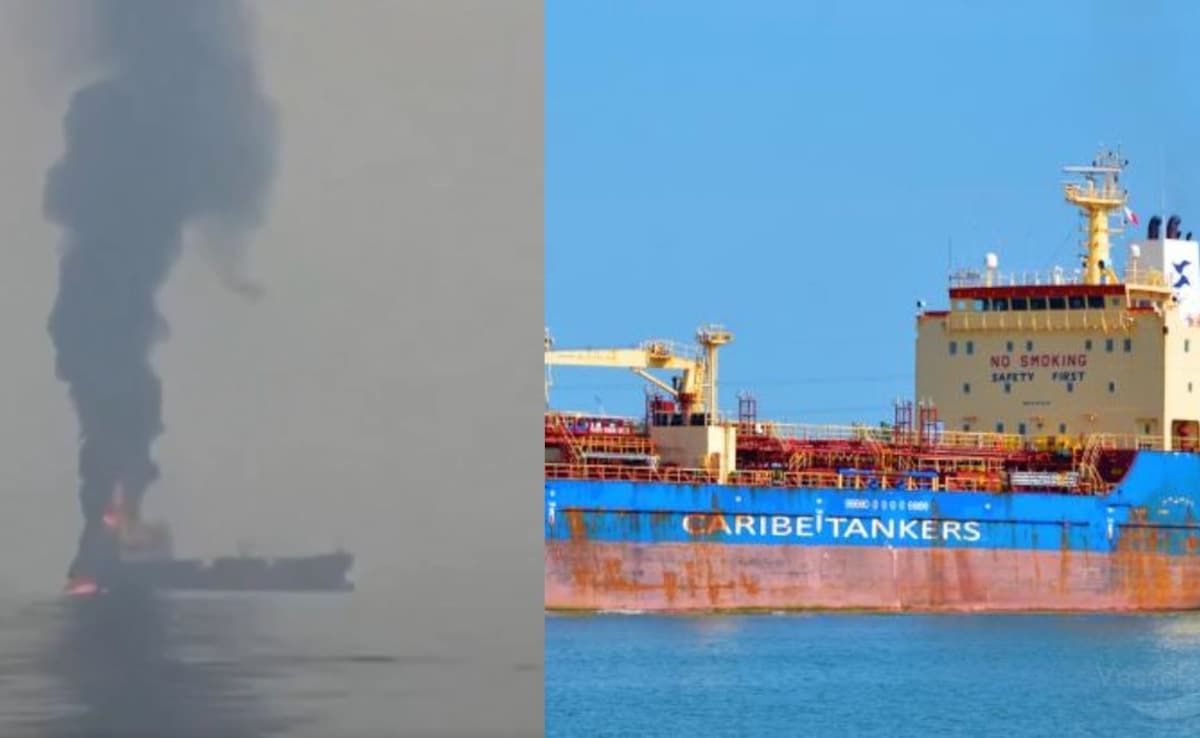
For the fifteen Indian sailors aboard a commercial tanker drifting through the Strait of Hormuz, that steel felt thinner than paper last night.
The Strait is a geographical choke point that behaves more like a high-tension wire. It is a strip of water just twenty-one miles wide at its narrowest. Through this needle’s eye passes one-fifth of the world’s liquid energy. When you turn a key in a car in London or flip a switch in a Mumbai apartment, you are, in a very literal sense, tethering your life to the stability of this specific patch of salt water.
But for the crew, the geopolitics of energy security are secondary to the immediate, visceral reality of a hull shuddering under an unexplained impact.
The Sound of a Border War
Imagine the silence of a midnight watch. The hum of the engines is a constant, low-frequency lullaby that crews eventually stop hearing. Then, the rhythm breaks. Reports from the region confirm an attack—not a metaphorical one, but a kinetic strike involving Iranian forces.
The official communiqués are dry. They speak of "interdictions" and "maritime violations." They don't mention the smell of ozone and burnt salt. They don't describe the way the emergency lighting casts a sickly, jaundiced glow over the faces of men who are thousands of miles from home, wondering if a diplomatic spat they didn't start is about to become their tomb.
Iran’s tactical playbook in these waters has become a grimly predictable routine. By seizing or striking tankers, Tehran exerts a peculiar kind of hydraulic pressure on the global community. If the world wants the oil to flow, the world must listen to Iran’s grievances. The sailors are not combatants. They are the currency.
The Geography of Anxiety
To understand why this happens, you have to look at the map not as a traveler, but as a strategist. The Strait of Hormuz is a funnel. On one side, the jagged, mountainous coastline of Iran. On the other, the United Arab Emirates and Oman.
Ships cannot simply "go around."
Because the navigable channels—the deep-water lanes safe for massive tankers—are so narrow, vessels are forced to hug the Iranian coast. This puts them within easy reach of the Islamic Revolutionary Guard Corps’ (IRGC) fast-attack boats. These are small, incredibly quick craft that swarm like hornets around the lumbering giants of the merchant fleet.
Last night’s attack wasn't a mistake. It was a calibration.
When fifteen Indian nationals find themselves caught in this crossfire, the stakes shift from economic to deeply personal. India has maintained a delicate, some might say masterful, neutrality in Middle Eastern affairs. It buys oil from everyone. It maintains ties with Tehran and Washington alike. By targeting a ship with a predominantly Indian crew, the aggressors are sending a message to New Delhi: No one is a bystander.
The Economics of Fear
Why should someone sitting in a suburban office care about a hull breach in the Persian Gulf?
The answer is found in the "Risk Premium." The moment news of the attack hit the wires, the invisible machinery of global finance began to grind. Insurance underwriters in London immediately spiked the cost of "War Risk" premiums. These costs are not absorbed by the shipping companies. They are passed down the line.
You pay for this attack at the grocery store. You pay for it when you buy a plane ticket.
Every time a drone or a limpet mine makes contact with a tanker, the friction of global trade increases. We live in a "just-in-time" world. We rely on the assumption that the sea is a neutral highway, as free and open as the air. That assumption is a luxury. The reality is that our entire modern existence rests on the shoulders of merchant mariners who are currently praying that the next shadow on the radar is a dolphin and not a missile.
The Human Shadow
Let’s talk about those fifteen men.
They are likely from places like Kerala or Punjab. They are men who signed contracts for six-month or nine-month stints at sea to pay for a sister’s wedding, a father’s medical bills, or a small plot of land. They spend their days checking pressure valves and painting over rust.
In the narrative of "Global Energy Security," these men are invisible. They are "the crew."
But when the alarm sounds, they are the ones who have to execute fire drills while knowing that if the cargo ignites, there is no escape. The Strait of Hormuz is too narrow for a ship of that size to maneuver quickly. It is a sitting duck.
Consider the psychological toll of the "gray zone" conflict. This isn't a declared war. There is no front line. There is only the sudden, violent transition from a boring Tuesday night to a hostage situation. The uncertainty is the point. Iran doesn't necessarily want to sink these ships—that would cause an environmental catastrophe and an inevitable military retaliation that would end their regime. They want to create friction. They want to make the cost of doing business without their consent too high to bear.
The Invisible Shield
What happens now?
Usually, the diplomatic dance begins. Notes are exchanged. The Indian Ministry of External Affairs will issue a statement of "deep concern." The US Fifth Fleet, stationed in nearby Bahrain, will increase its patrols, sending grey, jagged destroyers to shadow the tankers.
But military escorts are a Band-Aid on a sucking chest wound. You cannot escort every ship. There are thousands of them.
The real battle is one of willpower. The international community has long relied on the "freedom of navigation" principle. It is the idea that the high seas belong to no one and everyone. When a nation-state uses its geography to hold that principle hostage, it isn't just attacking a tanker. It is attacking the operating system of the modern world.
We often think of history as something that happens in books or in the halls of parliament. We are wrong. History is happening right now, in the dark, on a vibrating steel deck in the Strait of Hormuz. It is being written by fifteen terrified men who are waiting for the sun to rise, hoping that the world remembers they are there.
The oil will eventually reach the refinery. The prices will stabilize. The headlines will fade. But the steel is getting thinner.
Somewhere in the Indian Ocean, a phone is ringing in a house where a family is waiting for a voice that hasn't called yet. They don't care about the price of Brent Crude. They don't care about the JCPOA or the regional hegemony of the IRGC. They just want to know if the man who left six months ago is still the man on the other end of the line.
The sea is vast, but the world is very, very small.