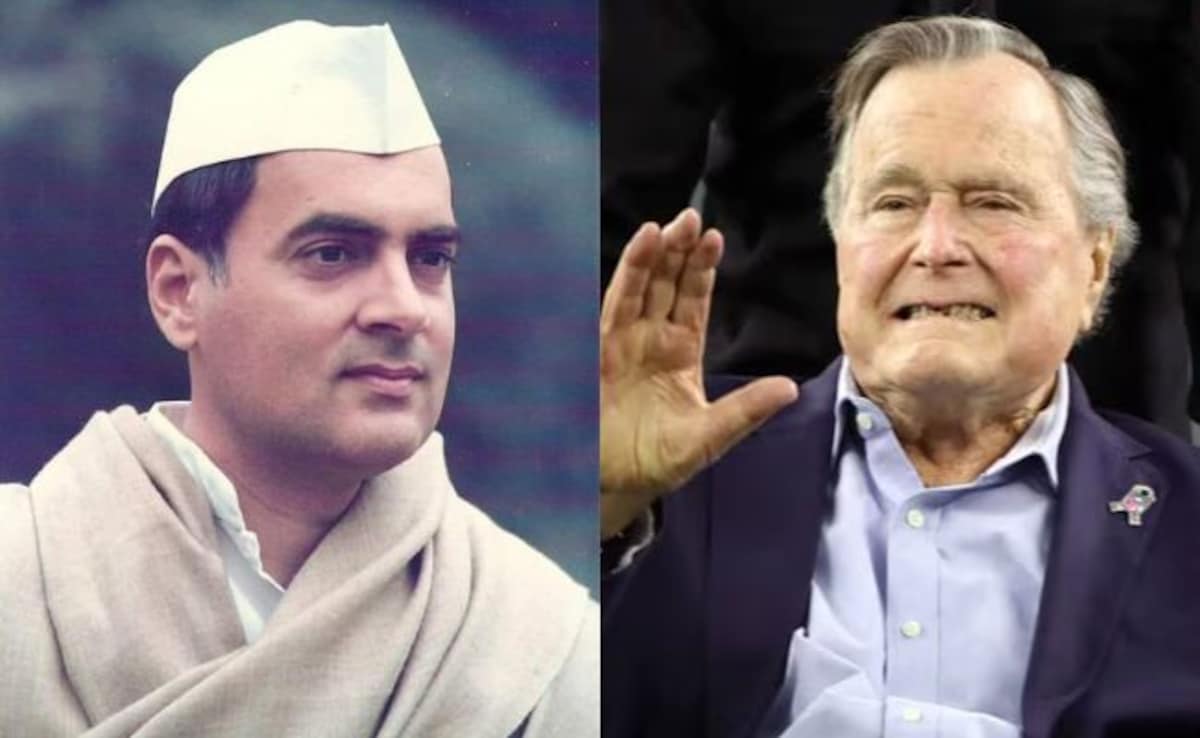
In June 1989, the world was a different place. The Berlin Wall was still standing, though the cracks were beginning to show. The Soviet Union was gasping for air under Mikhail Gorbachev. In the United States, George H.W. Bush had just moved into the Oval Office. In India, Rajiv Gandhi was battling a corruption scandal that would eventually cost him his premiership. It was during this volatile window of human history that Ali Khamenei ascended to the position of Supreme Leader of Iran.
He didn't just take a job. He inherited a revolutionary mantle that many observers at the time believed would crumble within a decade. They were wrong. While the leaders of the 1980s have long since passed into the history books—some through the ballot box, others by the hand of an assassin or natural causes—Khamenei remains. He is the longest-serving head of state in the Middle East, a living bridge between the Cold War and the age of artificial intelligence. To understand his longevity is to understand the systematic elimination of domestic rivals and a foreign policy built on the assumption that Western democratic patience is always shorter than Persian endurance.
The Class of 1989 and the Death of the Old Guard
When Khamenei took power following the death of Ruhollah Khomeini, he was not the obvious choice. He lacked the religious credentials typically required for the role. However, the political architecture of Iran was hastily rewritten to accommodate him. At that same moment, the global stage was populated by giants who defined the twentieth century.
George H.W. Bush was busy managing the "New World Order." He viewed the world through the lens of traditional diplomacy and state-to-state conflict. Bush is gone. His son has served two terms and retired. Even the man who defeated his son’s successor is now a historical figure. Meanwhile, the office in Tehran has not changed hands.
In India, Rajiv Gandhi represented a youthful, tech-forward vision for a non-aligned power. He was assassinated in 1991. In the United Kingdom, Margaret Thatcher was in her final year of dominance, an Iron Lady who believed she had broken the back of socialism. She has been buried for over a decade. The sheer volume of turnover in global leadership since 1989 is staggering. Khamenei has seen nine American presidents and eight British prime ministers. He has watched the rise and fall of the Soviet Union, the birth of the European Union, and the total transformation of China from a backwater to a superpower.
The Strategy of Survival through Insulated Power
How does a man outlast the titans of the 1980s? The answer lies in the unique, bifurcated nature of the Iranian state. While the presidency in Iran changes every four or eight years, providing a facade of democratic churn, the Supreme Leader sits above the fray.
Khamenei learned early on that to survive, he had to control the "hard" power of the state while letting the "soft" power—the economy, social services, and public diplomacy—fall on the shoulders of the presidents. When the economy tanks or the public becomes restless, the president is the lightning rod. If a policy succeeds, it is attributed to the "guidance" of the Supreme Leader. This setup creates a permanent buffer.
- The Revolutionary Guard (IRGC): Khamenei transformed this militia into a multi-billion dollar conglomerate. By giving the military a stake in the oil, construction, and telecommunications industries, he ensured their absolute loyalty. They don't just protect the border; they protect their balance sheets.
- The Veto Power: Through the Guardian Council, he ensures that no one truly "opposition" can ever run for office. The "choice" offered to the Iranian public is a curated list of loyalists.
- The Shadow Government: Beyond the formal ministries, Khamenei operates a series of bonyads (charitable trusts) that control up to 20% of Iran’s GDP. This is off-book money used to fund regional proxies and domestic patronage.
Outlasting the American Century
The central theme of Khamenei’s tenure has been a relentless, grinding opposition to the United States. To George H.W. Bush, Iran was a "rogue state" that could be contained. To Bill Clinton, it was a target for "dual containment." To George W. Bush, it was a member of the "Axis of Evil."
Khamenei’s brilliance—if you can call it that—is his realization that the American political system is its own greatest weakness in a long-term standoff. He knows that every four to eight years, the U.S. will likely change its mind. He saw the Obama administration sign a nuclear deal, only for the Trump administration to tear it up, followed by the Biden administration attempting to stitch it back together.
While Washington oscillates between "maximum pressure" and "diplomatic engagement," Tehran’s North Star remains fixed. This consistency has allowed Iran to build a "Land Bridge" of influence through Iraq, Syria, and Lebanon. They didn't do it with a superior military. They did it by being the only player in the room willing to wait thirty years for a result.
The Mirage of the Moderate President
Western media often falls into the trap of analyzing Iran through the lens of its presidents. We saw it with the "reformer" Mohammad Khatami in the late 90s, the "pragmatist" Hassan Rouhani, and even the "hardliner" Ebrahim Raisi.
This is a fundamental misunderstanding of the power structure. The president of Iran is essentially a Chief Operating Officer. He manages the day-to-day headaches. Khamenei is the Chairman of the Board with a lifetime appointment. When the West celebrated the 2015 Nuclear Deal, they were negotiating with Rouhani, but they were ultimately dealing with Khamenei’s permission. The moment that permission was revoked or the deal became a liability, the president was discarded.
The longevity of the Supreme Leader has created a political culture where survival is the only metric that matters. He has outlasted his rivals not by being popular, but by being indispensable to the small group of men who hold the guns and the money.
The Heavy Cost of Persistence
Staying in power since the era of the Sony Walkman and the Commodore 64 has come at a massive cost to the Iranian people. The country's currency, the rial, has seen its value evaporated by decades of sanctions and mismanagement. In 1989, Iran was a regional power with a struggling but hopeful middle class. Today, it is a fortress state where the youth—the "Z Generation" of Iran—have no memory of life before the clerical monopoly.
The protests that have erupted over the last few years are different from those in the past. They aren't asking for "reform" within the system. They are questioning the very existence of the office Khamenei holds. For the first time, the "Death to the Dictator" chants are directed not at a foreign leader, but at the man who has sat in the same seat since the year The Simpsons premiered.
The Geopolitics of a Permanent Presence
Khamenei’s survival has shifted the tectonic plates of the Middle East. By outlasting the leaders who started the wars in Iraq and Afghanistan, he has been able to pick up the pieces of shattered states.
The "Resistance Axis" is not a temporary alliance; it is a decades-old project. When Rajiv Gandhi was Prime Minister, Hezbollah was a fringe group of militants. Today, under Khamenei’s long-term sponsorship, they are a state-within-a-state with a missile arsenal that rivals many European militaries. This didn't happen overnight. It happened because the person at the top of the Iranian hierarchy didn't have to worry about an election in 1992, 1996, or 2020.
The Succession Shadow
The irony of outlasting everyone else is that you eventually become the only person left to blame. Khamenei is now in his mid-80s. The leaders he stood alongside in 1989 are mostly dead. The world he helped shape is increasingly unrecognizable to him.
The question is no longer who Khamenei will outlast next. It is what happens to the massive, convoluted power structure he built once he is gone. He has spent thirty-five years ensuring that no other individual becomes too powerful. In doing so, he has created a vacuum.
We are witnessing the final act of a leader who governed by the clock rather than the sword. He didn't need to win every battle; he just needed to be the last man standing when the other side got bored and went home. Whether that is a victory or a tragedy depends entirely on whether you are sitting in a palace in Tehran or standing on a street corner in Isfahan.
Stop looking for the "next" Iranian leader in the presidential elections. The only transition that matters is the one that has been delayed for three and a half decades. The era of the Cold War leaders is finally, belatedly, reaching its conclusion.