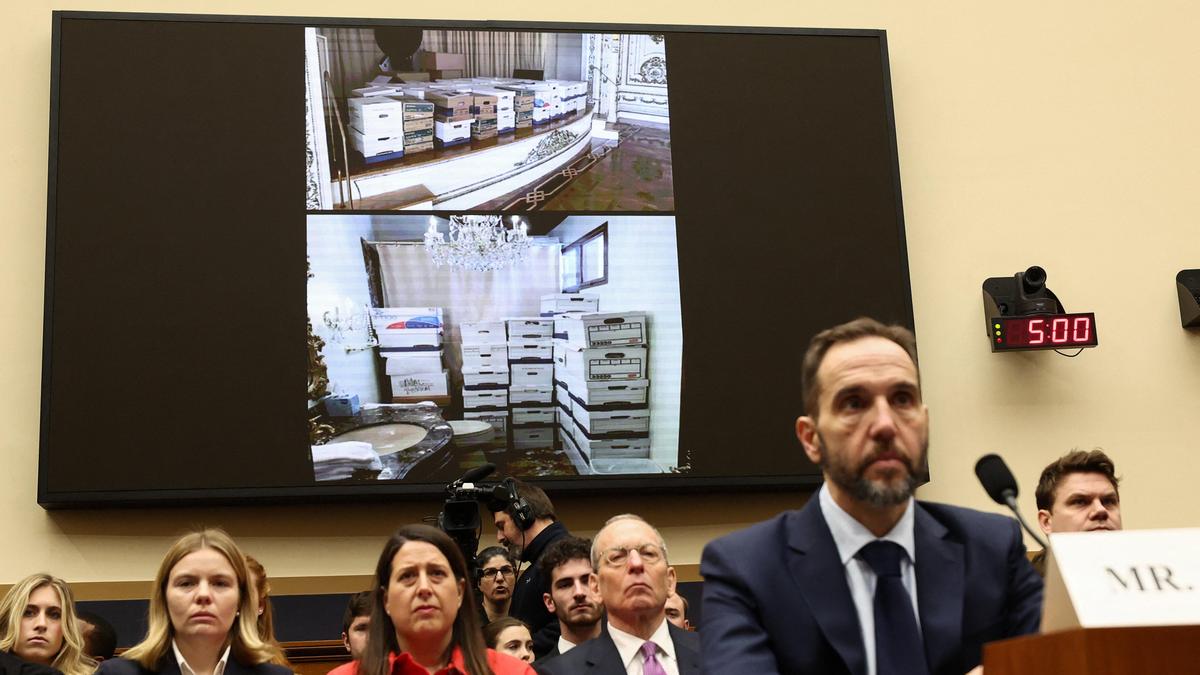
The media is choking on its own tail. Again.
The reports are hitting the wires with the predictable rhythm of a metronome: "FBI fires agents who worked on the Trump classified documents case." The left screams "political retaliation." The right screams "justice served." Both sides are wrong. Both sides are playing a game of checkers while the deep-set bureaucracy of the J. Edgar Hoover Building is playing a desperate game of institutional preservation.
If you think these terminations are about the specific contents of a box at Mar-a-Lago, you aren't paying attention. This isn't a victory for the rule of law, nor is it a simple revenge tour. It is a calculated, cold-blooded internal purge designed to save an agency that has realized its brand is currently worth less than a used Xerox machine.
The Myth of the Rogue Agent
The "lazy consensus" pushed by mainstream outlets is that these agents were "rogue" actors or, conversely, "martyrs" for the Constitution.
Neither is true.
In the federal government, nobody acts alone. Every warrant, every predication, and every tactical decision in a high-profile investigation is scrubbed by a phalanx of OGC (Office of General Counsel) lawyers. If an agent "failed to follow protocol," it means the protocol was designed to be a trapdoor.
I’ve seen this play out in corporate restructuring and federal oversight for two decades. When a project fails—or becomes a PR nightmare—the organization doesn’t blame the strategy. It blames the "implementation team." By firing the boots on the ground, the FBI leadership is attempting to amputate a gangrenous limb to save the body. They are offering up sacrificial lambs to the new administration to prevent a total dismantling of the Seventh Floor.
It is a corporate layoff disguised as a moral reckoning.
Why the Disciplinary Process is a Smoke Screen
When the FBI fires someone, they don't just hand them a cardboard box and escort them to the door. It is a grueling, multi-layered process involving the Office of Professional Responsibility (OPR). Under normal circumstances, firing a tenured federal agent is harder than passing a budget through a divided Congress.
The speed of these dismissals suggests one of two things:
- The "violations" were so egregious they had been sitting in a drawer for years, waiting for a politically convenient moment to be "discovered."
- The agency is bypassing standard due process to signal submission to the incoming executive branch.
Neither of these options should make you feel good about the state of American "justice." If the violations were real, why weren't they handled in 2022? If they aren't real, why is the most powerful law enforcement agency in the world folding like a cheap lawn chair?
The Intelligence Community’s Greatest Lie: Objectivity
We need to kill the idea of the "dispassionate investigator."
Every human has a bias. The failure of the FBI isn't that its agents had opinions; it's that the agency pretended those opinions didn't exist while building a culture that rewarded "aggressive" interpretations of the law against political targets.
This isn't just a Trump problem. Ask any defense attorney who has worked a white-collar case or a civil rights advocate who has watched the FBI infiltrate activist groups. The Bureau operates on a "get the guy" philosophy. They find the target, then they find the crime.
When you hear that agents were fired for "procedural errors," read between the lines. They are being fired because their specific brand of "get the guy" became a liability to the institution's budget. The FBI doesn't care about the truth; it cares about its $11 billion annual appropriation.
Dismantling the "People Also Ask" Delusions
Does this mean the Trump investigation was illegal?
Not necessarily. Legality and optics are different animals. You can do something that is technically legal but so poorly managed that it destroys your credibility. The FBI’s problem wasn't the law; it was the hubris of thinking they could conduct a raid on a former president without a 1,000% airtight case and zero leaks. They failed.
Are these agents being silenced?
Hardly. Expect book deals, cable news contributor slots, and Substack newsletters within six months. In the modern American outrage economy, getting fired by a polarizing institution is the best career move you can make. They aren't being exiled; they are being promoted to the private sector.
Is this the end of the FBI's political involvement?
Don't be naive. The players change, the jerseys change, but the stadium stays the same. The FBI is currently rebranding. They are purging the "anti-Trump" faction today. If the winds shift in four years, they will purge the "pro-Trump" faction. It is a cycle of institutional survival, not a return to neutrality.
The Cost of the Purge
The real casualty here isn't the careers of a few G-men. It's the concept of institutional memory.
When you fire people based on the political fallout of their cases, you send a clear message to the remaining 35,000 employees: Do not take risks. Do not investigate anyone with a following. Do not do anything that might end up on a Congressional hearing slide.
This leads to a "hollowed-out" agency. The most talented, aggressive investigators leave for the private sector where they can make $400k a year at a law firm or a hedge fund. The ones who stay are the "gray men"—the bureaucrats who know how to check boxes and avoid making waves.
You end up with a federal police force that is terrified of its own shadow, capable only of chasing low-level crimes while the massive, systemic issues (cyber warfare, transnational money laundering, fentanyl pipelines) go unchecked because they are "too complicated" or "too sensitive."
Stop Looking for Heroes
The mistake the public makes is looking for a "good guy" in this story.
- The fired agents aren't heroes of the resistance.
- The people firing them aren't heroes of the Constitution.
- The politicians cheering are just looking for a soundbite.
This is a story about the machinery of the state grinding up its own parts to keep the engine running. It’s an admission of failure. If the FBI was the "premier law enforcement agency" it claims to be, these errors would have been caught in real-time by the dozens of supervisors who signed off on every memo.
The fact that it took a change in the White House to "discover" these issues proves that the FBI is no longer an independent investigative body. It is a political wind vane.
If you want to fix the system, you don't fire three agents. You fire the system. You decentralize the power, you strip the Bureau of its intelligence-gathering capabilities, and you return it to what it was supposed to be: a federal agency that investigates interstate crimes and helps local police.
Anything else is just moving the deck chairs on the Titanic. The iceberg has already hit. The hull is breached. These firings are just the sound of the band playing while the ship goes down.
Stop waiting for a "report" to tell you what happened. You already know. The institution broke itself trying to be a political player, and now it’s trying to buy its way back into your good graces with the careers of a few fall guys.
Don't buy the "accountability" narrative. It's just the latest product the FBI is trying to sell you.
Go back to work. There are no heroes here.