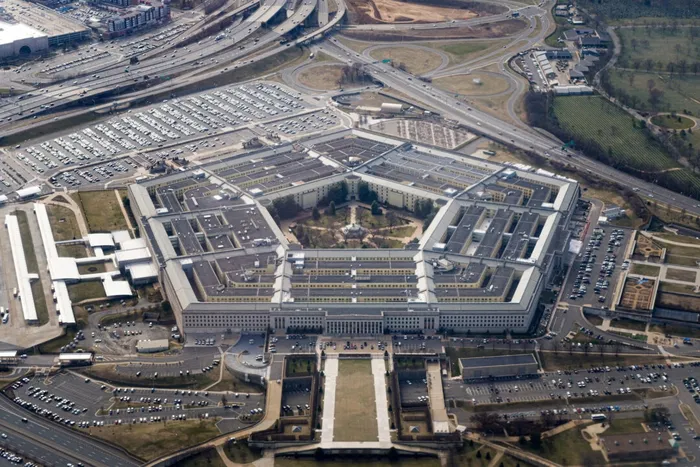
The era of a "sanctuary" in international waters is officially over. If you thought a 9,000-mile head start from the Caribbean was enough to lose a global superpower, the crew of the Bertha just learned a very expensive lesson. On February 24, 2026, the Pentagon—now transitioning into the Department of War—announced that U.S. forces boarded and seized the Bertha, a sanctioned oil tanker, in the middle of the Indian Ocean.
This isn't just a one-off maritime bust. It's the third high-profile interdiction in this specific region in less than a month. It signals a massive shift in how the U.S. enforces its "quarantine" of sanctioned oil. The message from Washington is blunt: we can track you, we will follow you, and we'll eventually jump onto your deck regardless of where you are on the map.
The Longest Game of Tag in Maritime History
The Bertha didn't just appear in the Indian Ocean. It was part of a desperate "breakout" attempt. Back in early January, following the capture of Nicolás Maduro during a U.S. military operation, a flotilla of about 16 tankers fled the Venezuelan coast. They were trying to outrun a blockade that President Trump had established to freeze the country's oil assets.
Most of those ships were caught quickly. The Bertha was the last one left. It carried 1.9 million barrels of Merey heavy crude—worth nearly $140 million at current market prices—destined for China. To avoid detection, the ship was a textbook example of "shadow fleet" tactics:
- Flag Hopping: It was flying a Cook Islands flag but was recently found using a "false" Curacao label.
- Running Dark: It routinely turned off its AIS transponders to disappear from commercial tracking.
- Deceptive Ownership: It's linked to Shanghai Legendary Ship Management, a company already under the magnifying glass for Iran-related sanctions.
None of it worked. The U.S. military used a combination of satellite surveillance, advanced shipborne sensors, and long-range persistence to "hunt" the vessel from the Caribbean, around the Cape of Good Hope, and into the Indian Ocean near the Maldives.
A Pattern of Indo-Pacific Interdictions
If you're keeping score, the Bertha is the 10th tanker seized since December 2025. But the location of these latest three boardings is what should make shippers nervous. By moving the fight to the Indian Ocean, the U.S. is proving that "international waters" don't provide the legal or physical shield they used to.
The recent timeline of Indian Ocean boardings:
- February 9: U.S. forces boarded the Aquila II, a Suezmax tanker carrying 700,000 barrels of crude.
- February 15: The Veronica III, a Panamanian-flagged VLCC, was intercepted after a similar trans-oceanic pursuit.
- February 24: The Bertha was boarded "without incident" in the INDOPACOM area of responsibility.
Defense Secretary Pete Hegseth hasn't minced words about these operations. The goal is simple: total control over the production and distribution of oil from sanctioned regimes. By seizing these ships, the U.S. isn't just stopping a sale; it's physically taking the commodity to potentially fund the reconstruction of a post-Maduro Venezuela.
Why This Matters for Global Energy Markets
Honestly, if you're a legitimate shipping operator, this probably won't affect your day-to-day. But for the "shadow fleet"—the estimated 800 aging tankers that operate in a legal gray zone—the risk profile just spiked.
Insurance costs for any vessel with even a tangential link to sanctioned ports are going to skyrocket. We're also seeing "right-of-visit" boardings become a standard tool of U.S. foreign policy. This isn't just about Venezuela anymore. It's a dress rehearsal for how the U.S. might handle Iranian or Russian oil exports if tensions continue to climb.
Russia and China have already called these seizures "illegal" and "coercive." Russian Foreign Minister Sergey Lavrov recently warned that these measures are "incompatible with fair competition." But in the reality of 2026, "fair competition" is taking a backseat to "maritime dominance."
What happens to the oil?
The U.S. has already started the legal process to sell off seized cargoes. Recently, federal prosecutors asked a court to approve the sale of 1.8 million barrels from a previously seized tanker. The money doesn't just disappear into a black hole; it's being earmarked for specific geopolitical goals, including rebuilding the Venezuelan energy sector under a U.S.-friendly administration.
Managing the Risk in the New Maritime Reality
If you're involved in maritime logistics or energy trading, the "wait and see" approach is dead. The U.S. military has demonstrated it has the "reach, endurance, and will" to enforce its domestic laws on the other side of the planet.
You should expect:
- Increased Scrutiny on Flags: Ships flying "flags of convenience" like Cook Islands, Panama, or Curacao will face more frequent "right-of-visit" requests from Western navies.
- AIS Transparency: "Running dark" is now a giant red flag that invites a boarding party rather than avoiding one.
- Secondary Sanctions: It's not just the ship; the management companies and insurers are next in line.
The Bertha seizure proves that the U.S. is no longer content with just issuing paperwork from a desk in D.C. They're sending helicopters. If your supply chain relies on "gray market" oil to save a few bucks, you're not just risking a fine—you're risking losing the entire cargo to a boarding team 5,000 miles from home.
Check your vessel's history and its management's ties to Shanghai or Tehran. If the Bertha could be found near the Maldives after a two-month chase, nowhere is out of reach.