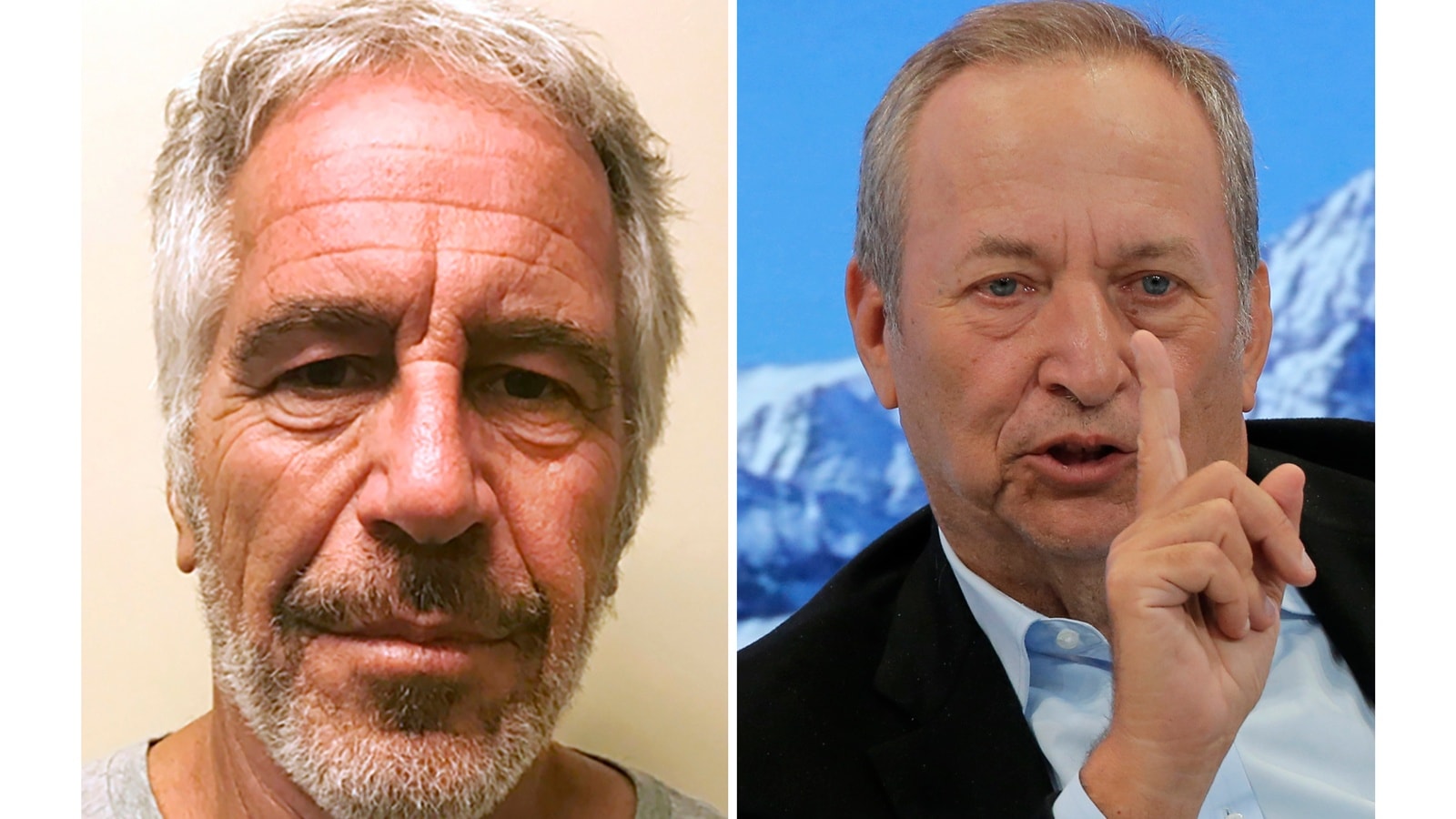
The resignation of Larry Summers from his emeritus role at Harvard University marks the final collapse of a specific kind of academic immunity. While the immediate catalyst involves the unsealing of the Jeffrey Epstein documents, the departure is not merely a reaction to a news cycle. It is the result of a decades-long friction between Summers’ brand of aggressive, high-finance intellectualism and a university culture that can no longer afford the reputational liability of his associations.
Summers is not just another professor. He is a former Treasury Secretary, a former Harvard President, and a man whose influence on global economic policy shaped the post-Cold War era. His exit signals that the "Harvard Shield"—the unspoken rule that prestige and intellectual brilliance can protect a faculty member from the fallout of their personal network—has finally shattered.
The Weight of the Epstein Files
The documents released by the U.S. District Court in Manhattan did more than just list names. They detailed a level of persistence in the relationship between Summers and Epstein that contradicted years of carefully worded dismissals. For Harvard, the problem wasn’t just the association; it was the timing. The university is currently reeling from a leadership vacuum and intense scrutiny over its donor relations and institutional integrity.
Summers’ resignation stems from the realization that his presence had become a lightning rod for critics who argue that the university is a playground for the "uncomfortably well-connected." When the files revealed that Summers continued to engage with Epstein long after the financier’s 2008 conviction, the internal pressure from the Harvard Corporation became insurmountable. They could no longer frame his history as a series of isolated lapses in judgment.
A Legacy of Friction
To understand why this resignation feels so definitive, one must look back at Summers’ original tenure as Harvard President from 2001 to 2006. He didn't just govern; he provoked. His public battles with the African American Studies department and his controversial remarks regarding women in science created a reservoir of internal resentment that never truly drained.
He functioned as a bridge between the ivory tower and the aggressive world of hedge funds and global governance. This bridge was lucrative for Harvard’s endowment, but it brought with it a different set of ethics—one where results justified the company you kept. In the world of elite finance, proximity to power is a currency. In the world of modern academia, that same proximity is now viewed as a toxic contaminant.
The Donor Dilemma
Harvard’s internal logic has always been tied to its endowment. Summers was a master at navigating the corridors of wealth. However, the Epstein connection highlighted a systemic flaw in how the university vetted its most influential figures. Epstein was not just a donor; he was a gatekeeper to a specific echelon of the global elite.
The investigation into Summers' ties revealed a pattern of introductions and social engineering that benefitted the university's coffers while exposing its leadership to ethical bankruptcy. The faculty, many of whom have long been weary of Summers’ outsized shadow, saw the Epstein files as the leverage needed to force a clean break. The university is attempting to reset its moral compass, and that reset is impossible with Summers still holding an office in Littauer Center.
The Economic Impact of a Reputation
Summers’ departure is also a business decision. Harvard is currently facing a significant decline in applications and a cooling of enthusiasm from its traditional donor base. The institution is seen by many as being out of touch with the reality of its own influence. By facilitating Summers’ exit, the administration is trying to cauterize a wound that has been bleeding since the 2019 revelations about Epstein’s ties to the MIT Media Lab and Harvard’s own Program for Evolutionary Dynamics.
This is a defensive maneuver. The university leadership knows that if they don't police their own, the government will. With congressional committees already looking into university transparency and foreign funding, a figure as polarizing as Summers becomes an easy target for subpoenas and public hearings.
The Intellectual Vacuum
The cost of this resignation is not negligible. Despite his controversies, Summers remains one of the most formidable economic minds of his generation. His insights into inflation, secular stagnation, and global markets are frequently more accurate than the consensus. Removing him from the Harvard ecosystem removes a specific type of rigorous, albeit combative, intellectual diversity.
However, the "Summers era" of Harvard was defined by the belief that brilliance granted a license to ignore social optics. That era is dead. The modern university is governed by a different set of priorities, where "harm reduction" and "community standards" outweigh the individual contributions of a superstar academic.
Power Without a Home
Where does a man like Larry Summers go when the most prestigious university in the world asks him to leave? He remains a fixture in the media and a consultant to the world’s most powerful financial institutions. His influence will not vanish, but it will no longer carry the institutional weight of the Harvard brand.
This divorce is mutual in its necessity. Summers needs to operate in environments where his associations are judged by the ROI they produce, not the headlines they generate. Harvard needs to pretend, at least for a while, that it is an institution of higher learning first and a sovereign wealth fund second.
The Structural Failure of Vetting
The broader issue revealed by the Summers files is the failure of institutional vetting at the highest levels of American power. This isn't just about one professor or one financier. It is about a closed loop of elite individuals who vouch for one another, creating a vacuum where accountability cannot penetrate.
The Epstein files show that Summers was warned. He was briefed on the risks. He chose to maintain the connection because, in his world, the risk of social friction was higher than the risk of ethical compromise. He gambled on his own indispensability. He lost.
The resignation is a signal to the rest of the Ivy League. The days of the untouchable "Great Man" of the faculty are over. If your Rolodex contains names that can bring down a board of directors, you are no longer an asset; you are a liability waiting to be triggered.
Harvard’s decision to cut ties is a calculated attempt to preserve what is left of its credibility. Whether it works depends on how many other names are still hidden in the files. The university is betting that by sacrificing its most prominent knight, it can save the king. But in the world of high-stakes investigative journalism and legal discovery, the king is rarely as safe as he thinks.
Analyze the remaining faculty members who held significant correspondence with the Epstein estate to determine if a broader purge of the economics department is imminent.