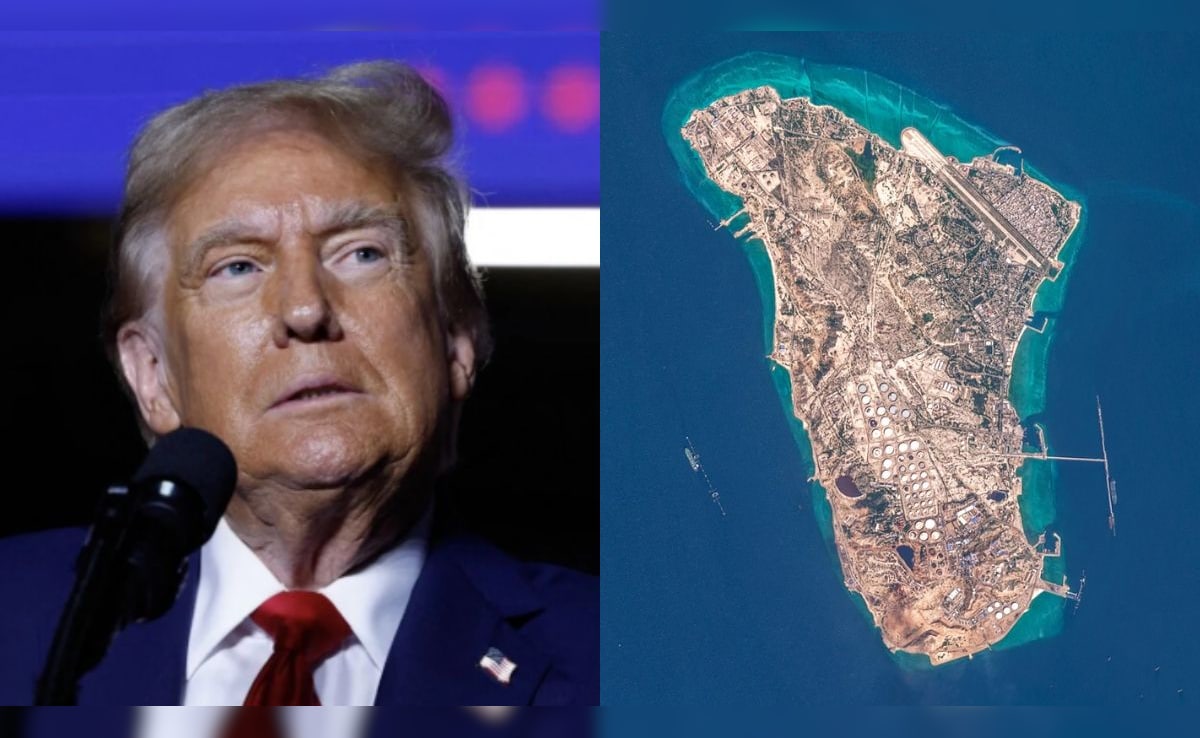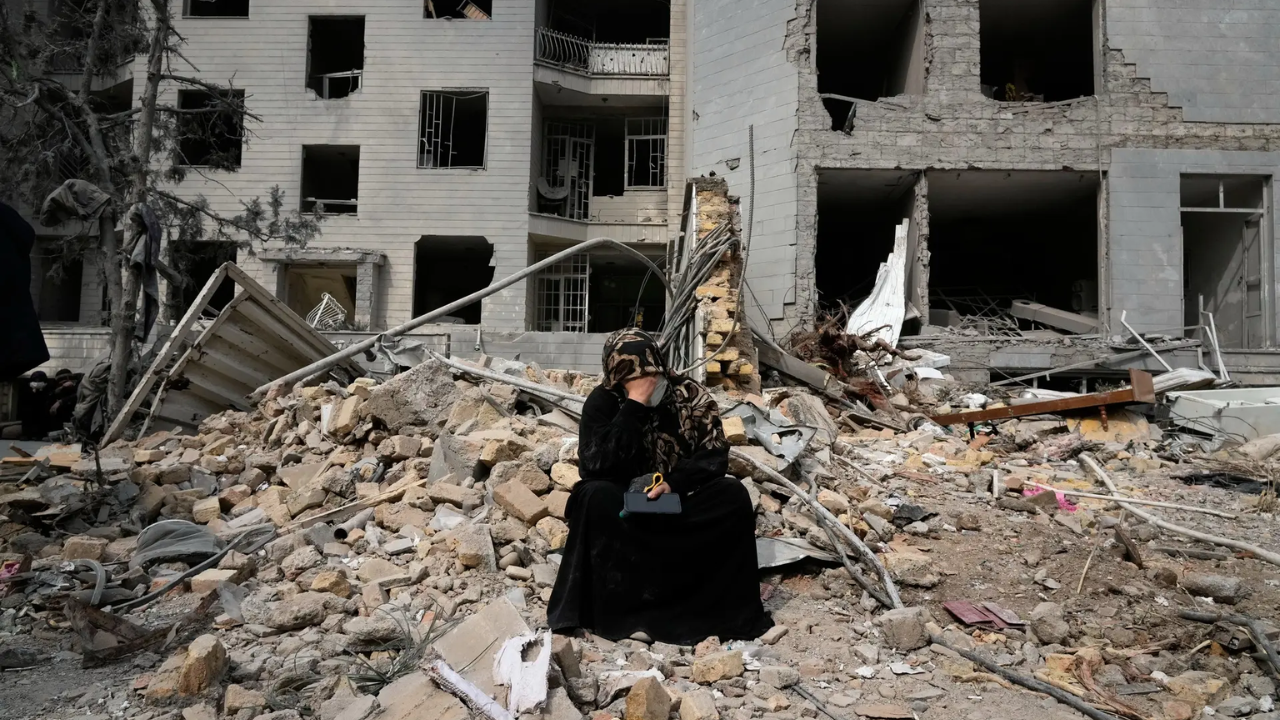
The strategic logic of the recent United States kinetic strikes against Iranian-backed military infrastructure on disputed or strategic island positions is not a mere exchange of fire; it is a calculated recalibration of the "Cost of Power Projection" in the Persian Gulf and Red Sea corridors. When the United States targets island-based assets—specifically radar arrays, drone launch pads, and anti-ship cruise missile (ASCM) batteries—it is attempting to force a structural shift in Iran’s regional deterrence model. Iran’s reliance on "Strategic Depth via Proxy" and "Asymmetric Maritime Denial" faces a critical bottleneck when the physical nodes of that denial are fixed, vulnerable, and increasingly expensive to replace.
The Architecture of Maritime Denial
To understand the current friction, one must categorize the Iranian military posture into three functional layers. These layers dictate how Tehran responds to infrastructure degradation and how the U.S. selects its target sets.
- The Sensory Layer: This consists of coastal and island-based radar systems (both X-band and S-band) and Signal Intelligence (SIGINT) outposts. These assets provide the "Targeting Solution" required for any kinetic action. Without this layer, Iran’s long-range munitions are essentially blind, relying on commercial AIS (Automatic Identification System) data which is easily spoofed or disabled.
- The Effector Layer: This includes the physical hardware of destruction—specifically the Noor and Ghadir missile families and the Shahed series of loitering munitions.
- The Command and Control (C2) Layer: The hardened communication links between the Islamic Revolutionary Guard Corps (IRGC) Navy and the localized launch cells.
The U.S. strikes specifically target the Sensory Layer. By degrading the ability to see, the U.S. renders the Effector Layer inert without needing to hunt down every mobile missile launcher—a task that is historically difficult in rugged island terrain. This creates an "Information Asymmetry" where the U.S. maintains full situational awareness while the local defender is forced into "Silent Running" or "Blind Firing," both of which are tactically inferior.
The Logistics of Island Defense
Island-based military infrastructure suffers from a "Supply Chain Fragility" that mainland bases do not. Every gallon of fuel, every replacement circuit board for a radar array, and every missile canister must be transported via small vessel or helicopter. This creates a quantifiable Logistical Interdiction Point.
- Resupply Latency: The time required to replace a destroyed radar unit on a remote island is significantly higher than on the mainland due to the need for maritime air superiority during the transport phase.
- Vulnerability of Fixed Assets: Unlike mobile launchers on the mainland that can hide in tunnels or urban centers, island infrastructure is geographically constrained. Satellite imagery and High-Altitude Long-Endurance (HALE) drones can maintain a constant "unblinking eye" on these coordinates.
The U.S. strategy leverages this fragility to impose a high Replacement Cost Ratio. If the cost for the U.S. to destroy a node (using a precision-guided munition) is significantly lower than the cost for Iran to manufacture, transport, and calibrate a replacement in a contested zone, the defender eventually hits a point of "Resource Exhaustion."
Analyzing the Iranian Retaliation Framework
Iran’s repeated threats of retaliation are not merely rhetorical; they are a component of "Reflexive Control," a theory where one actor provides information to another to lead them to make a predefined decision. Iran’s retaliation logic follows a specific "Escalation Ladder" designed to test U.S. political will without triggering a full-scale theater war.
The Proportionality Constraint
Iran typically seeks a 1:1 symbolic parity. If an island radar is hit, they seek to hit a comparable sensor or a commercial vessel of equivalent strategic value. This is a mechanism to maintain "Deterrence Credibility." If Iran fails to respond, the "Perceived Cost of Aggression" for the U.S. drops, inviting further strikes.
The Proxy Buffer
The use of regional proxies allows Iran to execute "Plausible Deniability," though this window is closing as U.S. intelligence attribution becomes faster and more public. The proxy model serves as a Kinetic Heat Sink, absorbing the retaliatory strikes that would otherwise hit Iranian soil. This keeps the conflict in the "Gray Zone"—the space between peace and total war.
The Mathematics of Interception vs. Impact
The efficacy of U.S. strikes is measured not just by "Bratty Damage" (physical destruction) but by the "Interception Probability" ($P_i$) of future Iranian attacks.
$$P_i = 1 - (1 - p)^n$$
In this simplified model, where $p$ is the probability of a single interceptor hitting a target and $n$ is the number of interceptors fired, the U.S. aims to keep $P_i$ near 1.0. However, the "Saturation Point" is the real danger. If Iran launches more drones and missiles than the U.S. has interceptors on station (the VLS cells on a destroyer), the $P_i$ collapses.
By hitting the island infrastructure, the U.S. is effectively reducing $n$ (the number of munitions Iran can effectively launch and guide), thereby ensuring that the onboard defense systems of U.S. and allied vessels are never overwhelmed. It is a preventive strike on the "Launch Volume" of the adversary.
Strategic Bottlenecks in the Strait of Hormuz
The geographical reality of the Strait creates a "Chokepoint Economy." Approximately 20-25% of the world's total oil consumption passes through this narrow waterway. The technical challenge for the U.S. is that "Sea Control" is much harder to maintain than "Sea Denial."
- Sea Denial (Iran's Goal): Only requires a few lucky hits to spike global insurance rates and halt shipping.
- Sea Control (U.S. Goal): Requires 100% protection of all assets 100% of the time.
This imbalance is the primary driver of Iranian confidence. Even a degraded Iranian military can claim victory if they can force a "Risk Premium" on global energy markets. The U.S. strikes on island infra are an attempt to lower this Risk Premium by demonstrating that the "Kill Chain" required for Sea Denial has been broken.
The Role of Electronic Warfare (EW) and Signal Degradation
Beyond kinetic strikes (exploding things), there is a silent layer of "Spectral Combat." The U.S. employs EA-18G Growler aircraft to flood Iranian island sensors with noise, but physical destruction is preferred for long-term suppression.
A destroyed radar cannot be "rebooted" or "patched." Physical destruction forces a total "Re-acquisition Cycle." This includes:
- Damage Assessment: The defender must verify what is broken.
- Procurement: Moving hardware from central stores to the coast.
- Amphibious Transit: The most vulnerable stage.
- Integration: Calibrating the new sensor with the existing missile batteries.
Each step in this cycle is a window of opportunity for further U.S. or allied intervention.
Risk Assessment of the "Tit-for-Tat" Cycle
The primary risk in this strategic exchange is "Miscalculation of the Threshold." Every military has a "Red Line" which, if crossed, triggers an automatic and non-linear escalation.
- The U.S. Threshold: Likely defined by the loss of American life or the sinking of a major surface combatant.
- The Iranian Threshold: Likely defined by strikes on sovereign Iranian soil (mainland) or the targeting of senior IRGC leadership within Iranian borders.
As long as the conflict remains focused on island infrastructure and "Uninhabited Assets," both sides can claim they are avoiding "Total War" while still satisfying the domestic and international need for "Action." However, this creates a "False Stability." The more frequent these strikes become, the higher the probability of a technical error (e.g., a missile hitting a civilian tanker or a neutral third-party vessel) which forces an escalation neither side originally intended.
The Asymmetric Value of Island Sovereignty
For Iran, these islands (such as Abu Musa or the Greater and Lesser Tunbs) are not just military bases; they are "Sovereignty Anchors." They extend Iran's territorial waters and Exclusive Economic Zone (EEZ) deep into the shipping lanes. The U.S. targeting of infrastructure on these islands is perceived by Tehran as a direct challenge to its "Territorial Integrity," even if the U.S. frames it as a "Limited Tactical Objective."
This creates a psychological "Value Gap." The U.S. sees a radar; Iran sees a piece of its national identity. This gap is why "Retaliation Threats" are so persistent. Iran cannot "ignore" a strike on an island without signaling to its neighbors (and domestic critics) that its sovereignty is negotiable.
Tactical Shift Toward Autonomous Attrition
The second-order effect of these strikes will be an acceleration of "Autonomous Attrition" tactics. Seeing that fixed island infrastructure is vulnerable, Iran will likely pivot toward:
- Subsurface Loitering Munitions: Underwater drones that are much harder to detect and destroy via traditional airstrikes.
- Containerized Missile Systems: Hiding ASCMs inside standard commercial shipping containers on civilian-looking vessels, making every ship in the Gulf a potential threat and complicating the U.S. Rules of Engagement (ROE).
This shift moves the conflict from "Infrastructure vs. Munition" to "Intelligence vs. Deception." The U.S. will need to invest more heavily in "Pattern of Life" analysis and AI-driven behavior monitoring to distinguish between a legitimate merchant ship and a mobile launch platform.
The strategic play now is to transition from "Reactive Strikes" to "Persistent Area Denial." The U.S. must not only hit the islands when provoked but must establish a "Permanent Sensor Mesh" that makes the re-militarization of these islands impossible. This involves the deployment of long-endurance autonomous surface vessels (USVs) and tethered aerostats that provide continuous coverage of the island supply routes. By making the "Cost of Re-supply" prohibitive through constant surveillance and the threat of immediate interdiction, the U.S. can effectively "De-militarize" the islands without needing to occupy them. The objective is to turn these strategic outposts into "Logistical Sinks"—places where Iran pours resources and receives zero tactical return.